Deep dives
Citizens' assemblies with children and young people: a unique educational tool for democracy

Hypothesis
Only in fifteen countries around the world do 16-year-olds have the right to vote, and in none of them are their voices heard as minors. However, several initiatives are beginning to proliferate around the globe that seek to add the voices of children and adolescents to the public arena. Their example shows that children are experts when it comes to talking about their own lives, that they like to participate in joint decisions and that doing so reinforces their sense of belonging to a group. What if we are missing out on a key tool for combating the social isolation of certain groups? As part of Platoniq’s School of Creativity and Democracy, we travelled to Malaga to attend a workshop organised by CoGlobal and facilitated by Katie Reid. Here are some of our conclusions.
- How can we ensure that the voices of children and young people are informed voices?
- What are the dangers of influencing their decision-making?
- What are we missing out on by not including them in the political process?
As we will see below, there are some case studies that can help us clarify these questions. Some are institutional in nature, while many others are initiatives being carried out in schools and colleges which, without reaching this level, are testing methodologies and achieving results that show us the importance of transferring democratic culture to younger people.
Story of me: Why do we believe this issue is relevant?
Ágora Infantil, a project developed by CoGlobal in schools in more than 60 Spanish municipalities, in which more than 4,000 girls and boys have participated, provides some very interesting data when it comes to democratic participation in childhood and adolescence. Specifically: an increase in inclusion of between 30% and 60% of those who are socially isolated and less connected in the classroom, a reduction in negative interactions between the group and a strengthening of group spirit.
Back in 2001, the Committee on the Rights of the Child stated that “Children do not lose their human rights when they walk through the school gates. Education must therefore be provided in a manner that respects the inherent dignity of the child and allows them to express their views freely (…) and participate in school life.” All of this is in accordance with Article 12 of the United Nations Convention on the Rights of the Child (UNCRC), which states:
- States Parties shall assure to the child who is capable of forming his or her own views the right to express those views freely in all matters affecting the child, the views of the child being given due weight in accordance with the age and maturity of the child.
- For this purpose, the child shall in particular be given the opportunity to be heard in any judicial or administrative proceedings affecting the child, the views of the child being given due weight in accordance with the age and maturity of the child.
All of this reinforces what we already said in our guide How to hold deliberative assemblies in schools and colleges, quoting one of the world leaders in democracy by sortition in schools, Democracy in Practice in Bolivia: “young people who experience innovative and engaging student politics are more likely to participate in politics as adult citizens, and may even one day invent creative ways to improve democracy.”
Story of us: Objective data supporting the idea
As Andrea Corres, Gisela Cebrián and Mercè Junyent point out in their article Early adolescents’ visions of the future: towards hopeful and sustainable futures? “understanding the visions of the future among early adolescents can be a first step towards finding creative and more appropriate ways to promote probable and preferable visions of the future towards more hopeful ones; taking this into account is the most fundamental step in building alternative and sustainable futures. Furthermore, imagining possible and hopeful futures becomes a political and justice-oriented action, especially necessary in educational spaces.” These are some of the conclusions of EDUCLIMAD, an applied research project that aims to raise awareness and involve young people in sustainability issues through school climate assemblies in 25 primary schools in Camp de Tarragona, in which 1,465 pupils and 61 teachers have participated directly.
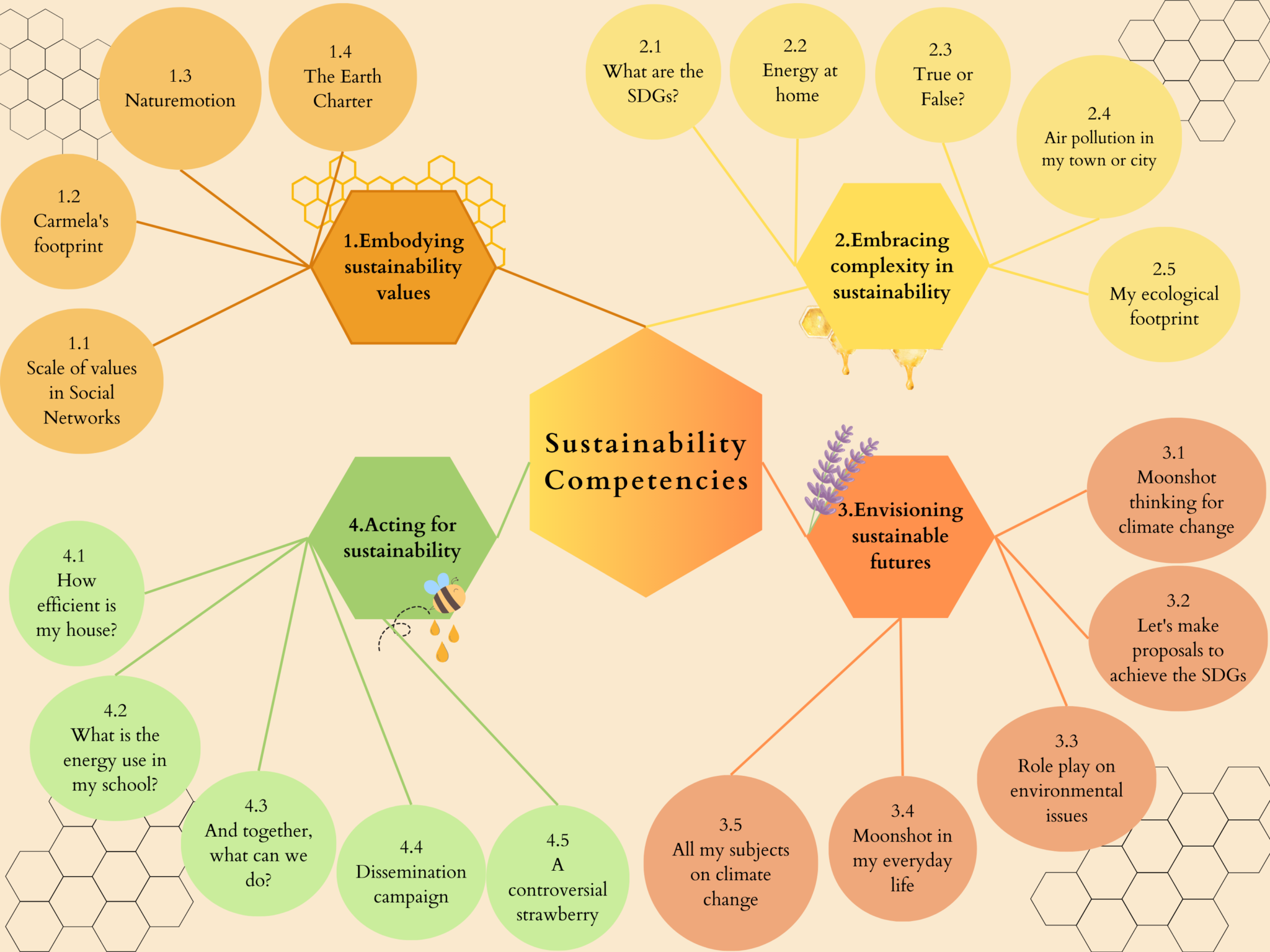
URV model for promoting sustainability in schools
Educlimad
Another project from which we can draw conclusions is the one carried out by Eurochild with its Children’s Council (CCE), a select group of children aged between 10 and 18, supported by Eurochild members from different countries across Europe, who play an advisory role in relation to Eurochild’s key priorities in terms of advocacy and governance. Some of its main conclusions, after being active since 2017, relate to the agency demonstrated by young people and minors in matters that concern them. “We are not prepared,” they tell us, “to listen to, let alone work with, children,” even though “children are experts in their own lives.” They therefore propose rethinking the participation of young people and children in terms of triangulation between child-facilitator-decision maker, moving beyond the child-adult model.
One of the most relevant case studies we have at hand is that of the Children’s Parliament of Scotland, which ended up informing the Citizens’ Assembly on Climate about its views. This example is particularly interesting because it breaks down the barrier between minors and adults by giving the former the ability to express their opinions and influence the discussions that subsequently took place in the Assembly. This is called “enclave deliberation” and consists of exploring with a specific group of people affected by a particular problem what the general approach of an assembly should be, thus overcoming the difficulties of working representatively when it comes to including all the diverse voices involved in the same issue.
In 1996, the Children’s Parliament was created in response to an idea from children in Edinburgh who were participating in an international “Eco-City” project. They believed that there was a need for a space where children could share their opinions and ideas, and that adults should be involved in the decisions made in Scotland. In all our work since then, climate change has remained a key concern for children. Twenty-five years later, a climate emergency has been declared in Scotland.
After several working sessions with just over 100 children aged 7 to 14 from across Scotland, representing 10 locations, urban and rural communities, a mix of income and ethnic groups, and a gender balance, a number of recommendations were made on healthy eating, land and sea use, lifestyle, travel, work and education. The conclusions can be found here.
A second project involving Katie Reid, probably the most experienced person in citizens’ assemblies with children and pre-teens, mentor at People Powered and author of the material Children and Young People’s Participation in Climate Assemblies for KNOCA, the European network for sharing good practice on the design and implementation of climate assemblies, is the Children and Young People’s Assembly on Biodiversity Loss.
Such was the impact of the project that Ireland’s Minister for Biodiversity commented:
The participatory process they designed is, in my opinion, replicable in all areas of public policy where the views of children and young people are sought. We should be doing much more. To say that they have had an impact on public policy-making would be an understatement.
There are many other initiatives worthy of analysis, such as the Área Demos mural art in democratic schools experience, the City Youth Forum in the city of Jihlava in the Czech Republic, made up of pupils from 10 primary schools, and the Young DiverCities project, now in its third year, which counts among its achievements the naming of a square in the city of Settimo in Italy.
Finally, it is important to mention the Future Council U24, a process that took place in 2023 to give young adults in Switzerland a voice in political issues, specifically 80 Swiss residents between the ages of 16 and 24 who were chosen by lottery.
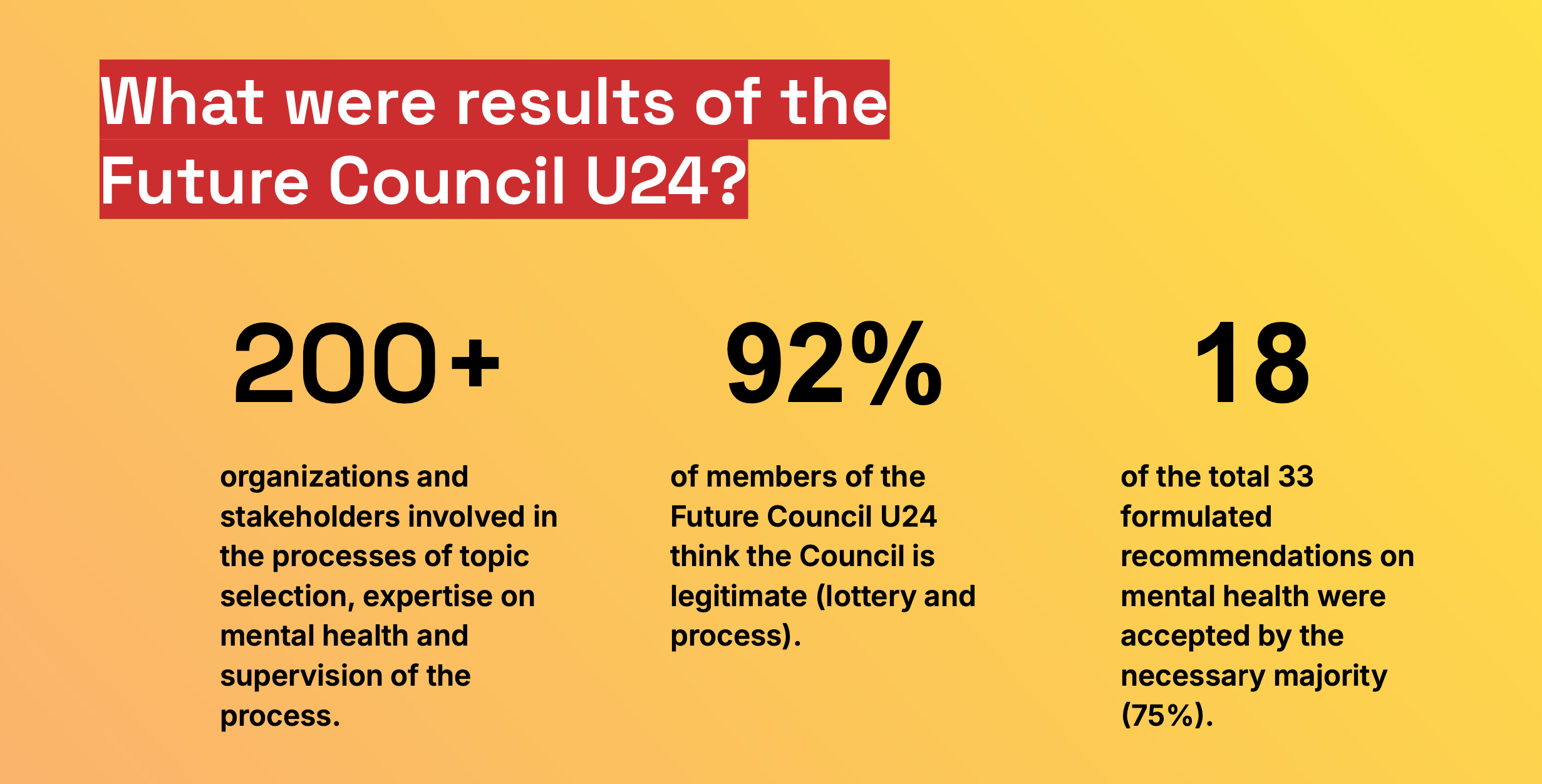
Results of Future Council U24
Pro Futuris Think + Do Tank
The first Swiss youth citizens’ assembly sought to answer the question: what should Switzerland do to improve the mental health of young people, particularly in the areas of education, work, leisure, family and health services? It came up with 18 recommendations, the most popular of which were the creation of a national database on mental health and young people, the expansion of Swiss health insurance to cover mental health, and strengthening cooperation between cantons to address this issue.
Story of now: How do we answer this question?
As Laura Lundy, professor at Queen’s University Belfast and creator of the Lundy model, a benchmark for the United Nations on how children participating in assemblies should be treated, points out, “the importance of Article 12 for education cannot be underestimated.”
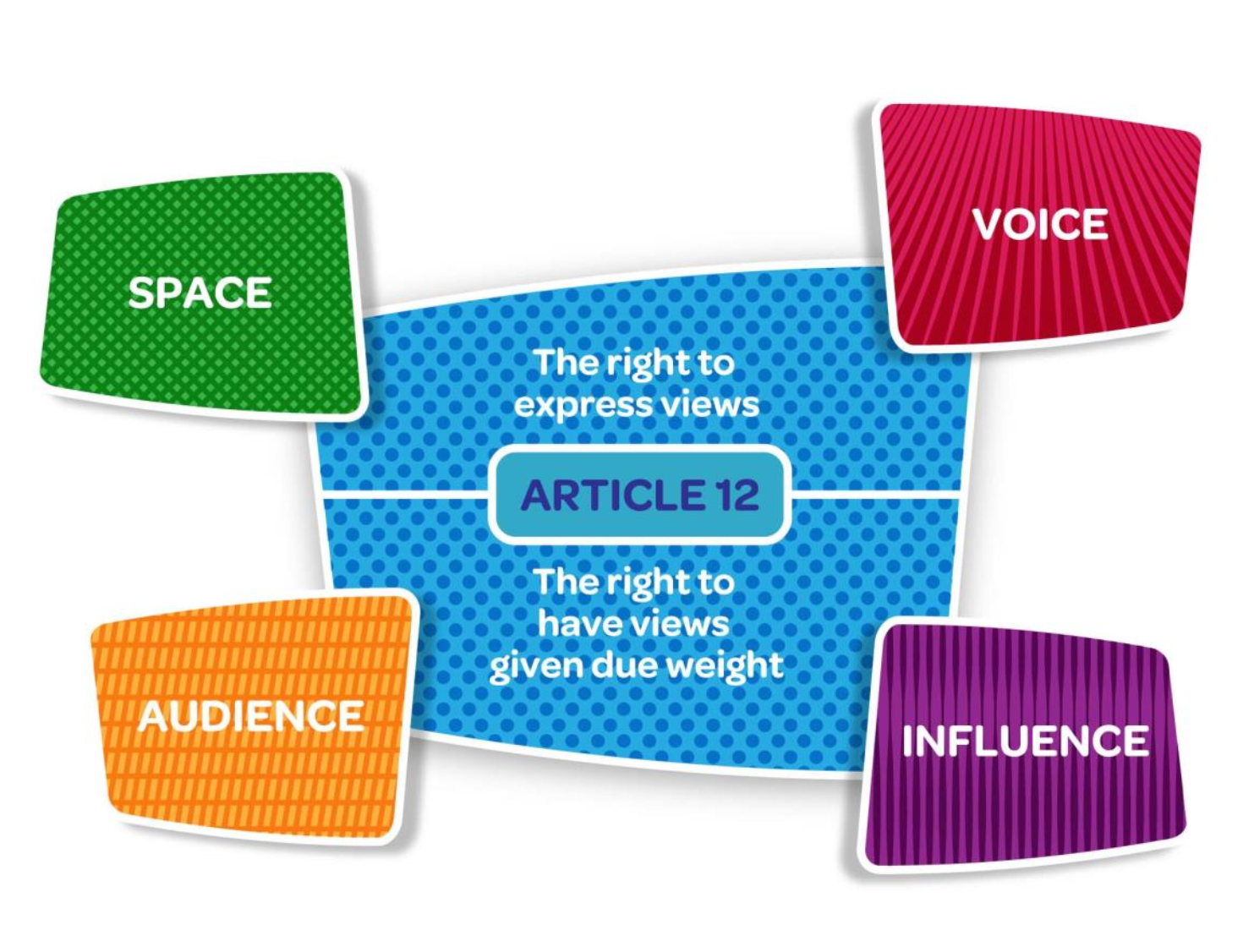
Lundy Model of Participation
Laura Lundy, 2007
This model offers a new way of conceptualising this article of the United Nations Convention on the Rights of the Child (UNCRC) by focusing decision-makers’ attention on four elements:
- Space: Children must have the opportunity to express their views:
- Voice: Children must be enabled to express their views.
- Audience: Opinions must be heard.
- Influence: Action must be taken accordingly, as appropriate.
When we published the guide on How to hold deliberative assemblies in schools and colleges at Platoniq in 2023, we already considered that student participation serves to innovate forms of democracy and offer equal opportunities to students who want to participate, regardless of their ethnicity, socio-economic background, educational or cultural level, popularity, charisma, or ambition.
Applying deliberative methodologies among young people allows us to demonstrate the values of democracy, accustom them to participating in group decisions, and help them understand the meaning and value of our institutions. Will you join the deliberative wave?
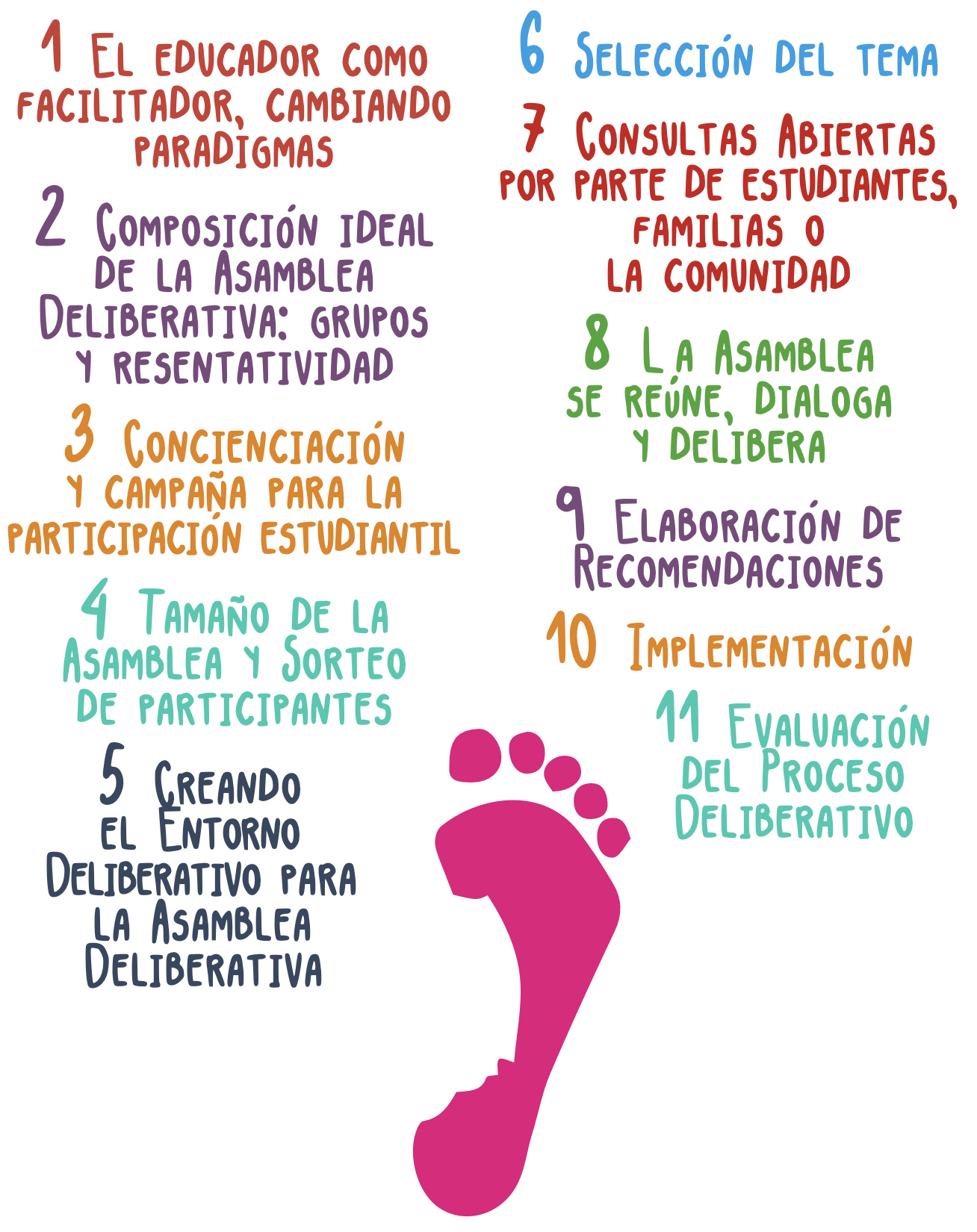
How to hold deliberative assemblies in schools and colleges
Platoniq
Recursos
Democracia en práctica, Elección por sorteo del Gobierno Estudiantil
Katie Reid, Children and Young People’s Participation in Climate Assemblies, KNOCA.
Toolkit del Parlamento de infantes de Escocia
UNICEF, 20 asambleas para escuelas de primaria
Platoniq, Como hacer asambleas deliberativas en escuelas e institutos
Laura Lundy, Model of child participation
URV, Methodological guide - School Climate Assemblies de Educlima
UNICEF. Our Future Pledge: An agenda for futures by youth. A toolkit and global campaign for youth foresight