Interviews
Quim Brugué The need for citizen participation understood not as a requirement, but as dialogue

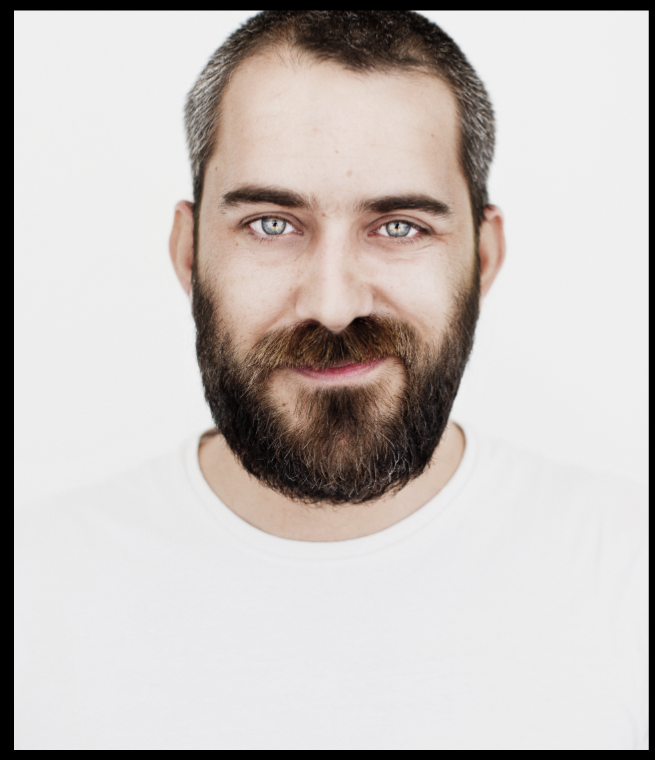
Following the project on real estate racism in Olot carried out in 2021, we spoke with Quim Brugué, professor of political science and administration in the Department of Political Science and Public Law at the University of Girona, who between 2003 and 2008 served as director general of Citizen Participation for the Government of Catalonia, to discuss the differences between citizen participation and institutional politics and what the future holds for the new wave of deliberative democracy.
As stated in the final report presented to Olot City Council, “discrimination in access to housing implies an erosion of the conditions of equality experienced by some individuals and groups. This erosion can take many forms and operate from different angles. Thus, it can be an erosion of equal conditions by excluding, restricting, preferring, distinguishing or, ultimately, placing a particular group of people at a disadvantage.”
Faced with this reality, the administration promoted a public dialogue between many social actors involved in reception, access to housing and the fight against racism: Stop Racism, the Platform for People Affected by Mortgages, Cáritas Garrotxa, the Suara Cooperative, the Chamber of Urban Property, Property Agents, individual property owners, the University of Girona, the Olot Housing Office, the Red Cross, neighbourhood associations, Mans Acció Solidària and the Garrotxa Social Action Consortium, to explore the reality of access to housing and the barriers that those who were not born in the territory might encounter.
Everything remains to be seen. We have worked hard to avoid having to file complaints. If we have to resolve issues by filing complaints, that's not good. We thought that a good strategy was to talk and open channels for dialogue and guarantee rights through persuasion rather than punishment
Finally, 27 proposals were implemented, in addition to the creation of a steering group to monitor and control them. Among the measures that stood out was the creation of the role of “housing facilitator,” who would be responsible for carrying out tasks to facilitate housing for new arrivals or those with problems accessing a flat, as well as promoting good practices by APIS with a distinctive seal that serves as an incentive.
Quim Brugué’s role in the project was to mediate between the parties and ensure that the entire process was carried out in a discreet and orderly manner. This is a way of doing politics that he knows well after his years in administration, and we wanted to ask him some questions about it.
Do you believe that participation is now a necessary condition for policies to be legitimate and effective, or is it still seen as an optional extra?
I believe that, in an environment of complexity and diversity such as ours, technical responses are insufficient and it is essential to involve citizens in order to achieve legitimacy and effectiveness.
However, I also think it is essential to clarify what we mean when we use the term citizen participation. If by participation we mean voting or a space where individual (or sectoral) complaints and claims are received, I believe that not only does this not contribute to the implementation of public policies, but it can actually block them. From my point of view, we need participation understood as dialogue (deliberative processes that generate collective intelligence) and non-binding (i.e. improving the decision-making process, but not replacing those elected to make decisions).
What design factors (selection of participants, methodologies, level of influence) are most decisive in ensuring that a participatory process has a real impact on public policy?
In line with my answer to the previous question, I believe that the determining factors are political rather than methodological. I do not think that the design of the process is as important as clarity and determination about what we are doing and why we are doing it.
And in this area, the key, in my opinion, lies in something that is sorely lacking: political leadership that understands what it is doing and is committed to its objectives. This success factor is difficult to achieve, partly because of what I call ‘methodological seduction’ (we engage in participation because everyone else does and we imitate their methods, but for the most part we do not really know what we are doing or why), but also because being clear on this issue is not attractive either to politicians (who do not like to admit that not only do they have to make the final decision, but that it is bound to upset someone – or everyone a little) or to citizens (who sometimes think, somewhat childishly, that their wishes should simply come true).
Therefore, the key factors are: (1) politicians who are courageous and know what they are doing, and (2) citizens who are truly citizens, not customers or professional complainers.
What are the risks that participation will reproduce inequalities rather than correct them?
I understand that there are enormous risks surrounding unequal participation, assuming, moreover, that this is a crucial issue:
Firstly, there is a risk that the time and knowledge (e.g. technological) required for participation will make it an elitist activity. This already happened in ancient democracies, where participation was very intense but very restrictive. Today, I believe something similar is happening.
A second danger is the seduction of large numbers, thinking that the more people participate, the better the participation. Participation understood as deliberation requires micro-audiences, and in this area it is essential to ensure the diversity (not the representativeness) of participants. Achieving this diversity is proving to be practically a “mission impossible”.
Finally, a third risk arises when we do not adequately assume political leadership. One risk of participatory processes is that they are strictly binding and that, therefore, the most powerful agents realise that what they have to do is control these spaces. They usually do so without too much difficulty. Therefore, one guarantee of taking into account even the most fragile and least present voices is that the final decision rests with a third party (elected politicians) who can incorporate them because they know they are marginalised.
When it comes to participation, there is often criticism that recommendations do not always translate into concrete policies. What mechanisms could ensure a stronger link between citizen deliberation and political decision-making?
Explain clearly and courageously that, in fact, not all recommendations will be translated into concrete policies. We cannot continue to naively believe that everything we ask for is feasible, although we must demand an explanation of what is and what is not.
On the other hand, following Luigi Bobbio, we can distinguish between cold deliberation and hot deliberation. The former involves anonymous individuals with no links or sectoral interests in the subject of the debate. Nor are they accountable to their organisations, which in this case do not exist. In the latter, however, deliberation takes place between actors with clear knowledge and positions, which they must defend against those who see things differently. If we opt for cold deliberation, the conclusions are often so generic and ambivalent that they can hardly be linked to concrete decisions and specific policies. If, on the other hand, we opt for heated deliberation, the ability to be specific may be undermined by a kind of war of positions in which no one ever leaves their trench. Between these two situations, and taking each case into consideration, we must seek a balance.
To what extent are local councils, due to their closer proximity, more effective than central government in linking participation with actual policies?
Once again, there are advantages and disadvantages. Proximity facilitates heated debate, with participants who know what they are talking about and what they expect. But it can also entrench confrontation and consolidate mutual deadlocks. On the other hand, the distance from central government means that participants either have very approximate ideas on the subject or are organised actors with sectoral interests. Here we can generate some results, although often closer to negotiation than participation.
I believe that it should be possible to do this properly at both levels of government, although always from a very artisanal perspective. This is a personal obsession of mine, to understand that each case needs to be treated according to its specific characteristics and with a significant degree of maturity about what we are doing and why in each case.
How do you imagine the future of citizen participation in Catalonia?
I am not very optimistic, as it seems more like a marketing strategy or a simple imitation effect. I thought that the experience of the 1980s and 1990s would help us mature in terms of citizen participation, but I don’t quite see it.
Furthermore, in this situation, I believe that today we must escalate the challenge from participatory methodologies to the survival of democracy itself.
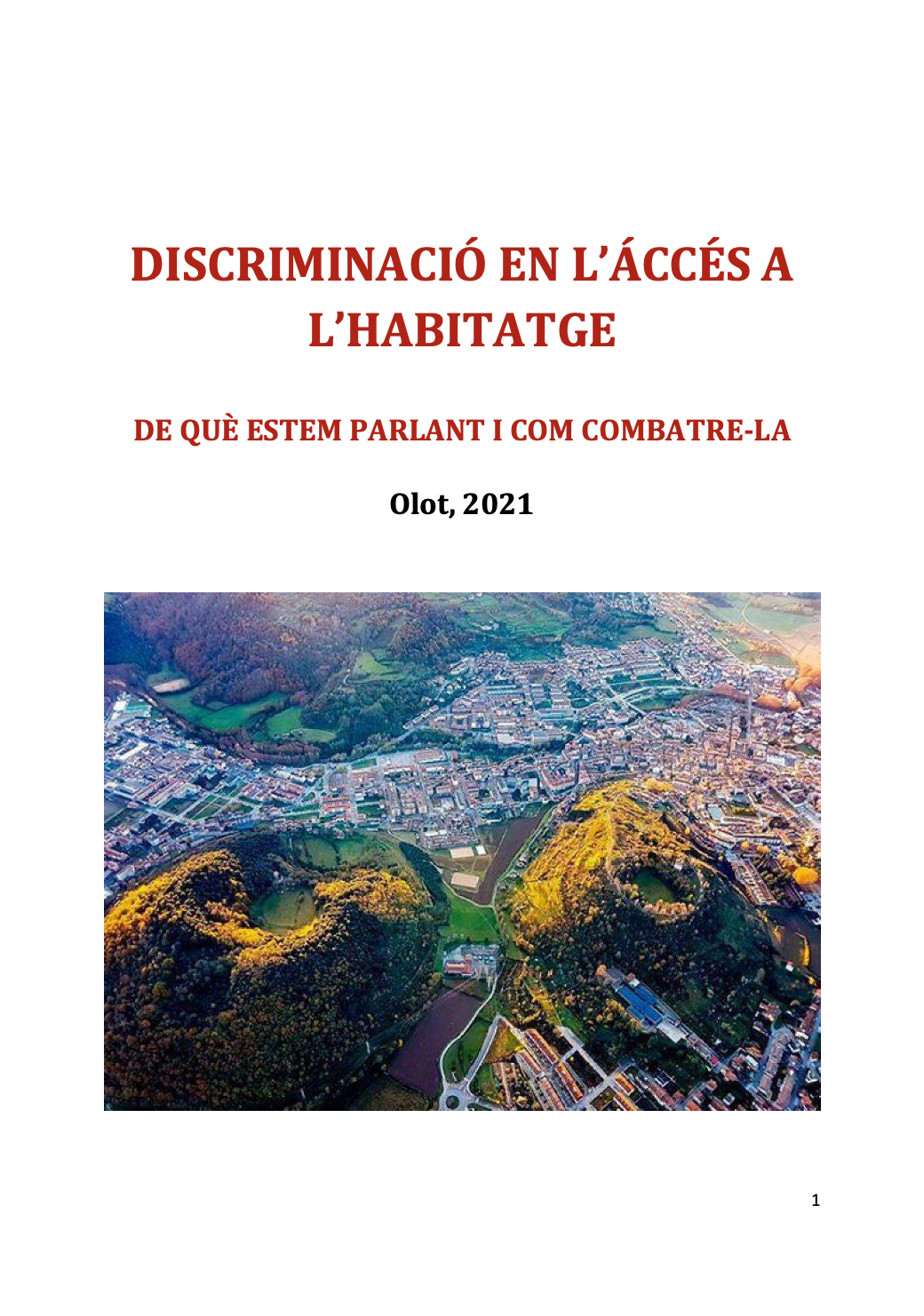
You can consult the conclusions of the process carried out in Olot here.
__ __
The interview took place at the University of Girona in September 2024, thanks to the support of the Open Society Foundation.