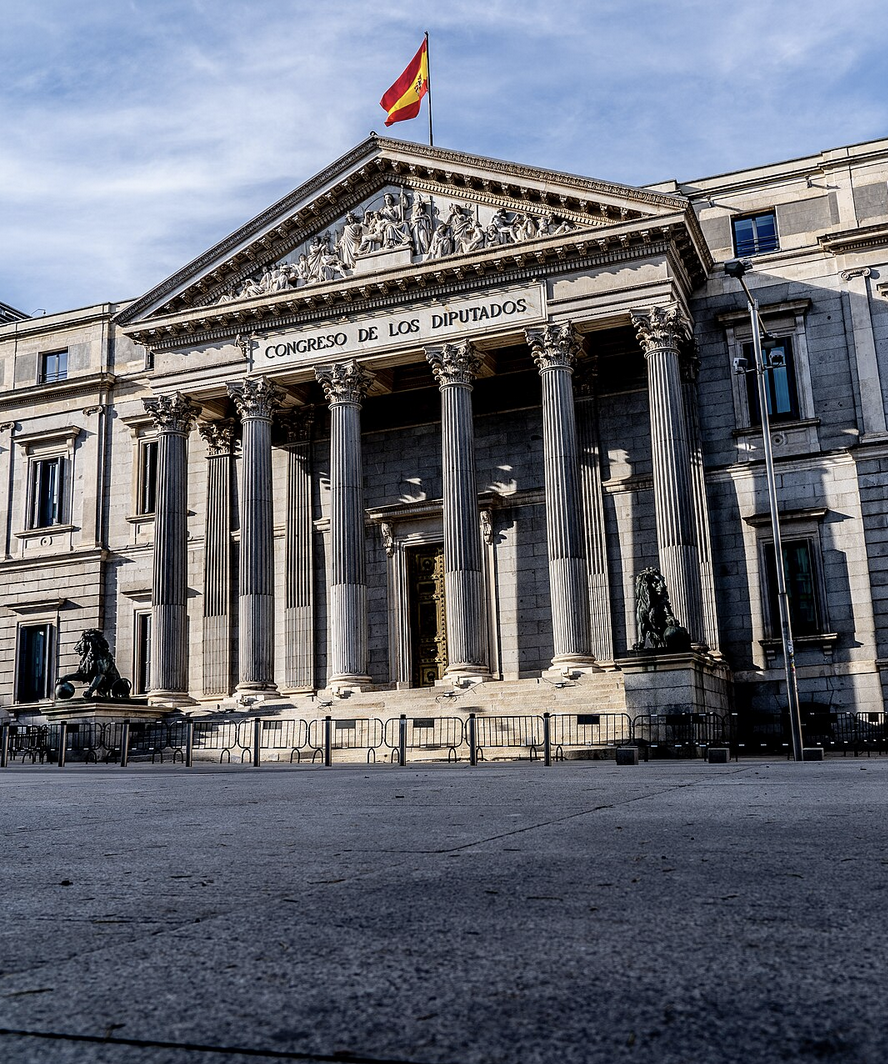
Every public square has its own atmosphere, its own mixture of smells, sounds, and rhythms. Some “plazas” smell of coffee and cigarette smoke at seven in the morning, when municipal workers, café owners, and old neighbours exchange gossip before the day begins. Others carry the scent of fried food, sea salt, wet stone after summer rain, or bread arriving from nearby bakeries. In certain places, traces of bureaucracy linger in the air: printer ink, paper archives, overheated municipal offices, the hum of fluorescent lights. Elsewhere, the square fills with the energy of protest and celebration: drums, spray paint, fireworks, sweat, music, children running between demonstrations and market stalls.
Urbanists rarely speak about these sensory dimensions of infrastructure, yet anyone who has lived through different cities, or different crises, understands them instinctively. Public spaces are never neutral. They accumulate habits, tensions, rituals, and forms of coexistence. Some squares invite lingering conversations and collective imagination. Others silently communicate that people should move along, remain quiet, or leave decisions to experts. Some squares feel collectively owned. Others feel surveilled.
Digital democratic infrastructures are no different.
Platforms like Decidim also carry smells; metaphorically speaking. They inherit political cultures, administrative rhythms, institutional anxieties, and assumptions about who participation is for. Their interfaces may look clean and universal, but beneath the buttons and assemblies lie invisible urban genealogies: Barcelona municipalism, Brazilian federalism, Swiss planning cultures, activist histories, bureaucratic traditions, even regional attitudes toward conflict and consensus.
This became strikingly clear in two very different conversations at DecidimFest this year. One came from Brazil, where Leonardo Mitchalski and the Brasil Participativo ecosystem are building something audacious: a public democratic infrastructure capable of scaling across thousands of municipalities. The other emerged from Switzerland, where Lars Kaiser reflects on a Decidim platform that was technically ready within days after a catastrophic landslide destroyed the town of Blatten, yet never actually became politically alive.
Brazil: Paving the Digital Commons
Leonardo describes his mission in simple terms: infrastructure is there to “make other people’s lives easier.” Leonardo speaks about infrastructure almost like a street engineer speaks about paving roads: the goal is to make movement smoother for others. In Brazil, this means simplifying the deployment of Decidim so dramatically that municipalities no longer need armies of specialised engineers just to get started. The team compresses what used to be a tangled “letter soup” of databases, dependencies, and configurations into near one-click deployments. The political ambition hiding underneath this technical simplification is enormous.
Because when participation infrastructure is too complicated, democracy itself becomes unevenly distributed. Wealthier institutions can afford expert teams; poorer municipalities cannot. Some cities get beautifully maintained civic spaces while others inherit abandoned digital ruins. Technical friction becomes political exclusion.
Picture by Gloria Mendoza Better Images of AI / CC BY 4.0 www.gloriamc.xyz
CC BY 4.0 www.gloriamc.xyz
From “letter soup” to one‑click deployments in Brasil
Installing Decidim typically requires a series of steps, setting up Redis, Postgres, and other components that Leonardo jokingly calls “letter soup.” The Brazilian SaaS stack compresses these into a single command that installs all dependencies at once, turning what was a multi‑step, error‑prone process into something more approachable for administrators and new contributors.
On top of this, they have built a small web application that lets a system administrator spin up a new Decidim instance for a city or state through a browser interface. The workflow is straightforward: download the project, run a command to install the web app on Kubernetes, run another command to expose it, and then configure organisations via a user‑friendly interface. Some customisations still need to be done manually by an admin, but there is ongoing work to pre‑fill part of that setup so that local governments can get from “idea” to “live participatory platform” far more quickly. Right now, eleven municipalities are lined up for beta testing, with the potential to scale to around 5,000 municipalities and states
This is exactly the kind of accessibility and iteration Platoniq’s Safe(r) Spaces Playbook calls for: hiding unnecessary complexity, documenting opinionated choices, and leaving room for adaptation to different contexts, rather than assuming one perfect configuration. It acknowledges that what works for Brazil might not apply everywhere, but offers an opinionated template that others can study, fork, and adjust.
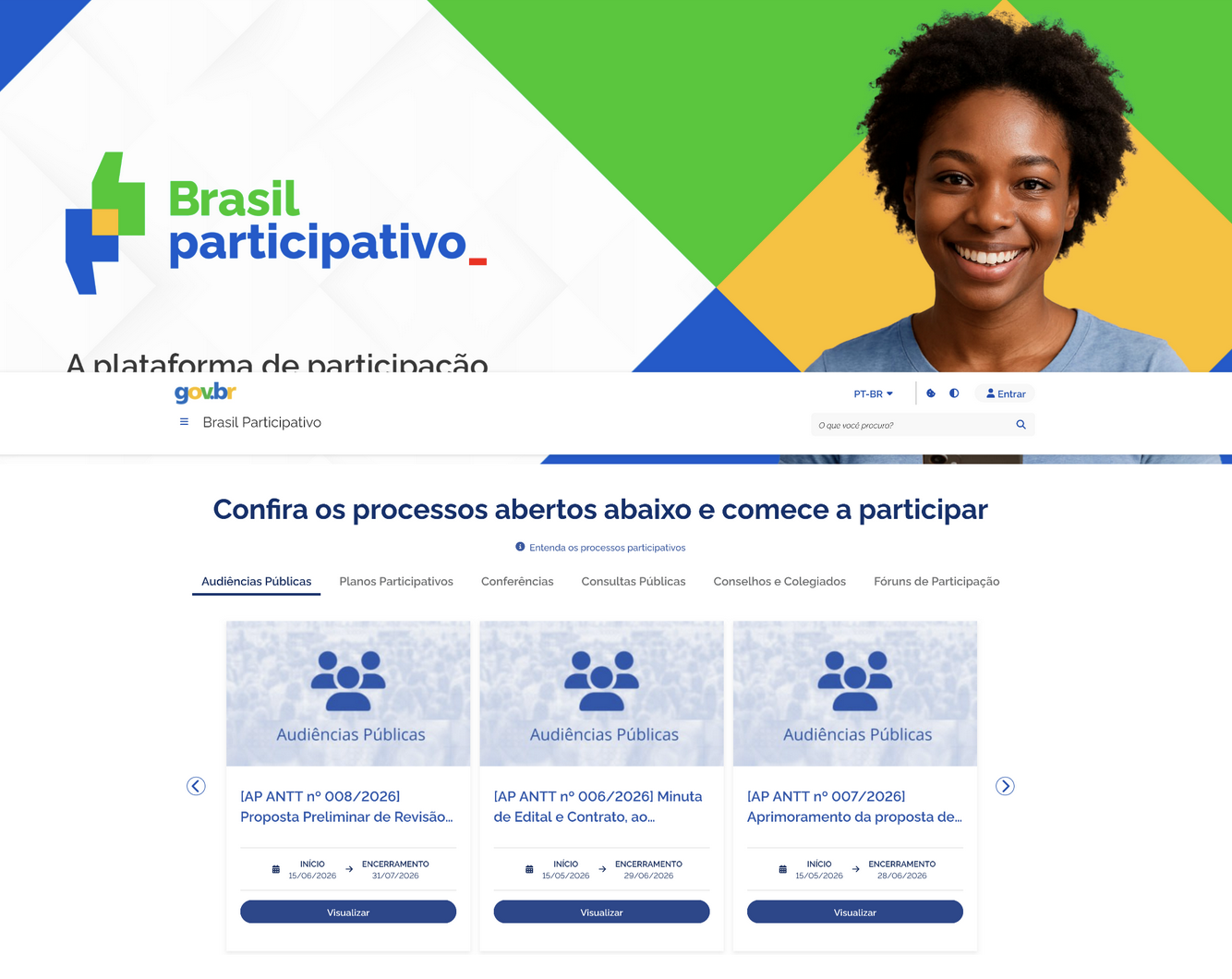
Brazil’s answer is not only open source software, but infrastructural hospitality. Their ecosystem; built through public cloud infrastructure and portable Kubernetes architecture, tries to ensure that democratic tools can travel. A municipality should not become dependent on a single vendor, consultancy, or charismatic technical expert. Participation infrastructure should behave more like a shared public utility than a luxury product.
It is a fascinating inversion of how many governments still approach civic tech. Usually, digital participation arrives as a polished interface sold through procurement logic: a platform as a product. But Leonardo’s approach treats infrastructure itself as a commons. The important thing is not only the visible square where participation happens, but the hidden plumbing that allows the square to remain open, maintained, and collectively owned. And perhaps that is where the smell metaphor becomes useful again.
Some digital infrastructures smell proprietary. Closed doors. Expensive maintenance contracts. Dependency. Others smell experimental and precarious: abandoned GitHub repositories, activist exhaustion, volunteer burnout. The Brazilian project smells different. It smells institutional; but in a surprisingly hopeful sense: like a public kitchen trying to feed many people with limited resources while keeping the recipe open for others to adapt.
When asked why this work matters, Leonardo points to developing countries, where there are not “so many highly skilled software engineers” and where the benefits of easy‑to‑use, well‑documented tools can be enormous for institutions and communities. For him, each piece of documentation, each automation that makes maintenance less about panic and more about calm root‑cause analysis, is part of making participation infrastructures more inclusive.
Overload, “vultures,” and political paralysis
Platforms like Decidim are often imagined as democratic Swiss Army knives: modular tools that can unfold differently depending on the situation. Assemblies, proposals, debates, accountability mechanisms: each feature promises adaptability. In Blatten, Switzerland, Lars Kaiser and his team encountered the opposite dilemma.
When a massive rockfall erased the Swiss town in 2025, residents were suddenly dispersed across the valley. Families moved into temporary flats, spare bedrooms, and relatives’ homes while the country debated whether rebuilding the town even made sense.
Lars’s team rapidly configured a Decidim platform to help keep the displaced community connected. Within two days, the infrastructure existed. Residents supported it. Officials expressed interest. The platform was ready.
Yet it never truly launched.
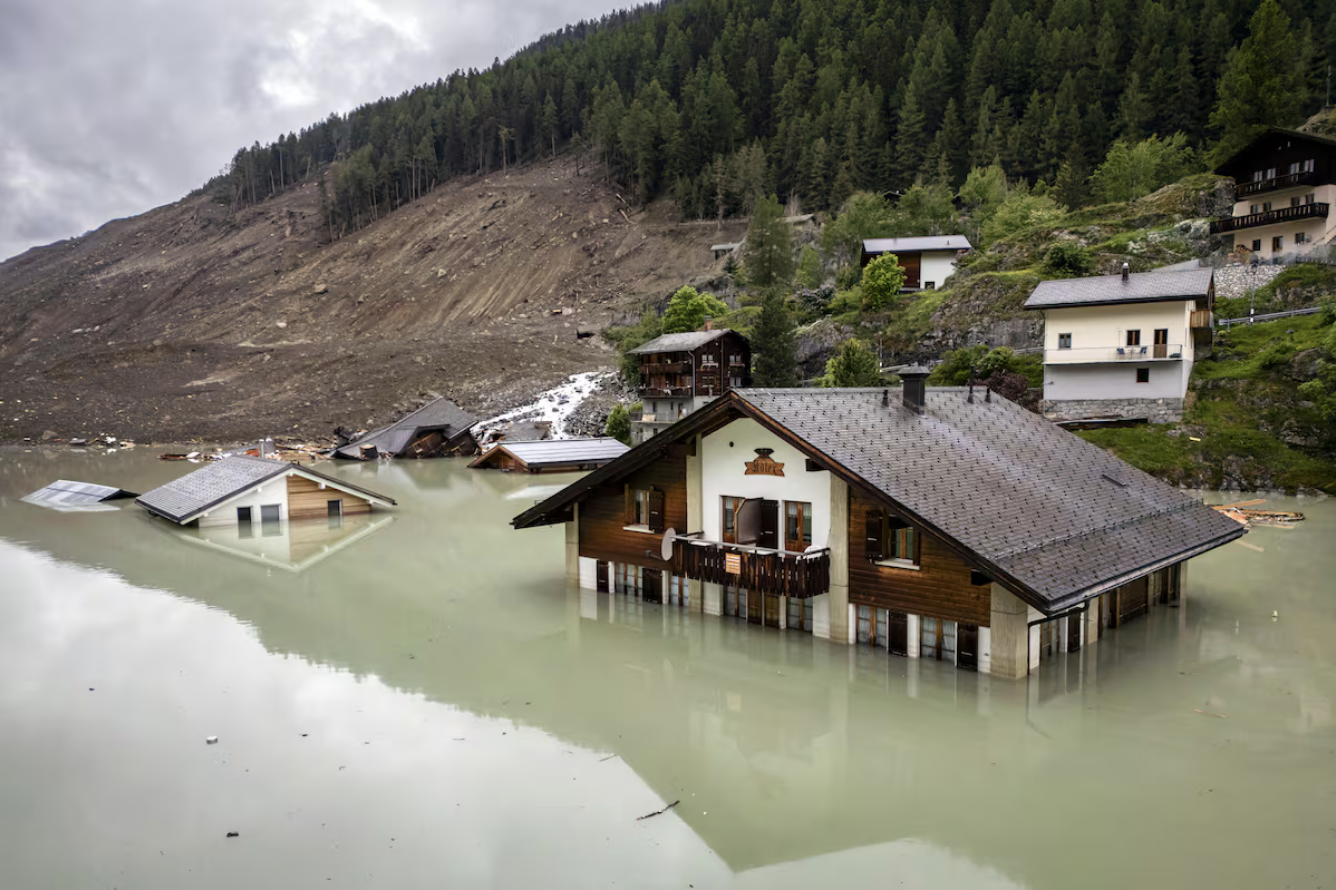
Aerial view of the Swiss village of Blatten one day after the massive avalanche triggered by the collapse of the Birch Glacier
Michael Buholzer (AP/LaPresse)
Alongside solidarity and donations, the disaster attracted a rush of external actors: planning offices, architects, and investors arriving with offers to “help” that were often also bids for lucrative projects. One person involved described these actors as “vultures preying on the people in the valley,” capturing the sense that the influx of money and proposals was as threatening as it was supportive
For local councils, already managing emergency logistics and long‑term uncertainty, this created administrative overload and deep mistrust. A concept for an online‑offline meeting place, including the Decidim platform, was drafted and even approved by the valley council, but implementation “got bogged down in some administrative quagmire.” Residents were ready; the platform was ready, but the link was never officially shared
In Valais, maintaining social contact and cohesion after the catastrophe was treated as a “soft” concern and therefore not prioritised amid the flood of “hard” tasks, although, for a dispersed community, relational infrastructure is a precondition for any meaningful reconstruction debate
Not because the software failed. Not because people rejected participation. But because the administration entered a state familiar to many crisis territories: cognitive overload. Emergency logistics, reconstruction pressures, media attention, opportunistic investors, political uncertainty: all collided simultaneously.
And under these conditions, maintaining social connection became classified as “soft.” Optional. Secondary. But anyone who has experienced catastrophe knows the opposite is true.
After a disaster, social cohesion is not decoration. It is infrastructure.
Without spaces where people can remain connected, argue, grieve, remember, and imagine futures together, reconstruction becomes purely technical. Roads get rebuilt. Houses return. But the public square disappears.

Subversive participation, not plug‑and‑play methods
Lars Kaiser comes from a background in spatial planning in Switzerland, where participation is often tied to planning law and urban transformations rather than grand constitutional debates. He describes UrbanEquip’s mission as the “democratisation of urban development,” with a focus on projects that are both fun and capable of having a real impact on who shapes cities and towns. That mix of playfulness, income, and structural effect sits uneasily in a disaster context where administrations instinctively strip out anything that looks like experimentation or emotion.
What Lars Kaiser understands, perhaps because of his work in urban games and conflict-based participation, is that democratic spaces cannot be designed around fantasies of permanent collaboration. Cities are full of conflicting incentives. Residents, developers, politicians, investors, planners: they rarely want the same thing. Pretending otherwise produces sterile participation rituals that collapse under real pressure.
Seen this way, the ghost platform of Blatten becomes deeply revealing.
The problem was never the absence of technology. The infrastructure existed. The deeper issue was that the surrounding institutional ecosystem no longer had the emotional bandwidth to host democratic space itself. The square had been built, but no one could keep the lights on socially or politically.
It also reveals that social cohesion is not a secondary or “soft” concern after catastrophe. For dispersed communities, maintaining connection, trust, and collective discussion is part of the essential infrastructure of recovery, just as important as housing, logistics, or engineering.
And this may be one of the central questions for the future of digital democracy.
Not whether platforms can scale technically. Not whether interfaces look modern. Not even whether participation rates increase.
But whether societies know how to treat democratic infrastructures as essential infrastructures; especially during moments of urgency.
Because public squares are strange things. Their value often becomes visible only once they disappear.
You notice it after floods, blackouts, displacement, political collapse, or forced isolation. Suddenly what mattered was never only the pavement or benches themselves, but the possibility of encountering others repeatedly across differences. Of seeing conflict before it hardens into abstraction. Of maintaining some shared rhythm of collective life.
Digital democratic infrastructures are beginning to inherit this role.
Some will resemble giant federal transit systems, like the Brazilian ecosystem. Others may remain fragile temporary shelters, like the unrealised platform in Blatten. Some will smell like bureaucracy; others like activism; others like mutual aid kitchens assembled during emergencies.
Both experiences highlight how participation platforms are perceived politically. In highly fragile contexts flooded by consultants, investors, and external actors, Decidim risks being seen as just another service offer unless it is clearly rooted in public value, local trust, and long-term democratic commitment.
But perhaps the most important lesson from both stories is this:
Platforms are not simply tools we use to organise democracy. They are places.
And like all places, they require maintenance not only of servers and interfaces, but of trust, attention, conflict, memory, and collective presence.
At DecidimFest, this work sat at the intersection of code, care, and politics. It reminds us that safer digital spaces do not appear only in moderation policies or community guidelines, but in every choice that makes it easier for the next municipality, the next student, or the next civil servant to join, learn, and maintain the digital commons we depend on.
This article forms part of the INSPIRE Project, a Horizon Europe research initiative exploring intersectional inclusion, democratic participation, and participatory infrastructures across digital and physical spaces. Readers interested in the broader research context can explore the report Exploring the Intersection of E-Democracy Platforms, Urban Development Models, and Political Cultures (June 2025), which offers a conceptual foundation for understanding digital participation platforms as civic infrastructures shaped by political cultures, urban assemblages, and spatial logics.
__
Cover image inspired by the work of Elise Racine