The first module of the School of Creativity and Democracy, The Vertigo of Dialogue and Deliberation, lays the foundations for understanding participation as a dynamic, unpredictable and constantly changing process, where convictions are continually challenged.
With the help of several experts, we explore the process of deliberation: first, we discuss the concept of creative democracy and how it relates to modern democracy; also, we analyze the cognitive conditioning factors that hinder participatory processes; finally, we reflect on the practice of deliberation and some of its most important aspects.
Creative democracy
It all starts with a conceptual shake-up. Cristian Palazzi, in charge of citizen mobilization and advocacy at Platoniq, we understand that democracy is not a static structure, but a living organism that is created, cared for and transformed collectively. Inspired by María Angélica Luna Parra’s concept, we propose to think of creative democracy as “the right to create more rights”. A democracy that is not born from laws, but from the imagination, desire and political energy of the citizenry. We are creative beings, and therefore, democracy is what we make, not what we simply inherit.
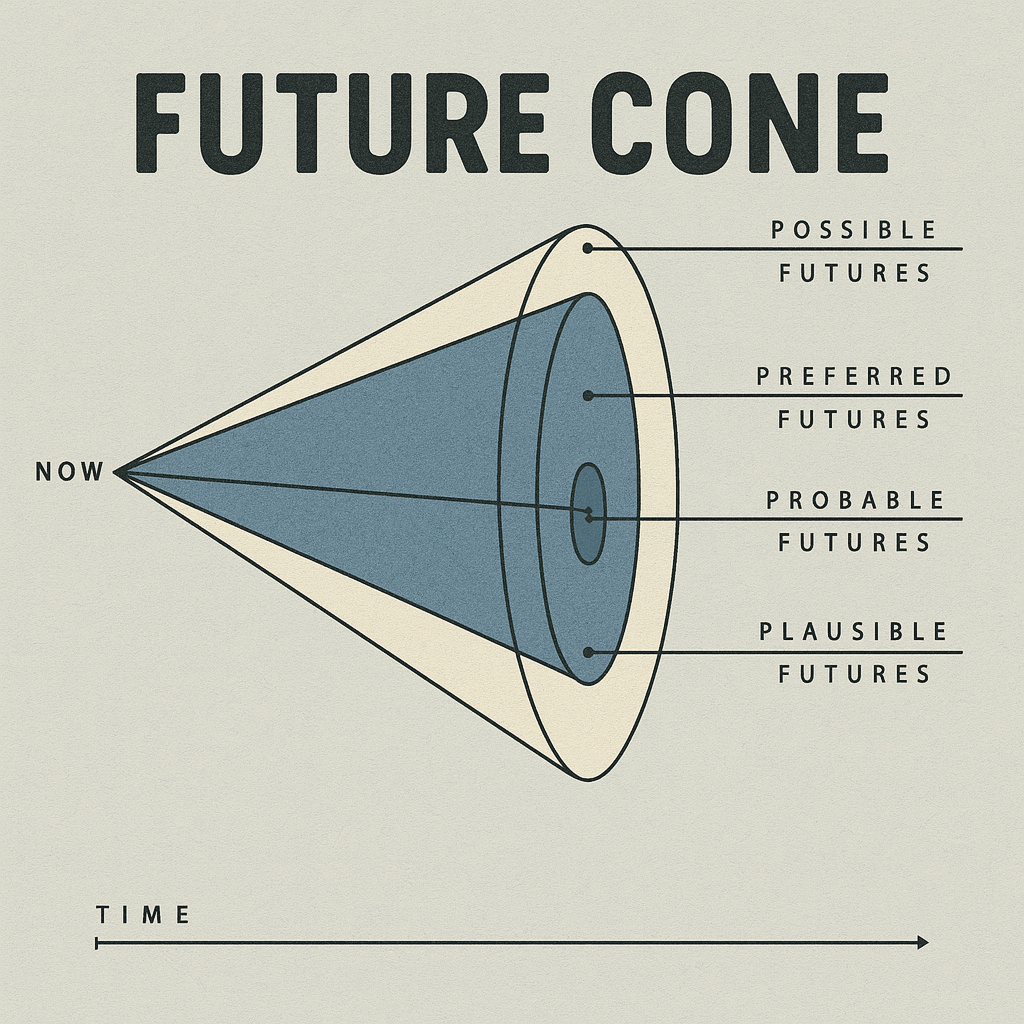
The “future cone” teaches us that if we do not act with intention, the future will only be an extension of the present. The likely option is not to change. So the preferable option requires stepping out of the comfort zone and creating infrastructures for the unexpected. Where other voices do not reach, where laws no longer suffice, creativity can open new democratic paths.
We see this also in historical and contemporary examples. From Fannie Lou Hamer and her radical slogan: “No one is free until everyone is free”, to Kimberlé Crenshaw and her theory of intersectionality, we understand that oppressions do not come alone and neither do struggles: they intersect, they feed back, they transform each other. We hear the echo of Sojourner Truth, the momentum of Tarana Burke with #MeToo, the lucid denunciation of Moya Bailey with the concept of black misogyny, and the collective cry of Cristina Fallarás with #Cuéntalo. Movements such as 15M, Black Lives Matter or Refugees Welcome not only demanded changes, but also created languages, imaginaries and political concepts that we use today to measure public action. All this leads us to understand that creativity is not a luxury, but a condition to expand democracy.
Patricia Luján, from her experience as an advertising creative and founder of School of Feminism, teaches us how to use marketing as a political tool at the service of rights. Through her campaigns for 25N or 8M, we understand that creativity can also be a form of public pedagogy: clear, direct and viral.
Deciding changes with words
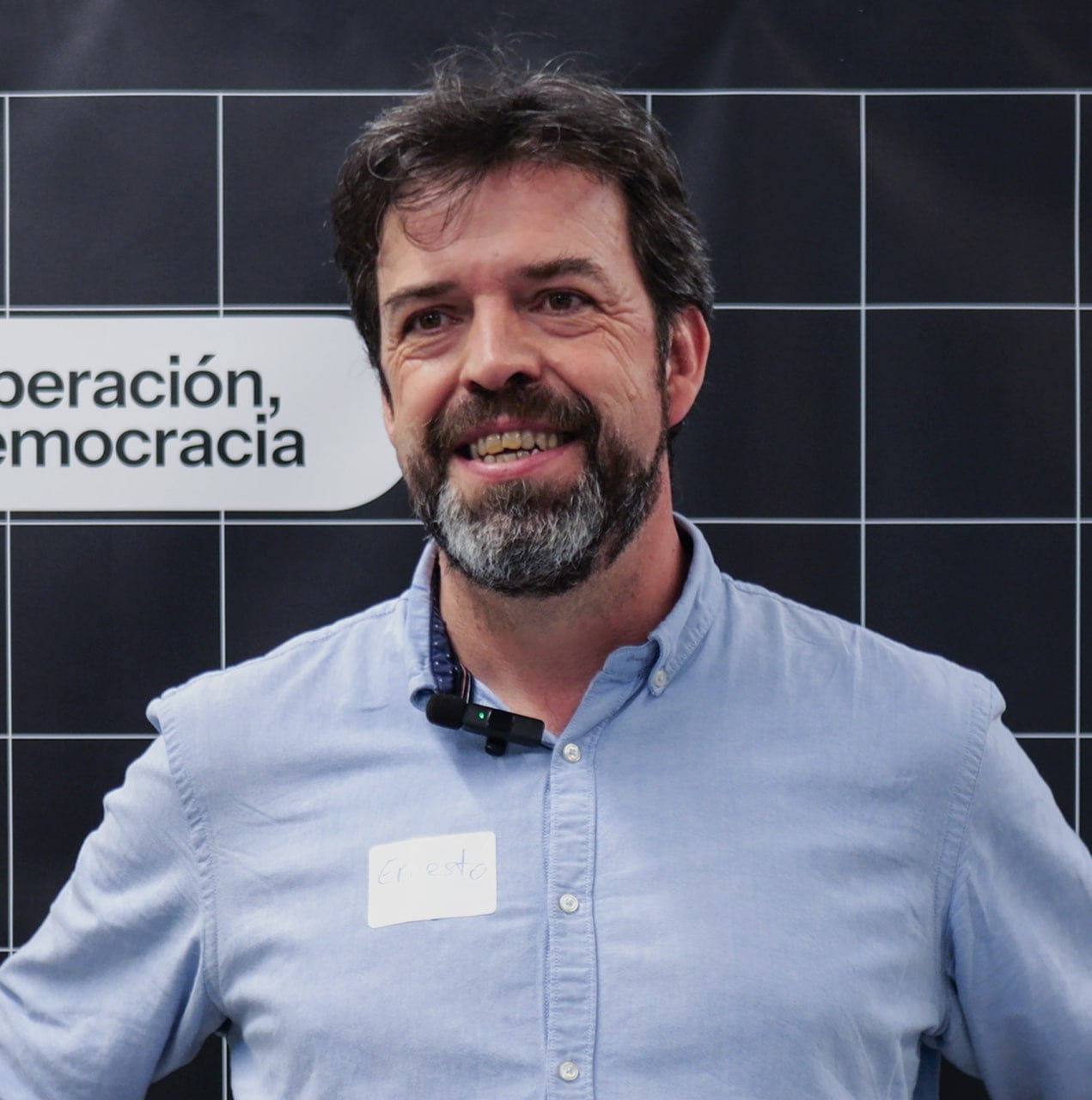
But imagining is not enough: we need to know how we think in common. And this is where Ernesto Ganuza, CSIC researcher and expert in deliberative democracy, comes in. With him we disarm our own assumptions: we are not isolated minds loaded with values that are expressed automatically. We are situated beings, traversed by our histories and biases, who reason in interaction with others. Deliberation is not about having the strongest opinion, but about listening to different perspectives and building shared common sense. What is important is not the diversity of opinions, but the diversity of trajectories.
We are situated beings, traversed by our histories and biases, and we reason in interaction with others
Ganuza alerts us to the risk of polarization and bubble thinking, and shows us how to avoid it by designing participatory processes that leave no one out from the start. The convening, diagnosis, formulation of proposals and follow-up must be planned with clear criteria of fairness, representation and care. Because participation is neither spontaneous nor neutral: it is a process that must be woven with method and affection.
Deliberation put into practice
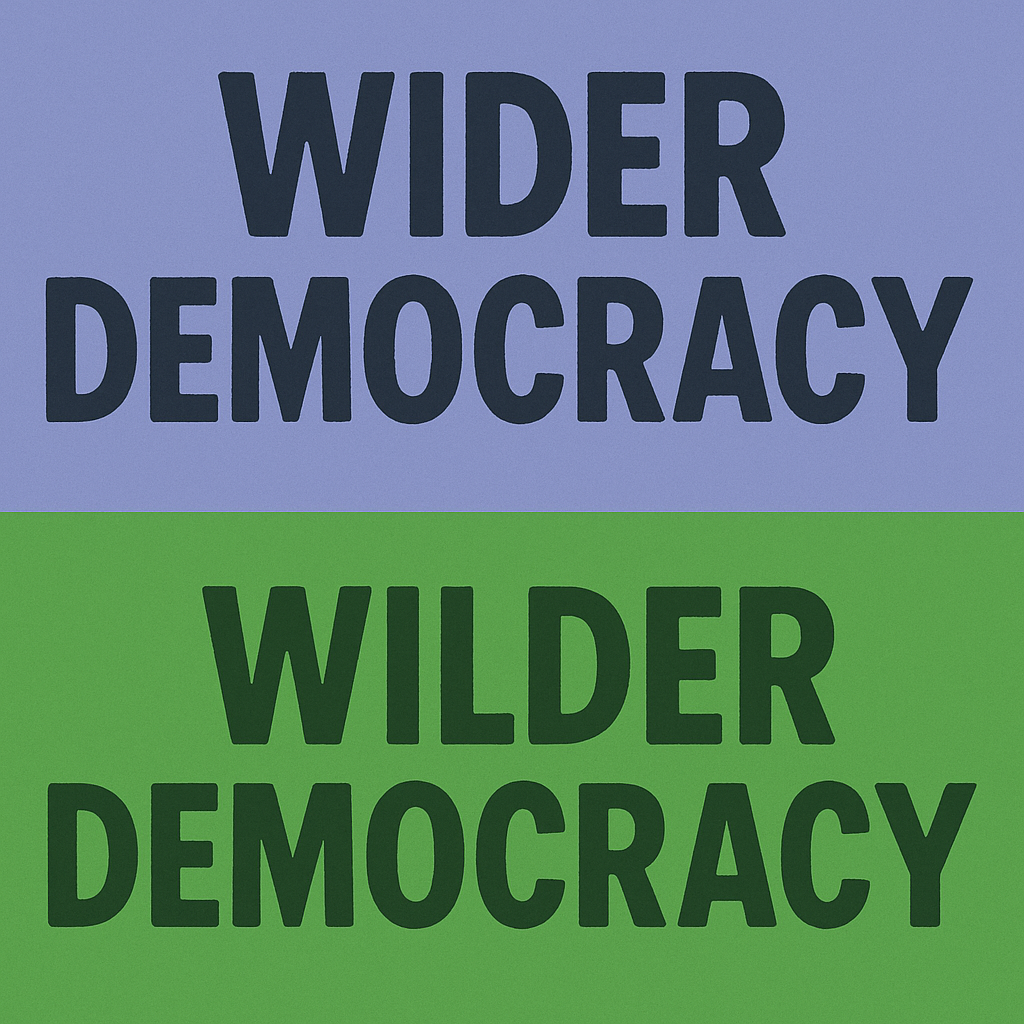
At this point in the journey, Olivier Schulbaum, strategic director of Platoniq, and Oliver Escobar, researcher at the University of Edinburgh, take us even further. Escobar teaches us that institutional participation (Wider Democracy) must coexist with and learn from the freer, more open and creative forms of citizen participation (Wilder Democracy). How important it is to be able to combine dialogue and deliberation (D+D model), where first we build relationships, understanding and shared narrative, and only then we solve and decide from collective intelligence.
To participate well, one must know how to communicate well. It is therefore necessary to know how to distinguish between debate (imposition), dialogue (understanding) and deliberation (shared decision with public reasons). And for a process to be fair, it is not enough for us to like the result: it must feel legitimate in its form.
To achieve a truly just democracy, it is necessary to overcome the structural barriers that exclude the usual people. Deliberation in enclaves, for example, allows groups with common experiences - such as migrants, racialized people or young people with mental health problems - to first build their voice in a safe environment before being exposed to public debate. Positive discrimination, properly understood, is not a privilege: it is a tool to level the playing field and ensure real freedom to participate. This is what the School of Creativity and Democracy proposes.
Elaboration of a citizen participation process. Step 1: Designing a sample
To close this module, we worked on the design of a sample for a real participatory process. Far from being a simple technical exercise, this is a deeply political practice:
- Who do we call?
- Who is left out?
- What criteria do we use to imagine commonality?
And in this way we return to the origin of everything we have learned: to participate is to imagine, deliberate, create, propose, facilitate and sustain.
Because if something is clear, it is that democracy is not given: it is imagined, practiced and defended every day. And that is what the School of Creativity and Democracy proposes.