Interviews
Adrian Bua A Dialogue on Participatory Democracy, Capitalism and Co-optation



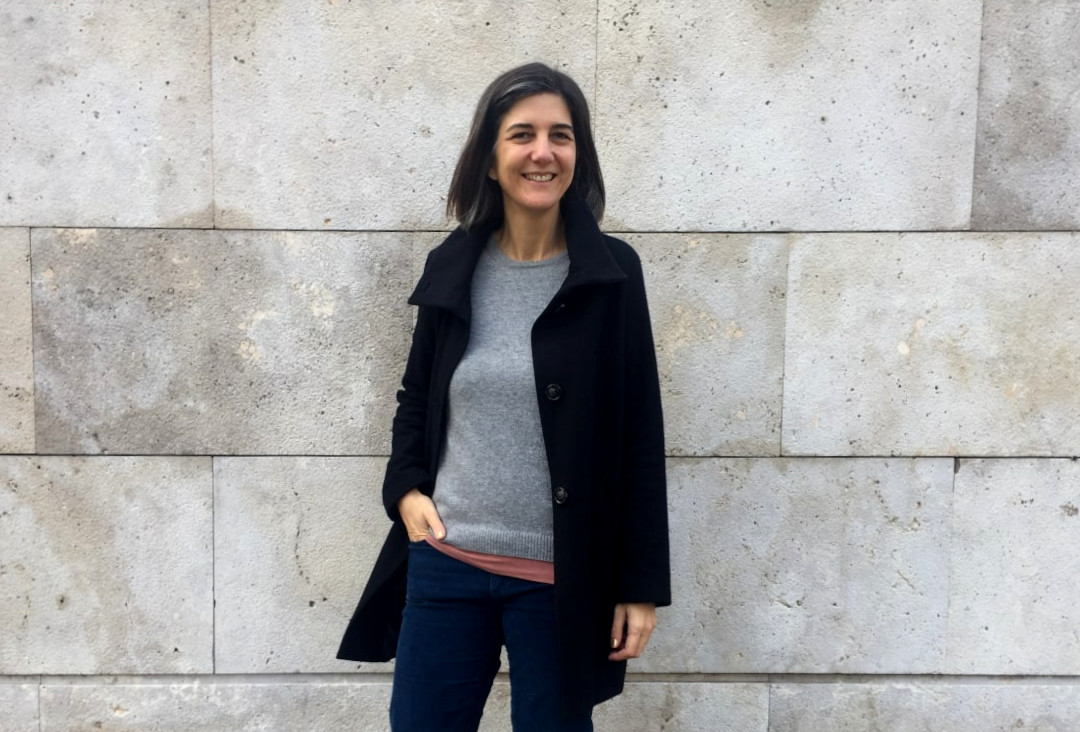
Adrian Bua is democratic theorist working at the intersection of democratic innovation, and critical political economy and sociology. Currently a postdoctoral researcher at the Universitat Autònoma de Barcelona, he has written extensively on participatory governance, radical municipalism and the political economy of democratic reform. Together with collaborators, he has examined how participatory institutions interact with capitalist structures, urban regimes and shifting forms of state power.
His latest work moves between normative democratic theory and a sociological analysis of fields, drawing on Marx and Bourdieu to interrogate the material conditions of participation. Rather than treating democratic innovation as inherently emancipatory, Bua insists on analysing it within the constraints of accumulation, institutional power and unequal distributions of capital, in all its forms.
Participatory democracy promises inclusion, empowerment and redistribution. Yet it unfolds within capitalist societies structured by growth imperatives, investment logics and unequal distributions of capital.
The conversation begins from that structural tension. Does participatory governance redistribute power, or does it negotiate its terms within existing accumulation regimes?
Olivier Schulbaum: Participatory processes often present themselves as transformative. But if they operate within capitalist political economy, are they not inevitably constrained by it?
Adrian Bua: Participatory processes are always embedded in a socioeconomic context. The system we live in produces a series of interests and limits. Recommendations emerging from participatory processes frequently clash with the requirements of capital accumulation.
Take citizen assemblies. They may produce ambitious recommendations around regulation or redistribution. But if the broader economic strategy remains oriented toward growth and expansion, those recommendations confront systemic pressures. Similarly, when participatory recommendations affect private investment interests, state actors may decide not to implement them in order to avoid discouraging investment.
These limits are structural rather than accidental. Participation operates within them. It does not escape political economy.
OS: In your work on participatory governance, you argue that participation has been co-opted. What has shifted?
AB: Contemporary forms of participatory democracy were originally linked to redistributive justice and the reinvention of socialism. Participatory budgeting in Porto Alegre is an example. It was about reallocating resources to, and empowering, working-class communities.
Over time, that critical orientation was replaced by a more functionalist vision. Participation became a tool for increasing legitimacy and trust in institutions, it became “governance driven”.
Sonia Bussu and I argued for democracy-driven governance instead. Institutional processes should expand democratic and associational activity rather than merely stabilise existing structures.
There is therefore a struggle over what participation is for.
This struggle is not only ideological but structural. It plays out in the field dynamics of participation itself, as I try to theorise in my latest work
OS: You’ve argued that participatory processes operate within structural limits imposed by political economy. But within those limits, where do you see room for agency? What is the intention behind developing a Democratic Capabilities Framework?
AB: Our starting point, and here I mean the work developed together with Lucy Parry and Oliver Escobar, was precisely that tension. On the one hand, participatory processes are constrained by political economy. On the other, they are not entirely determined by it. There are spaces of change, possibilities of agency, and moments where participation can shift outcomes.
We wanted to conceptualise those possibilities more systematically.
That is why we turned to the capabilities approach developed by Amartya Sen and Martha Nussbaum. It is a theory of justice that focuses not only on formal rights but on the actual resources and conditions people need in order to realise their goals. It asks what people are effectively able to do and to be.
The capabilities approach has influenced frameworks like the United Nations Human Development Index. What we are trying to do is bring that philosophical grounding into the field of democratic participation.
- What resources do citizens need in order to participate meaningfully and to have real impact?
- What conditions enable their influence to be consequential rather than symbolic?
So instead of asking simply whether participation exists, we ask: what resources do citizens need in order to participate meaningfully and to have real impact? What conditions enable their influence to be consequential rather than symbolic?
The Democratic Capabilities Framework is therefore justice-oriented. It does not assume that formal inclusion is sufficient. It attempts to theorise the resources, supports and institutional conditions required for effective participation, especially for those who are structurally marginalised.
OS: From a Bourdieusian perspective, how do you see democratic capabilities interacting with existing forms of capital, specifically in the field of participation?
AB: That’s a very good question.
At one level, you could say that democratic capabilities are the particular forms of capital required in the field of participation.
Beyond the generic forms of capital (economic, cultural and social) each field has its own field-specific symbolic form of capital. That symbolic capital is constituted by the predispositions, attributes and skills necessary to operate effectively in that social universe.
These field-specific forms combine with the generic forms of capital to give people power, status, credibility, etc.
So one way of answering your question is to think of democratic capabilities as the kinds of capital required to take part effectively in democratic life.
Now, one thing that complicates this is that symbolic capital is dynamic. It is not static. Recognition, which is essentially what symbolic capital consists of, changes historically.
For example, what it means to be a “good academic” is not the same today as it was fifty years ago. Academic capital changes. And the same applies to the field of participation.
Different historical eras have valued different forms of participation and different ethics of participation. If we simplify somewhat, at the dawn of democracy, when rights such as voting were not widely distributed, there was a strong contentious ethic. Participation from outside institutionalised channels, including trade union militancy and protest, had particular value.
In contrast, today we see a landscape where institutionalised democratic innovations coexist with contentious politics. Contentious participation remains important, but collaborative, dialogic and consensus-oriented forms are also highly valued.
This represents a transformation in what counts as participatory capital.
Now, the Democratic Capabilities Framework was not designed as a fixed list. It was developed inductively, and there is an extent to which it is responsive to context. So it may already reflect this dynamism. That would be an interesting theoretical avenue to explore further, whether capabilities track changes in participatory capital across historical moments.
In terms of generic forms of capital, the distribution of economic, cultural and social capital shapes social status differences. So we would expect people with higher stocks of these forms of capital to also possess higher capabilities to participate in democratic life.
This is why the intersectional lens is so important. Participation needs to be designed equitably so that people can exert similar levels of influence, regardless of their starting position in the distribution of capital.
And I think the framework captures this in the emphasis on consequential or influential participation, that is, participation that actually makes a difference.
So democratic capabilities and generic capital do not overlap entirely, but they are certainly related, and that relationship could be explored more deeply.
OS: If marginalised communities acquire democratic capabilities, would that represent a counter-capital? A threat, perhaps, to existing structures of capital, especially if deliberation moves beyond consensus toward conflict?
AB: In Bourdieusian terms, I would not see it as a threat to capital itself. In Marxian terms it could be, but I think Bourdieu´s notion of capital is more useful for understanding participatory democracy, and politics more broadly.
So, rather than a “threat”, I would see it as new groups acquiring capital that enables them to exercise agency, to develop strategies and ambitions at a higher level. It would be a socially equalising dynamic. It would threaten status asymmetries rooted in unequal distributions of capital.
But it would not threaten capital as such.
A threat to capitalism, as in Marxist terms? That is a different question.
OS: But influencing democratic life already happens through protests and strikes. What difference does it make to acquire deliberative capacities and influence through participatory policymaking? Why not rely on contentious politics?
AB: I am very much in favour of social movements and contentious politics. As mentioned before, I have argued that the field of democratic innovation should move toward a more democracy-driven rather than governance-driven approach.
But I would challenge the romanticisation of contentious politics.
For one, contentious politics can be reactionary. But also, progressive activists, for want of a better word, are not outside the field of capital. In Bourdieusian terms, activists are part of the elite. Activism requires organisational capacity, cultural capital, social capital. Dominated groups have less access to those resources.
So while contentious politics is essential, it also reproduces certain asymmetries.
One of the values of democratic innovation, especially when approached through an intersectional lens, is that it can give voice to people who might not be represented even within activist spaces.
Because they have greater stocks of capital, the dominated-domimant become leaders and spokespersons, and can re-signify the demands coming from below to serve ends they pursue in other social fields
Bourdieu speaks of alliances between the generally dominated and the dominated fraction of the dominant class, activists, academics, intellectuals. These alliances can be vectors of change. But they are fragile. Because they have greater stocks of capital, the dominated-domimant become leaders and spokespersons, and can re-signify the demands coming from below to serve ends they pursue in other social fields. There is a more imperfect correspondence of interests than in the case of alliances between different fractions of dominant elites.
This is why democratic innovation and contentious politics should be seen as complementary rather than mutually exclusive, as I tried to theorise with Sonia.
OS: You conceptualise participatory capital as the degree of credibility with which an agent can claim to promote desirable and achievable social change. How does that relate to democratic capabilities? Are capabilities a precondition for participatory capital, or are they shaped by struggles over its valorisation?
AB: You could understand participatory capital as the credibility agents possess within the field when they claim to advance social change. Democratic capabilities contribute to that credibility.
But participatory capital is not simply the sum of capabilities. It depends on recognition. It depends on how the field values particular dispositions.
So there is a circular dynamic. Capabilities help build participatory capital, but the value of those capabilities is shaped by struggles over what change is considered realistic, desirable or legitimate.
As participatory practices move closer to the field of power, those criteria shift.
OS: You argue that as participatory practices move closer to the field of power, co-optative pressures intensify. How can democratic capabilities avoid becoming heteronomous, which you argue in capitalist societies means they are shaped primarily by the economic pole of the field of power?
AB: The issue is not so much protecting capabilities from heteronomy as recognising that scaling up changes the dynamics. When participatory initiatives move closer to decision-making centres, new actors enter the field with different interests. That is when co-optation pressures intensify.
But scaling up also inserts new practices into the field of power. Change often occurs through gradual insertion rather than rupture. Participatory practices can influence powerful actors, even if, or even perhaps because, they are absorbed. So, I argue that some change does occur through co-optation, however constrained.
The question is whether agency expands faster than heteronomy closes it.
The discussion then turns toward infrastructure: how participation is materially organised.
OS: In our work on Political User Experience, we draw a metaphor between physical democratic infrastructures in the city and digital participation infrastructures. If we treat a digital participation platform as a social field, what forms of capital are being accumulated there?
AB: If a digital platform is treated as a field, then specific forms of symbolic capital emerge within it. Digital literacy, rhetorical fluency, responsiveness, these can become forms of capital.
But platforms are not neutral. They are often designed around efficiency, scalability and managerial logics. Those logics can reproduce heteronomy.
The key question is whether the design creates space for autonomous deliberative practices or embeds participation within administrative rationality. Digital participation can expand access, but it can also intensify managerial control.
OS: In your work on urban regime contention, you examine how participatory governance interacts with urban regimes. How do democratic infrastructures — both physical assemblies and digital platforms alter the balance of forces within those regimes?
AB: Participatory infrastructures can alter the balance of forces if they redistribute symbolic and organisational capital. Physical assemblies can generate collective capacity and new networks. Digital platforms can lower thresholds of entry.
But urban regimes are resilient. They are structured by coalitions between political and economic actors. Participatory infrastructures can influence those coalitions, but they can also be absorbed by them.
Whether they become regime-shifting devices or stabilising mechanisms depends on how they interact with existing power structures, and the question requires empirical analysis
Hybrid participation, mixing online and face to face spaces, is often presented as the solution: more inclusive, more efficient.
OS: Does hybridity expand autonomy in the field of participation, or does it deepen the penetration of the field of power into local democratic spaces?
AB: Hybridity can expand access and flexibility. But it can also extend managerial oversight. Online components may introduce new metrics, new forms of monitoring and new efficiency expectations.
So hybridity is not inherently emancipatory. It can either expand participatory capital or reinforce heteronomous logics.
The conversation then moves to time, not as scheduling, but as structure.
OS: In your Bourdieusian analysis, how should we understand time within this field? Is time itself a form of capital unequally distributed across agents?
AB: Yes. Time is profoundly unequally distributed, and its quality differs depending on the forms of capital one possesses.
Bourdieu speaks of the scholastic disposition: an important part of this is the privilege of having time to step back and analyse the world, as if it was made for the scholar to observe. That distance from necessity allows that kind of reflection. Others are immersed in more immediate necessity and lack that privilege.
So, time accelerates inequality. Those with capital can convert time into advantage. Those without capital may have time but lack the resources to use it productively.
Participation requires sustained engagement. So temporal inequality becomes a political issue.
OS: Participation requires time, emotional energy and cognitive labour. Is there a risk that participatory governance extracts unpaid democratic labour while leaving economic structures untouched?
AB: There is that risk. Academics and practitioners of participatory democracy occupy contradictory positions. They are committed to empowerment but embedded in institutions that demand outputs, reports, policy products, publications.
Sometimes the product becomes more important than the democratic activity. This extractivism does not necessarily arise from bad faith. It arises from structural positioning.
Participation can empower. But it can also be appropriated as a resource.
Temporal inequality also shapes who can remain engaged over time.
OS: Deliberative processes unfold sequentially ( meetings, follow-ups, consultations). How do economic precarity and labour market conditions shape who can sustain long-term engagement?
AB: Economic precarity makes sustained engagement difficult. Capitalist labour markets advantage those with stable income and flexible schedules.
Those with secure capital endowments are structurally better positioned to maintain long-term engagement. So capitalism indirectly shapes the composition of participatory fields.
Time is not neutral. It is structured by economic conditions.
The final movement of the conversation turns toward technological change.
OS: AI promises productivity gains. But does it reduce the labour necessary to live, or does it expand the terrain of capital accumulation into language, culture and time itself?
AB: Whilst I am not an expert, I do think that AI increases productivity. The question is what happens to those gains. Under private ownership, productivity gains become profit for owners rather than free time for everyone else.
Marx distinguished between formal and real subsumption. Formal subsumption occurs when capital appropriates the product without reorganising the production methods. Under real subsumption, capitalism organises the production process itself, reducing the role of human creativity from it, with the logical endpoint that we come to think that we depend on that production process and cannot imagine an alternative.
I think AI could lead to the real subsumption of intellectual labour
I think AI could lead to the real subsumption of intellectual labour. For example, universities are already formally subsumed under capital, especially in more neoliberal countries like the UK or the USA. There is still operational autonomy, but AI may push intellectual labour toward real subsumption by separating producers from control over their own processes.
This could proletarianise intellectual and cultural labour — journalism, design, programming, academia.
Without democratic ownership, AI is likely to accelerate inequality and concentrate control over symbolic production.
The dialogue pauses here.
Participation builds capabilities within unequal fields. It expands agency but remains structured by capital. It risks co-optation even as it generates new forms of participatory capital.
Democratic innovation does not escape political economy.
It negotiates with it.
The unresolved question is how far that negotiation can go.
After the Conversation
When the conversation ended, some threads were informally revisited – we summarise the main points of the conversation between Olivier and Adrian below.
If democratic capabilities depend on time, and if time itself is structured by capital, then technological transformations that reorganise labour and attention cannot remain outside the analysis of participation.
Adrian’s account makes clear that participatory governance operates within capitalism and social field dynamics. It accumulates symbolic capital, risks heteronomy, negotiates co-optation. It depends on time, organisational capacity and material conditions.
But what happens when the very conditions of labour, cognition and time are being reorganised at scale?
This is where the question of artificial intelligence enters, not as a technological curiosity, but as a political economy problem.
AI, Labour and the Capture of Democratic Time
AI undeniably increases productivity. The political question is what happens to those gains.
Historically, technological development carried the promise of reducing necessary labour time and expanding the realm of freedom. In Marx’s formulation, productivity could shorten the working day. Under capitalism, however, productivity gains are typically reintegrated into accumulation.
AI extends this dynamic beyond manual labour. It automates cognitive, linguistic and symbolic production. It extracts value from collective knowledge. It converts communication into data. It reorganises the means of symbolic production.
In Bourdieusian terms, this technological shift is also a reconfiguration of the field.
Ownership of models, datasets and infrastructures concentrates symbolic capital at unprecedented scale. Control over classification systems and generative outputs becomes control over epistemic authority. AI does not simply assist deliberation. It structures what becomes visible, legible and actionable.
If democratic capabilities depend on access to time, information and recognition, AI intervenes in each of those conditions.
It can reduce cognitive burden by summarising debates and lowering linguistic barriers. That may genuinely expand participation.
But it can also standardise discourse, accelerate closure and embed managerial logics into participatory infrastructures. Deliberative outputs risk becoming extractable data. Participation risks becoming an unpaid supplement to platform capitalism.
The contradiction is stark.
AI can enable democratic capability. Or it can intensify heteronomy within the field of participation.
The outcome depends on ownership, governance and design.
The Proletarianisation of Intellectual Labour
Many intellectual professions have long been formally subsumed. They retained partial autonomy while operating within market logics. AI may push toward real subsumption by separating producers from control over their own processes.
Generative systems trained on collective knowledge transform intellectual labour into raw material. Journalists, designers, programmers and academics increasingly operate within infrastructures they do not control.
The result may not be the elimination of intellectual labour, but its proletarianisation.
The classic proletariat was dispossessed from the means of production. Today, the means of symbolic production are increasingly privately owned. Control over language, data and models becomes a central site of power.
If this is correct, then the struggle over technological infrastructures also becomes one about developing democratic capabilities.
Time as a Democratic Battleground
Participation requires time. Reflection requires time. Solidarity requires time.
Under platform capitalism, time becomes fragmented, monetised and accelerated. AI intensifies productivity expectations while compressing response cycles. Temporal inequality deepens.
Those with stable income and secure schedules can sustain engagement. Those in precarious conditions cannot. Sequential deliberative processes structurally advantage agents with durable temporal capital.
Co-optation itself operates temporally. Movements generate insurgent participatory capital. Over time, fatigue sets in. Institutional, elite actors with stable resources absorb transformative energies.
Temporal exhaustion becomes a mechanism of de-politicisation.
If democratic capabilities are to remain transformative, they must address temporal justice directly.