Interviews
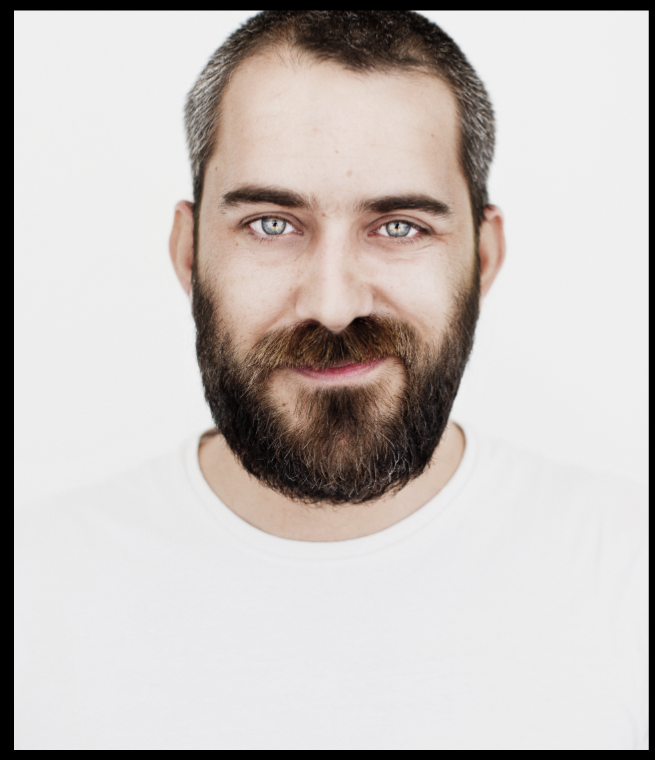
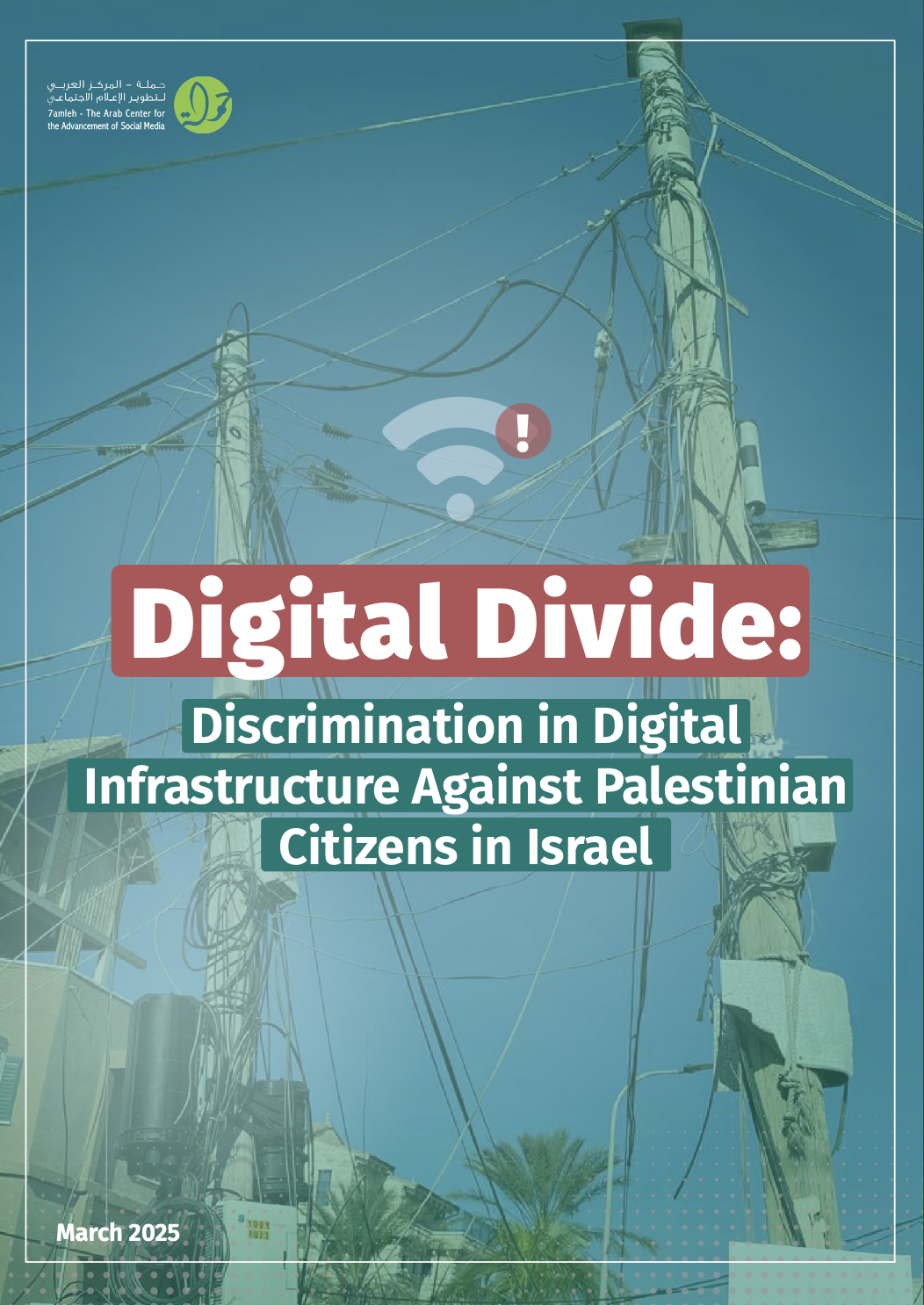
Taysir Mathlouthi "Digital rights are human rights." Palestinian public opinion in the digital sphere

What does it mean to speak, or to be silenced, when the digital sphere becomes one of the central battlegrounds of the Palestinian struggle?
In this interview, we sit down with Taysir Mathlouthi, EU Policy Advocacy Officer at 7amleh - The Arab Center for the Advancement of Social Media, to explore how Palestinian narratives are shaped, restricted, erased and defended in today’s platform-dominated public sphere. Moving from the structural biases embedded in content moderation systems to the political pressure shaping the decisions of Meta, Google and other global actors, Mathlouthi walks us through the mechanics of digital repression: over-moderation of Arabic, permissiveness toward Hebrew incitement, the illusion of technological neutrality, and the deep asymmetries of power that define online visibility for Palestinians.
Could you explain what 7amleh is?
Taysir: Hamleh is a Palestinian organization that focuses on digital rights. In Arabic, “hamleh” means “campaign” or “campaigning.” The “7” is just how we write the letter “ḥ” in Arabic when using the Latin alphabet.
Your background combines human rights, international relations, and disinformation analysis…
Yes. I studied political science, international relations, and human rights, but I’ve worked mostly on issues related to Cambridge Analytica, Julian Assange, and Snowden. That’s how I entered the field, and I began doing what we call online social listening, understanding how disinformation campaigns start and spread on social media platforms. I did that for the UN, particularly on natural disasters, but also to monitor far-right campaigns against migrants. I worked on the Turkey-Syria earthquake and also with UNICEF in Iran, analyzing disinformation campaigns against Afghan refugees.
How did you arrive at the field of Palestinian digital rights?
I’ve been working on Palestinian human rights and human rights in the Arab region in general for many years. I wasn’t specifically focused on Palestinian digital rights at first, but I was researching misinformation and disinformation in the MENA region (Middle East and North Africa). That’s how I entered the field, and I’ve been supporting the Palestinian cause for many years.
How would you describe the current situation of Palestinian voices in the digital space?
I would say it’s still a very niche voice. It’s often hard to convince people that digital rights are human rights. Some people, especially now with the genocide in Gaza, say it’s not the priority. But what we’re saying is that it is one of the priorities, because without digital rights, you don’t have telecommunications. You can’t call an ambulance or share your narrative on social media. More and more people are speaking out, Palestinians and pro-Palestinians alike, especially after October 7th and the censorship that followed.
In general, policies decided within Meta or Google are against Palestinians
Many people who were previously unaware of what was happening in Palestine started noticing online censorship on platforms like Instagram and how traditional media framed Palestinians. That’s when the Palestinian voice began to rise more strongly.
Do you think there is algorithmic censorship targeting these people?
Yes, there’s a paradox. Digital platforms are not neutral; they are for-profit businesses. They defend their own interests and don’t necessarily promote content that benefits society. At the same time, they are opportunistic. If something trends, they’ll push it, like what we saw with TikTok. But in general, policies decided within Meta or Google are against Palestinians. There’s a clear link between these platforms and far-right ideologies. They’ve complied with the Israeli government and with Trump, and they promote narratives that harm Palestinians.
Many platforms claim neutrality, but Hamleh argues that platform neutrality is an illusion. Can you give concrete examples of how this lack of neutrality affects Palestinians?
For example, with Meta, we know they have been over-moderating Arabic content. They use what’s called a classifier: a database of words to moderate a language, and the Arabic classifier is overloaded. There are so many words flagged as suspicious that it reflects a racist assumption that Arabic is dangerous or linked to terrorism. One example is the word Shahid, which means “martyr.” Meta treated it as a sign of supporting terrorism, but in Arabic and in the Palestinian context, it simply means someone who has been killed. It could refer to a child killed in Gaza. Meta didn’t care to understand these nuances.
At the same time, Hebrew moderation is minimal because Meta considers Hebrew a “small language” and not a strategic priority, even though Danish, a smaller language, has a full classifier. In conflict areas like Israel and Palestine, Hebrew should be well-moderated because of incitement and harmful content. In our latest report on Meta, we showed that the company allowed hate speech and incitement on Instagram and Facebook, posts by Israeli leaders calling for ethnic cleansing and violence against Palestinians. The same happens with Google on YouTube. They allow such content in Hebrew while over-moderating Arabic posts. When they tell us these are algorithmic mistakes, we don’t accept it. These companies are richer than entire countries. They have the resources to do better moderation.
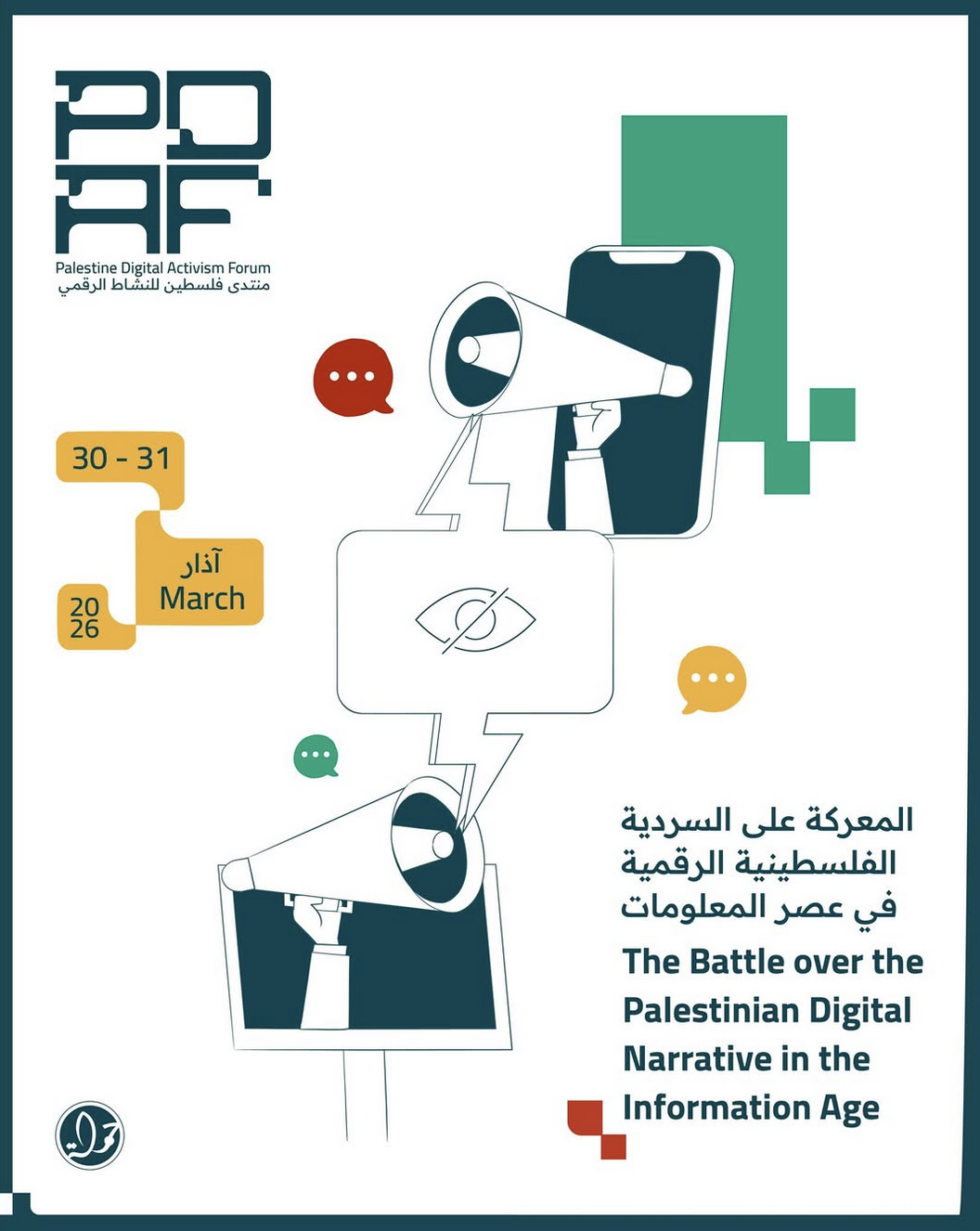
7amleh organises the Palestine Digital Activism Forum 2026
You developed the Digital Record as a community tool to document and make visible digital representation. How did this initiative come about, and what are its main objectives involving the community?
The thing is, if NGOs don’t do this work, no one will. It’s one thing to say platforms aren’t neutral, but another to prove it. For litigation and reporting, you need evidence and we can’t get it without community support. We aim to empower users to understand how platforms shape their narratives and public image and to equip them to defend themselves. We ask for their experiences because each individual case is part of a systemic pattern of discrimination.
We support them pro bono if their content is deleted, if their accounts are suspended, or if they experience shadow banning. We help them file complaints and push back against censorship. In return, they help us by providing evidence, examples of account suspensions, the keywords that triggered them, cases of journalists being targeted, or incitement in Hebrew that wasn’t moderated. Some of our most valuable evidence comes from tech workers inside these companies, showing internal communications that prove such decisions are intentional.
How can this documentation be used to influence policy or raise awareness?
For example, in the EU we have the Digital Services Act (DSA), a new regulation to oversee big social media platforms. It includes mechanisms to file complaints when platforms make discriminatory or wrongful moderation decisions. The evidence we gather allows us to submit these complaints to the European Commission. We can’t do that without proof, so documentation is crucial.
You engage with EU institutions and policymakers. What kind of engagement do you have?
We meet with them three or four times a year. We meet with DigiConnect, which oversees the DSA, and with DigiMENA, which focuses on the MENA region and Palestine. We also engage with the EEAS, the European External Action Service, which deals with disinformation and foreign influence. They focus on Russia and China, but we tell them: look at Israel, because Israel is also shaping narratives within the EU.
Without storytelling, we can’t win. Storytelling reminds people of our shared humanity, something often forgotten
It’s not easy to work with them—you don’t always see results—but we share our reports and sometimes manage to push for small changes, even if it takes time.
Do you think EU institutions are willing to face the issue of digital repression of Palestinians?
When it comes to Palestine itself, I don’t think they care. When we talk about censorship in Palestine, they say it’s not their concern. But they start caring when we tell them Israel is buying ads targeting EU citizens. Then they pay attention because Israel is using the same strategies as Russia or China, and that’s seen as a threat to EU democracy.
Your lab emphasizes the importance of narratives in resisting digital repression. How can storytelling become a tool for collective power?
Without storytelling, we can’t win. Storytelling reminds people of our shared humanity, something often forgotten. It also allows us to control our own narrative instead of letting others tell our stories.
Social media platforms are essential. That’s why we don’t call for boycotts. We don’t yet have sustainable alternatives to platforms like Instagram, so we have to use them strategically. If we communicate effectively, we can achieve great things. After October 7th, many people changed their views on Palestine because of what they saw on social media, since traditional media wasn’t showing the reality.
A good example outside Palestine is the new mayor of New York, Mamdani. He didn’t win only because of Instagram, but his messages about community and affordability became so strong on social media that people outside New York talked about him. If we use these platforms wisely, they can work in our favor, though they are complex tools.
In this context of storytelling, what lessons have emerged from Palestinian communities facing political transformation?
I don’t want to use the word “resilience” because Palestinians are tired of being called resilient. They don’t want to be resilient; they just want to be free and live normal lives. That’s the minimum they deserve.
But we’ve learned that even amid genocide and war, people can still raise their voices and share messages. If your message is rooted in values, ethics, and human rights, people will eventually hear you.
Without Palestinians sharing what’s happening, public opinion wouldn’t have shifted toward them. We probably wouldn’t be talking about Sudan or Myanmar either.
Thanks to them, we’re seeing political and cultural shifts—toward human rights and progressive values—even as the far right gains ground. It’s a balance, but without Palestinians, we wouldn’t have today’s politically engaged youth or people boldly opposing their governments. That’s powerful, especially after years of apathy post-COVID.
For ordinary citizens, what can they do to support or participate in this process of digital resistance and solidarity?
Share truthful information. Follow credible journalists and media accounts. Post on social media, even small things. I know people fear losing their jobs or being judged, but even small, humanitarian posts make a difference.
Raise your voice. One person can influence another. Support grassroots organizations, get involved in your neighborhood or local community. Political change can’t happen without collective, community-based support. Sharing truth and following social media platforms that support Palestinian digital action are key.
Conclusions
What emerges from Mathlouthi’s reflections is a simple but unsettling truth: digital rights are not an accessory to political struggle; they are part of its core terrain. In the Palestinian context, the digital sphere is not merely a space for expression but a fragile lifeline where documentation, memory, and survival depend on infrastructures designed far away and governed by opaque, often hostile decisions.
The conversation makes clear that the stakes are not abstract. Content moderation systems, linguistic classifiers, platform policies, ad targeting, and algorithmic invisibility all become instruments that can either amplify a community’s voice or erase it. In Palestine, these technical decisions shape who is heard, who is vilified, and who becomes invisible at the very moment visibility means protection.
This resonates deeply with Platoniq foundation’s commitment to building digital Safe(r) Spaces. Not “safe” in the sense of insulation or neutrality; which platforms routinely fail to provide, but safer in the sense of being consciously designed to reduce harm, centre marginalised voices, and make visible the power dynamics that shape participation. A Safe(r) Space is not simply a digital room. It is a political commitment: to transparency, to accountability, to community-led governance, and to the protection of those who are most vulnerable to erasure.
– Interview conducted as part of the Mozilla Festival, 2025