During the 2024-2025 academic year, two secondary schools in Madrid and Barcelona became spaces for democratic experimentation. There, Platoniq launched its Teaching Unit on Creativity and Democracy, an educational initiative that seeks to rekindle the participatory spirit of young people and turn classrooms into small laboratories of citizenship.
A proposal to rethink civic education
This initiative, designed for students in the 4th year of secondary school and sixth form, offers a programme that combines history, art, debate, collective reflection and digital communication. The aim is to learn to participate through deliberation, create through opinion and build the future of democracy together.
The Teaching Unit stems from the conviction that democracy is not taught through theory alone, but by practising it. Faced with a growing sense of disconnection between young people and politics, at Platoniq we propose an educational alternative where learning involves experimentation, empathy and collective creativity.
“Students tend to associate politics with something distant, boring or unattainable,” explains Cristian Palazzi, the Foundation’s educational coordinator. “We wanted to show them that democracy is something that is experienced every day, in the classroom, in their community, in the way they dialogue and make decisions.”
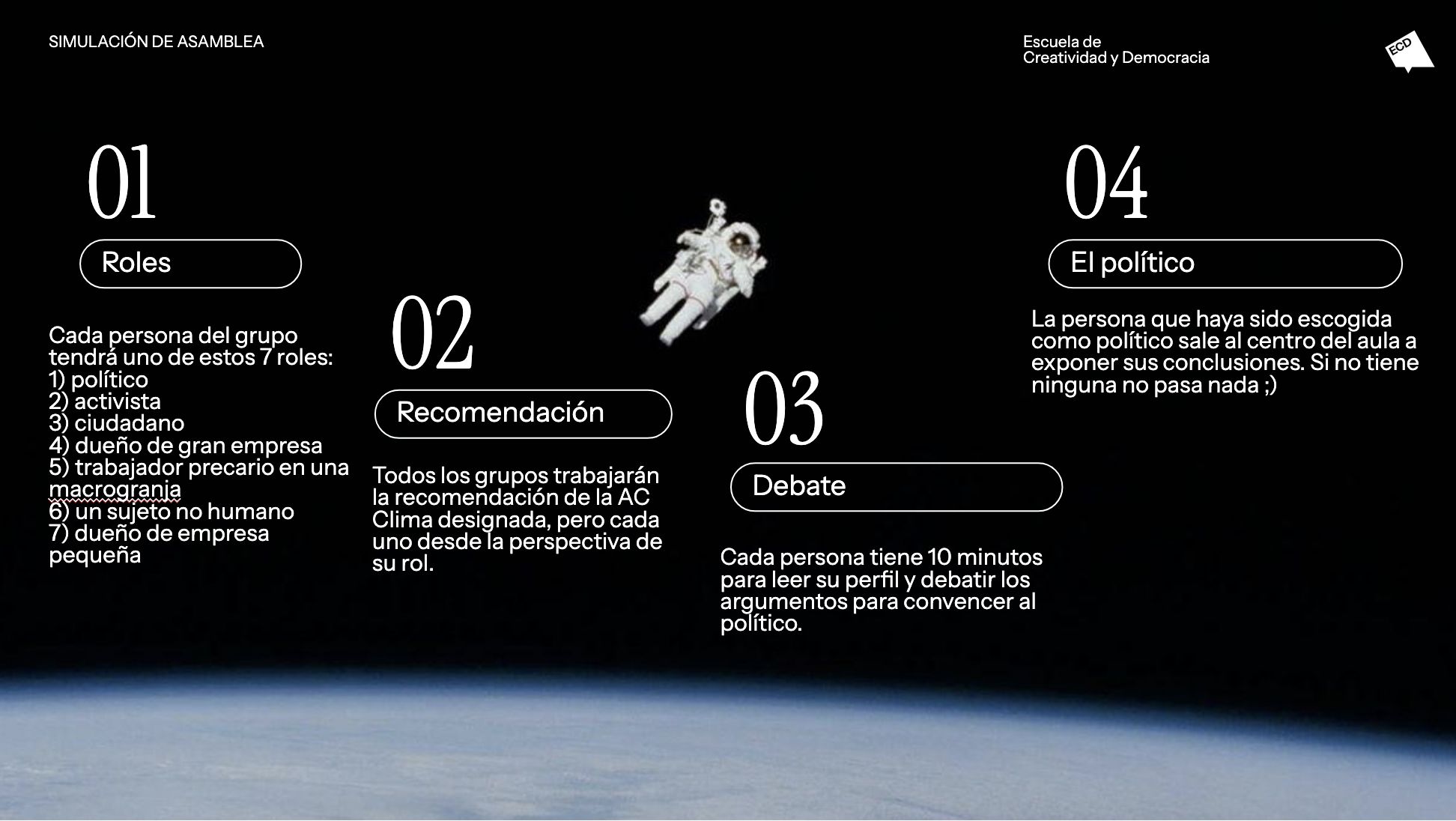
Materiales utilizados durante el taller
Platoniq (2025)
The proposal combines short theoretical sessions with practical exercises that introduce students to the real tools of citizen participation: Citizens’ Assemblies, deliberative processes and collective decision-making methods. The starting point is the Citizens’ Assembly on Climate in Spain (2021-2022), which brought together 100 people selected by lottery to discuss how to tackle the climate crisis and produced 172 recommendations. Based on these conclusions, students immerse themselves in the history and practice of deliberative democracy.
- Learning by doing
The Teaching Unit is organised into four sessions, designed as a progressive process in which students move from personal reflection to collective action.
It all begins with a creative activity. Through a positioning performance, young people express what they understand democracy to be, how they feel about politics, and what role they believe young people should play in decision-making. This initial exercise allows them to make their voices heard and break with the idea that citizenship begins at age 18.
I realised that democracy is not just about voting every four years, but also about listening to each other.
In the second session, students rediscover the origins of democracy, its historical debates, and the different forms of citizen representation. Through interactive mini-lessons and short quizzes, they compare ancient and modern systems, from Athens to contemporary Citizens’ Assemblies. Teachers highlight how visual and playful tools help to internalise complex concepts. “It was surprising to see how quickly they understood the difference between debate, dialogue and deliberation when they experienced it directly,” says a teacher from the Barcelona school.
One of the most intense moments of the experience is the role-playing game based on the Citizens’ Climate Assembly. Each group plays a role: politician, activist, citizen, worker, businessperson or even an animal raised on a macro farm. Based on recommendation 41 of the Assembly, the groups must argue, persuade and reach agreements. The result is a passionate debate that combines reasoning, emotions and creativity.
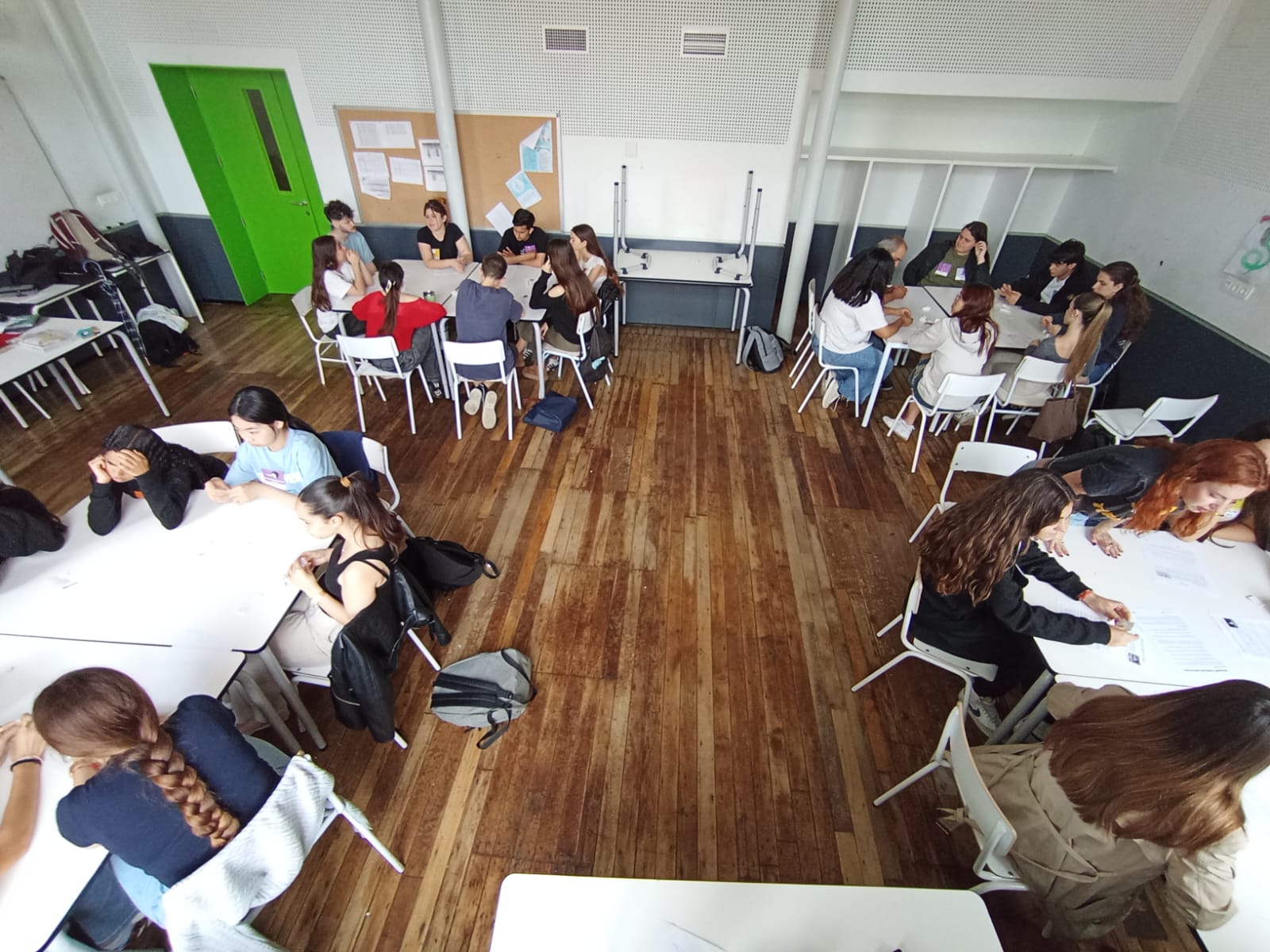
“I had to defend the owner of the macro farm, even though I didn’t agree with him. It was difficult, but I gained a better understanding of how other people think,” said one of the students. This type of dynamic allows students to understand the diversity of perspectives and the need for consensus, which are essential principles of any living democracy.
In the final sessions, theory becomes practice. Students organise their own mini-citizens’ assemblies, with roles for facilitators, experts and deliberating citizens. The topic: an environmental or social challenge chosen by the group. They then apply different voting and consensus-building techniques to decide on their final recommendations. The experience culminates in a creative communication exercise: the young people translate their proposals into short audiovisual formats, especially TikToks, with the aim of spreading ideas for change among their peers.
I never thought TikTok could be used to talk about politics. But that's exactly what we need.
Beyond the activities themselves, the true value of the experience lies in the transformation of the educational climate. Classrooms become spaces of trust, listening and collective construction. Students practise empathy, cooperation and critical thinking. The final co-design dynamic takes this logic to the school environment itself: a student assembly in which young people deliberate on the main problems facing their school. Coexistence, emotional well-being, participation and sustainability are some of the topics that arose for discussion.
The exercise not only reinforces the idea that participation has real consequences, but also involves teachers in processes of shared responsibility and governance. “Seeing them debate with respect and a desire to improve their school was very exciting. It’s just what democratic education should be,” said an ethics teacher.
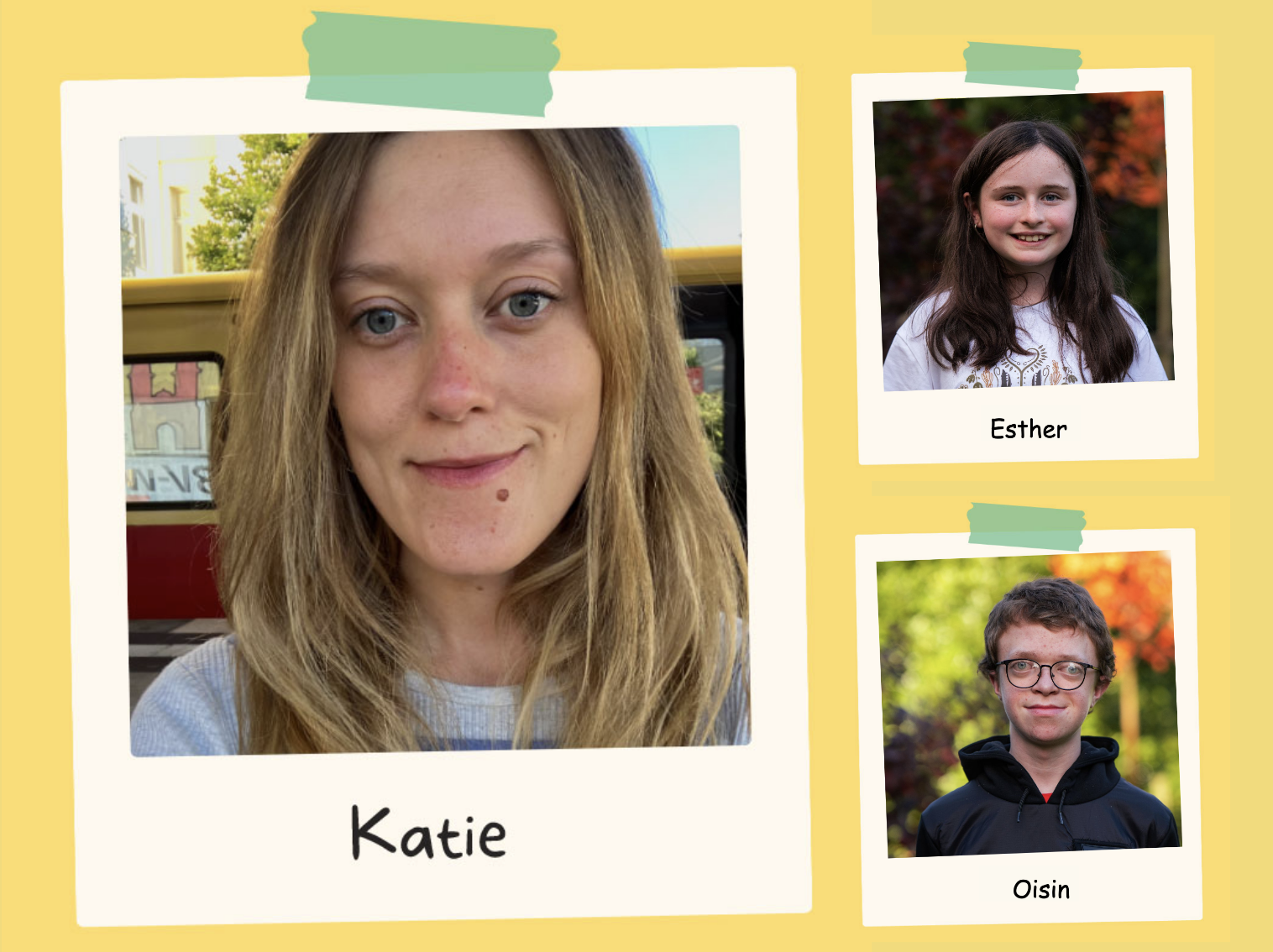
The Teaching Unit is based on Platoniq’s accumulated experience in participation and education. In 2022, the organisation developed the guide “How to hold deliberative assemblies in schools and colleges” for the Ministry of Education, a national benchmark for education in democracy. The project also draws on international references. Playwright and activist Katy Rubin, creator of the Legislative Theatre method, has trained Platoniq in creative methodologies for deliberation. Meanwhile, Katie Reid, a British specialist in child participation, has supported the team with her approach based on children’s rights to be heard. “Involving children in decision-making is not a symbolic gesture, it is a fundamental human right,” she states in her interview published in Wilder Journal.
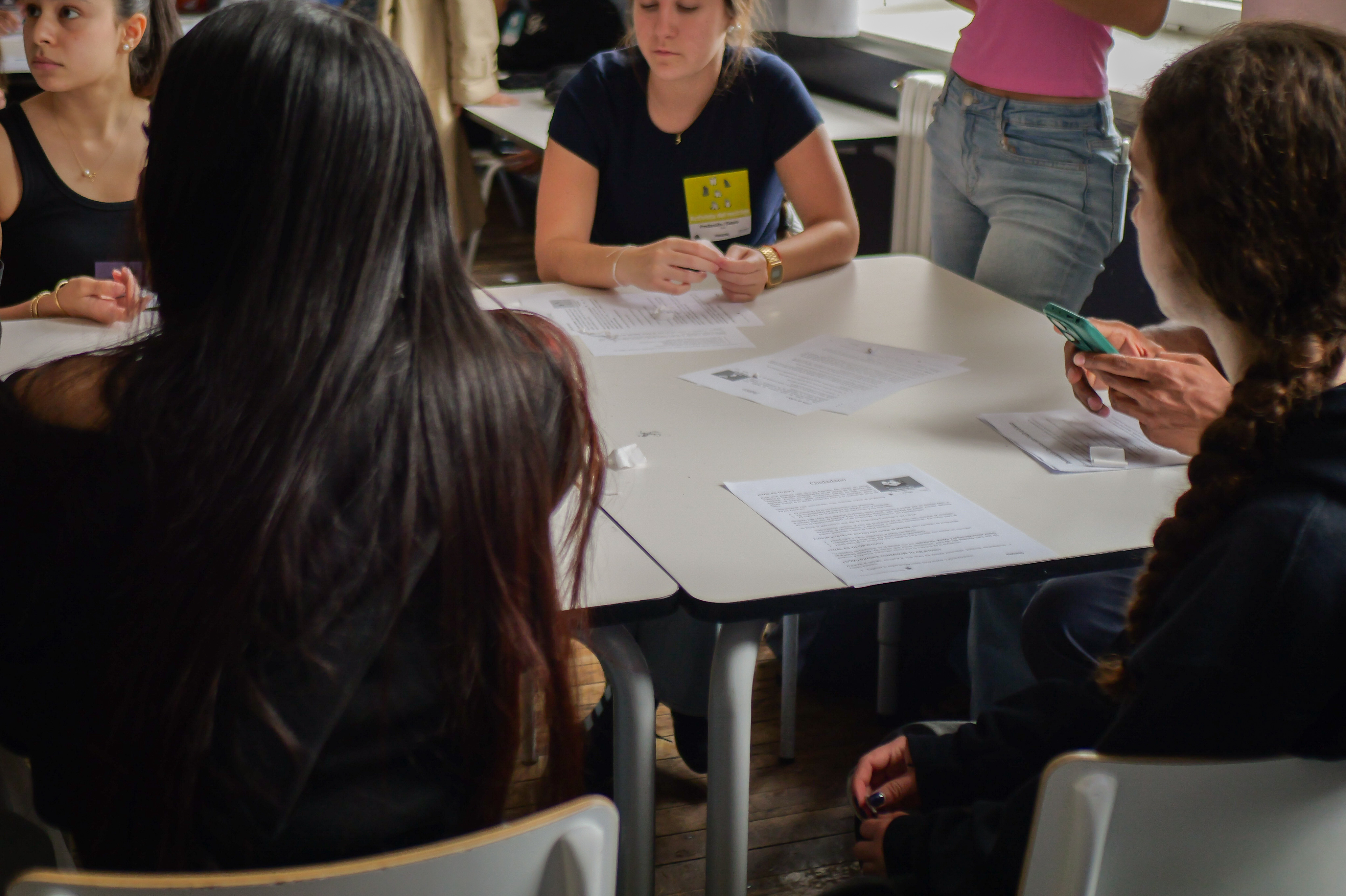
This experience is not limited to teaching civics, but proposes a pedagogy of the future where creativity and emotion are intertwined with political education. The workshops strengthen key civic skills: critical thinking, empathy, respect for diversity, ecological awareness, and global cooperation. In addition, they promote situated learning: students connect global challenges such as climate change or mental health with their own daily lives. In this way, the school becomes a space for reflection and action that prepares young people not only to understand the world, but to transform it.
- A pedagogy of the future: creativity, emotions and citizenship
The experience in Madrid and Barcelona is only a first step. Platoniq plans to extend the Teaching Unit to more educational centres during 2025, providing teachers with downloadable materials: detailed outlines for each session, audiovisual presentations and guides for holding Deliberative Assemblies in the classroom. The Platoniq team seeks to consolidate a network of deliberative schools that share best practices, results and lessons learned. “We want every school to have its own student assembly, so that democracy ceases to be a subject and becomes an everyday experience,” concludes Palazzi.
The Teaching Unit on Creativity and Democracy shows that young people are not passive spectators, but political actors in the making. When given a voice and tools, they respond with maturity, imagination and a sense of community. The democracy of the future is learned through participation, strengthened through listening and reinvented through creation.