Interviews
Garikoitz Lekuona ‘Deliberative and representative democracy must learn to coexist.’ Experiences from the Tolosa Citizens' Assembly

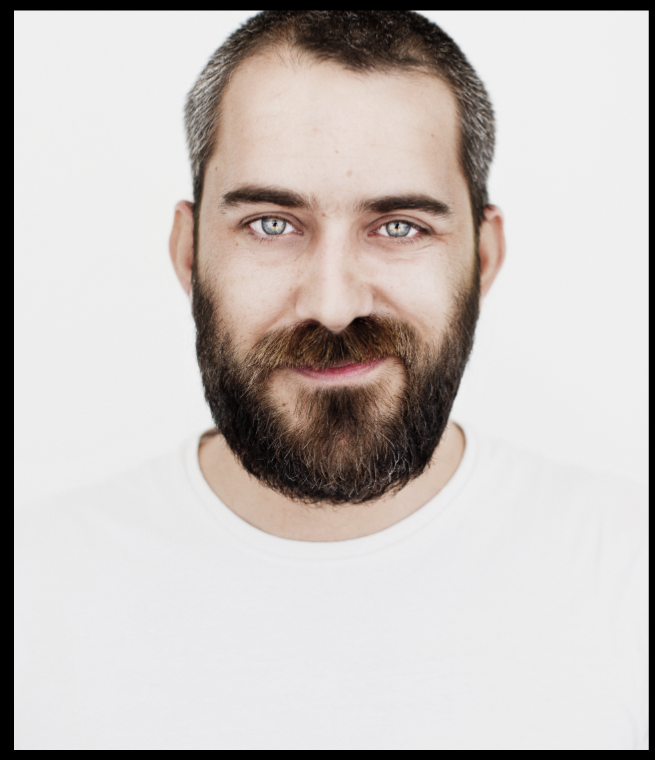
Garokoitz Lekuona is a participation technician for Tolosa City Council, although his official title within the municipal service is Community and Governance. He accompanied the Tolosa Citizens’ Assembly in its implementation in 2021-2023. He tells us: “We deal with issues that go beyond participation, but within them lies this central field of our work: generating citizen participation processes that improve people’s lives.”
Why should a local council promote deliberative democracy in its territory?
Garikoitz: I believe that what is really happening is that we have social, political and economic problems that are giving rise to trends that are quite dangerous for democracy. That is my argument: it is not just the complexity of society or the disaffection of citizens with politics, as is often said. The underlying issue is greater than that.
We are obliged to connect with society because time has shown that, when it comes to certain policies, citizens are no longer satisfied with representative democracy.
We are obliged to connect with society because time has shown that, when it comes to certain policies, citizens are no longer satisfied with representative democracy. What is more, they believe that political representatives should not be free to manage certain issues without consulting them, and therefore demand their own space of power to decide on public policies that directly affect their rights and basic needs.
One of the processes that you have implemented from the City Council is a citizens’ assembly linked to mental health policies. How did you arrive at this topic and why this one and not another?
Garikoitz: To be honest, it arose when the opportunity arose to experiment with a deliberative process involving citizens chosen by civic lottery. It coincided with the end of the legislative term, which generated some fear: as it was the first experience and so close to municipal elections, we did not want to bring a difficult social conflict to the table. That does not mean that there were no conflicts, but we were looking for an issue that was credible, real and perceived as important by citizens, because otherwise we ran the risk of appearing to be playing games or deceiving people. We were coming out of the pandemic, with the issue of health and emotional well-being very much present in society, including in Tolosa, and it was seen as an ideal topic for trying to develop community public policies, i.e., the City Council and civil society working together. The aim was to think about what policies needed to be promoted to make Tolosa a healthier city in terms of people’s well-being and care. The issue therefore arose from the search for political consensus, both in choosing it and in formulating the question, and also with the intention that this consensus would continue until the moment of responding to citizens’ recommendations. From then on, however, it broke down.
It is good that the experience was built on consensus and also that in the end it could not be maintained, because that demonstrates a contradiction in the system in which we live. On the one hand, we ask society to build broad consensus on dilemmas, values and challenges, and on the other, we continue with the representative logic of majorities and minorities, of government and opposition. This is where deliberative and representative democracy intersect, and both must coexist because that is what gives legitimacy to the process.
What exactly was the Assembly’s mandate? What was the main question?
Garikoitz: The question was specific. I remember it better in Basque, but it was something like: What can we do, through public-community collaboration, to look after the health and emotional wellbeing of the people of Tolosa?
On an issue such as mental health, how did you ensure that the group most directly affected was represented?
Garikoitz: To this end, among other things, a content committee was created to ensure that different voices were represented in the information and training phase. And I think it was the right decision. Not only were academic and institutional voices heard, such as health services and various public health professionals, but space was also given to social groups that were already working in the field. This helped citizens feel closer to the discourses, languages and experiences.
There is always a risk that the social movement will fear that the recommendations of an assembly will supplant or replace the work they are already doing.
There is always a risk that social movements will fear that the recommendations of an assembly will supplant or replace the work they are already doing. But the important thing was to give visibility to what already existed and to do so using everyday, accessible language, through the voices of citizens involved in community projects.
And how did you manage the cognitive diversity involved in discussing mental health in a citizens’ assembly?
Garikoitz: All the training sessions began with a twenty-minute presentation by different experts, but then there was a rotation between tables, where those same people answered questions from the public using different language. It was not just a matter of conveying data and information, but of generating conversation. This more flexible change in format helped to make the knowledge easier to understand and adapt to different ways of comprehending it.
What explanatory aids were used to make it more understandable?
Garikoitz: We worked extensively with graphic information and drawings. We hired a facilitator who captured what we heard in diagrams, images, or visual representations, so that the content was summarised and accessible. These panels remained visible during the five sessions, so that at each new meeting, a quick glance was enough to get back on track and remember what had been worked on. This combination of official information and graphic translation proved to be very effective.
Let’s move on to the impact. What did this assembly mean? Did it really change anything?
Garikoitz: It was a very powerful experience in every way, both professionally and personally, but also very tough. The process was practically entirely managed by our department, and the strain was enormous, both physically and emotionally. During the preparation and implementation phases, I felt supported, with external advice and assistance, but the problem came afterwards: in the post-process phase, when it came to responding to the recommendations and commitments. That’s when everyone disappeared and the burden fell on a single department. That cannot be. We need to think about how to systematise all this within the institutional framework. It is paradoxical that such a bureaucratic and formal administration has not yet developed a way to incorporate this type of process into its functioning. The assembly took place outside the Town Hall, in a public space organised by it, but the recommendations were transmitted informally, without legal record, and the same happened with the political response. Everything remained non-binding. I believe that an important lesson learned is that the recommendations should be formally recorded and the political responses should be approved in plenary session, so that they become a binding institutional commitment, beyond political colours or technical criteria. There is much room for improvement, especially in what happens after the deliberation.
And specifically? Has it had any impact on mental health in Tolosa?
Garikoitz: Yes. The political commitment was established for four years, and now there are issues on the municipal agenda that were not there before. Without this process, they would not exist, either on the political agenda or on the technical agenda. So yes, the assembly introduced citizen contributions that are now being worked on.
What enabled the institution to be responsive and take responsibility?
Garikoitz: One key factor was that, despite the elections and the change of government, the current mayor—who was then in the opposition—believed in the process and remained committed to it. This demonstrates the importance of building political consensus and overcoming the logic of government and opposition. It was also key that there was a technician who believed in the process and promoted it, and that little by little other departments came to see it as a central issue. When politicians convey that something is important, and there is a department that stirs things up, the rest end up paying attention to it.
Are they asking you for more?
Garikoitz: That fear exists because these processes are very costly in terms of resources and dedication. But I think we need to lose our fear of the methodology and learn to play with it, always respecting the principles. There are many types of mini-publics that can bring freshness to addressing different municipal policies, and people are calling for it.
To conclude: when you hear “citizen participation” or “deliberative education”, what do you feel?
Garikoitz: For me, the key word is power. It is rarely used, but it is what is really at stake. It is about the exercise of public power, understanding that citizens can and should use it, beyond voting for representatives. Even if we do not know precisely what representative democracy is or how it works, we have the right to have a say in the policies that affect us in our daily lives. It is about being aware and also participatory, about not giving up that power.
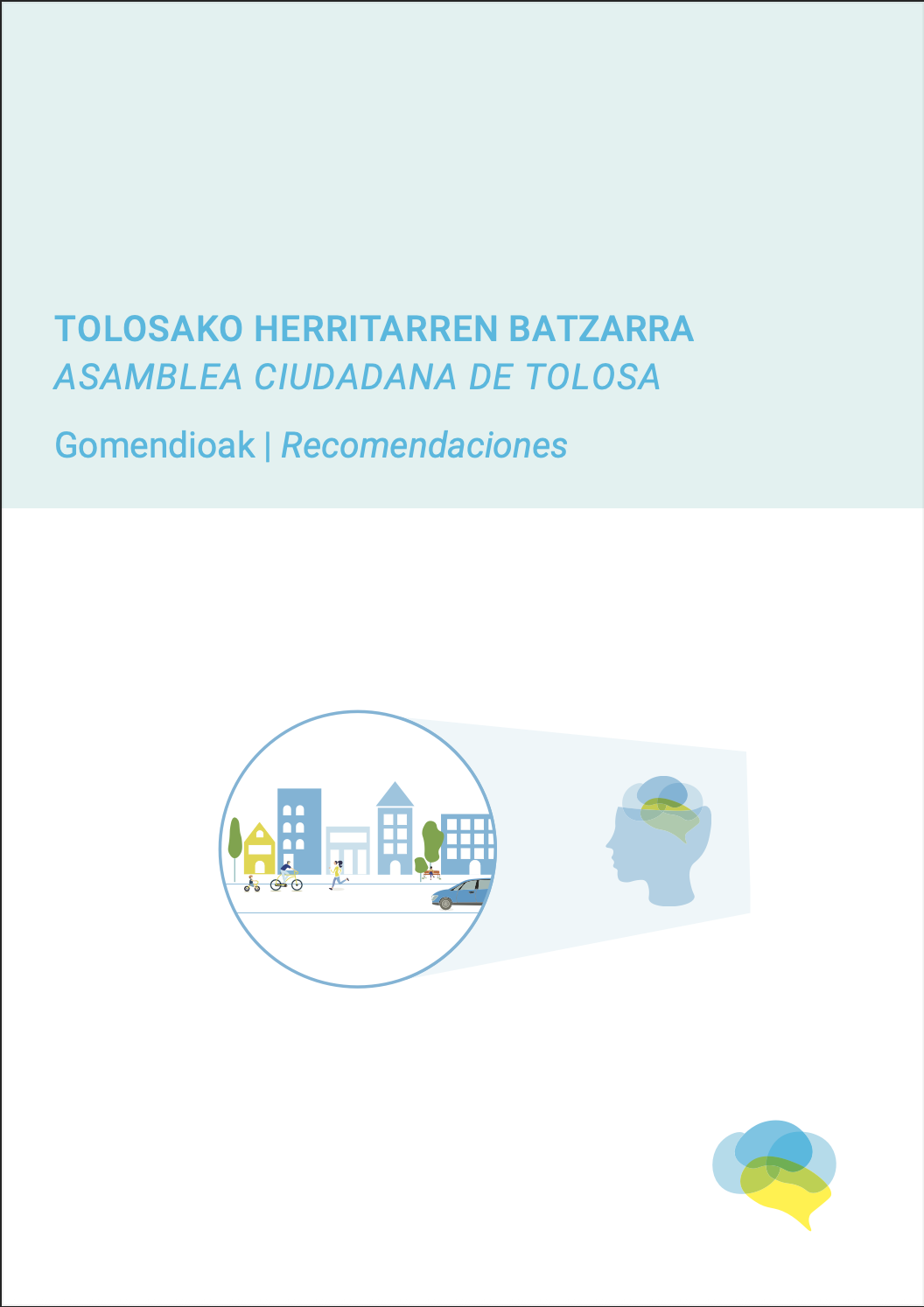
You can consult the recommendations arising from the assembly here.
__
The interview took place at the Forum on Deliberation, Creativity and Democracy, between 15 and 18 October 2024, thanks to the support of the Open Society Foundation and the Barcelona Provincial Council.