A Raven Knocking at the Gate: BOSCO Remains Hidden
This is no tale by Edgar Allan Poe. No gothic mansion trembling in the night. Nor merely one of Franz Kafka’s corridors, where files vanish beneath yellow stamps and fluorescent light.
This is about a public administration refusing to show citizens the code of an algorithm that decides who can access social rights.
For months, and despite a landmark Supreme Court ruling, the source code of the automated system used to manage Spain’s social energy subsidy (popularly known as BOSCO) has remained hidden. The case driven by Civio is no longer simply about access to public information: it has become one of the most important debates on algorithmic democracy and institutional accountability in Spain.
\ “Your file is still pending.” “Your request remains under review.” The answer dissolves in procedural fog, while the algorithm speaks like a hidden god.
The underlying question is profoundly political: can a democracy accept automated systems making decisions about social rights without allowing public auditing? Can public administration hide behind technicalities, procedural silence, or alleged technical complexity to avoid democratic scrutiny?
The BOSCO case reveals that contemporary obscurantism no longer lives only in secret archives or closed ministries. It now inhabits inaccessible APIs, outsourced infrastructures, opaque contracts, automated models, and lines of code protected from public debate.
More and more fundamental decisions (who receives support, who is excluded, who is considered “eligible”) are mediated by invisible digital systems. And yet citizens are still asked to perform an act of technological faith.
The administration’s continued refusal to fully comply with the ruling is not merely a technical issue: it is a democratic symptom.
This is why Civio’s work matters so deeply. Because it forces open the black box. Because it reminds us that transparency cannot suddenly end the moment governance becomes computational. Because defending the right to understand public algorithms also means defending the right to politically challenge their criteria, biases, and consequences.
And perhaps this is also why we still need poetry alongside journalism, law, and civic technology.
Because bureaucratic language anesthetizes. Because forms dehumanize. Because automated replies turn suffering into procedure.
Poetry, instead, removes the mask.
\ Behind each “technical issue” stamped in grey, there is a family told to wait another day. Behind each hidden line of public code, power walks disguised in a neutral robe.
Perhaps this is where algorithmic democracy truly begins: in recovering the collective capacity to read what power would prefer to keep unreadable.
__
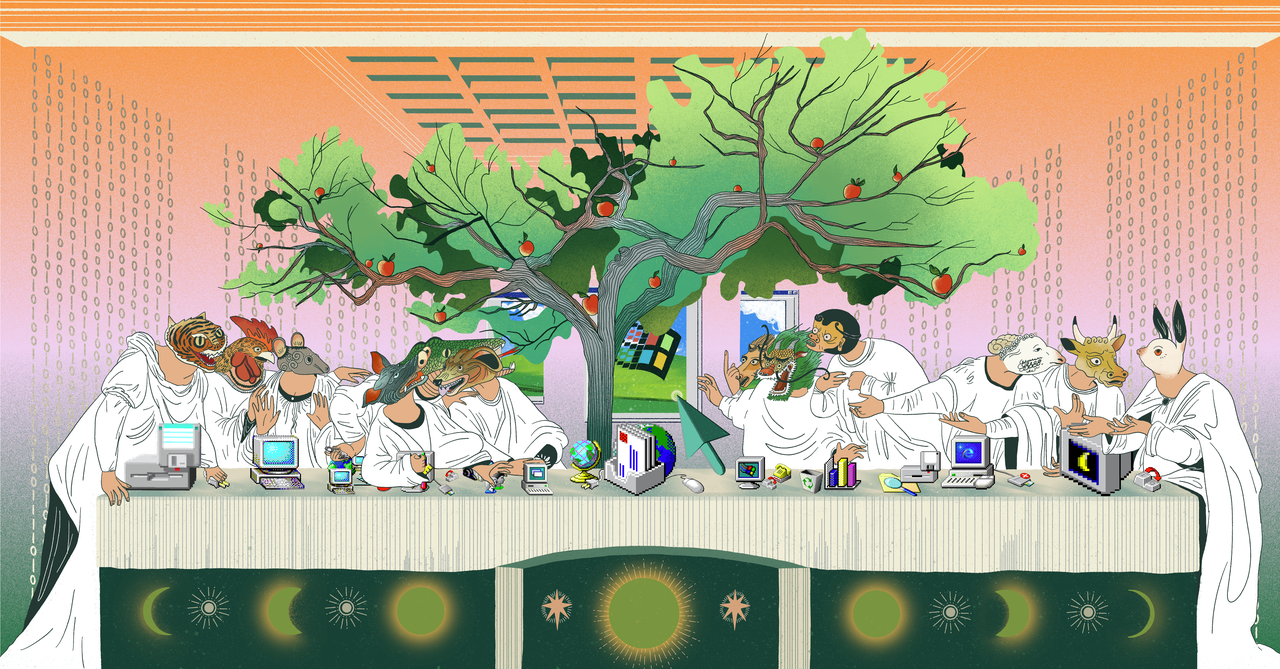
Image credits © Yutong Liu / https://betterimagesofai.org / https://creativecommons.org/licenses/by/4.0/