Deep dives
Claiming recognition: the right to the city from migrant youth [Policy Brief]


On 10 July 2025, 15 young people aged between 18 and 30 from Barcelona took part in a Legislative Theatre workshop on the Right to the City. We used Legislative Theatre, digital participation and participatory research methods to rethink the right to the city and its intersection with the concerns of the city’s migrant population from the perspective of young people, with diversity in terms of class, ethnicity and gender.
Context
Throughout Catalonia, some 160,000 immigrants currently live in an irregular administrative situation, of whom approximately one third reside in Barcelona. This puts the overall number of undocumented people in Barcelona at around 57,000. Although there are no exact official figures on how many young people aged 16–25 are in an irregular situation, we know that 17.9% of homeless people in Barcelona are young migrants. In addition, street organisations indicate that around 10% of homeless people assisted by municipal teams were between 18 and 25 years old, most of them unaccompanied migrants who, upon reaching the age of majority, are left without protection. As for unaccompanied minors, in 2023 some 2,331 arrived in Catalonia and 501 were assisted in Barcelona.
In 2021, the Ombudsman’s Office estimated that around 150 young people who had left care were living on the streets, while in 2020 there were around 500, of whom 30.9% lacked stable accommodation. In total, more than 1,300 young people leaving care will turn 18 in 2025, according to the Department of Social Rights, which means they will need real plans for emancipation (housing, emotional support, training, employment).
The 16–23 age group is the most visible: with active permits (17,452), a high percentage in employment and regulatory improvements. However, once they cross the 18–20 age barrier, many face a severe lack of protection due to the loss of guardianship and more restrictive regulations when it comes to renewing permits and obtaining papers for regularisation.
This leaves an as yet undetermined number of young migrants without papers, without housing and without employment.

Young participants in the Workshop on the Right to the City
Platoniq (2025)
Public policy recommendations
Through a participatory process based on Legislative Theatre, the young participants co-produced a series of policy recommendations in various areas aimed at improving the integration of young migrants in the city of Barcelona.
These recommendations were reviewed by the workshop’s policy group, made up of young activists, politicians and a member of the participation department of the Generalitat de Catalunya (Catalan Regional Government), who proposed and validated comments and amendments to each of the recommendations that emerged from the staging.
The recommendations are compiled below by thematic blocks, but we can give an account of how the process went and the completeness of the recommendations by referring to the Open Spaces participation platform that was used throughout.
The first series of recommendations falls within the framework of Just transitions to citizenship for vulnerable young migrants and responds to a common problem among “undocumented migrants, namely how young migrants of legal age, especially those in an irregular administrative situation, without a family network or living on the streets, face a fragmented system, with educational and residential circuits that do not communicate with each other”.
The second set of recommendations responds in turn to the digital administrative itinerary and human support in accessing rights. Both the participants in the co-design of the scenes and the policy working group highlighted the need to address the fact that “migrants face excessive bureaucratic complexity from the moment they arrive, marked by a lack of coordination between public offices, duplication of procedures, and a digital system that, instead of facilitating, hinders access to basic rights”.
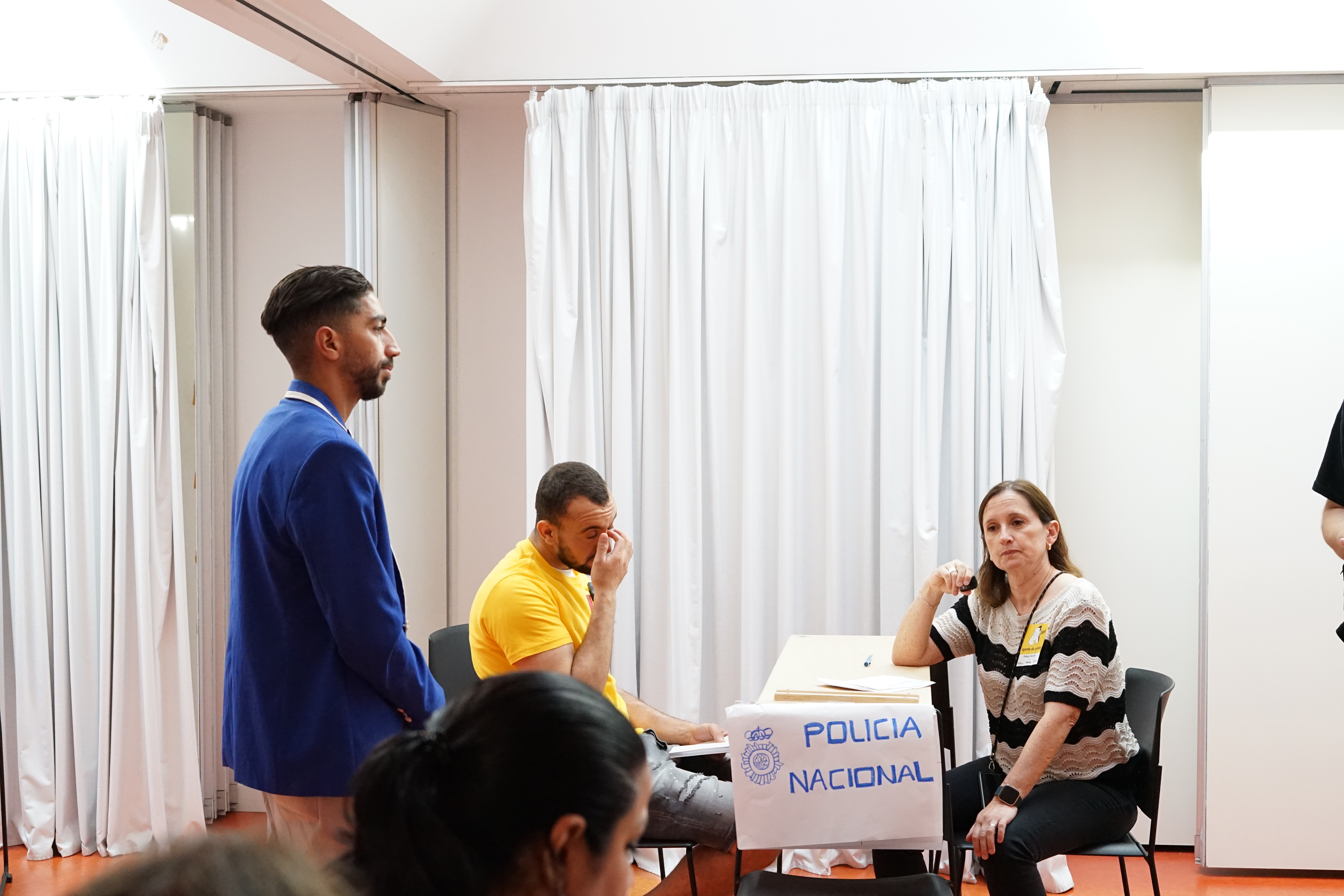
Representation of the second scene
Platoniq (2025)
Thirdly, we find a series of proposals linked to Political participation and effective citizenship for migrants, which arose from the latent debates in scene 3 (“Right to dream”) and runs through the three scenarios presented in the Legislative Theatre process. The issue that emerged was how “migrants who have been living in the territory for years, working, studying, participating in community or political spaces, still do not have full access to citizenship or fundamental political rights such as the right to vote or to be consulted on policies that affect them. This creates a second-class citizenship, deepens structural exclusion and reinforces tokenism when they are invited to participate only as users or witnesses.” These have not yet been directly verified with the migrant participants, so they are considered a series of preliminary cross-cutting proposals**. Platoniq assumes the responsibility of validating, expanding or reformulating them collectively.
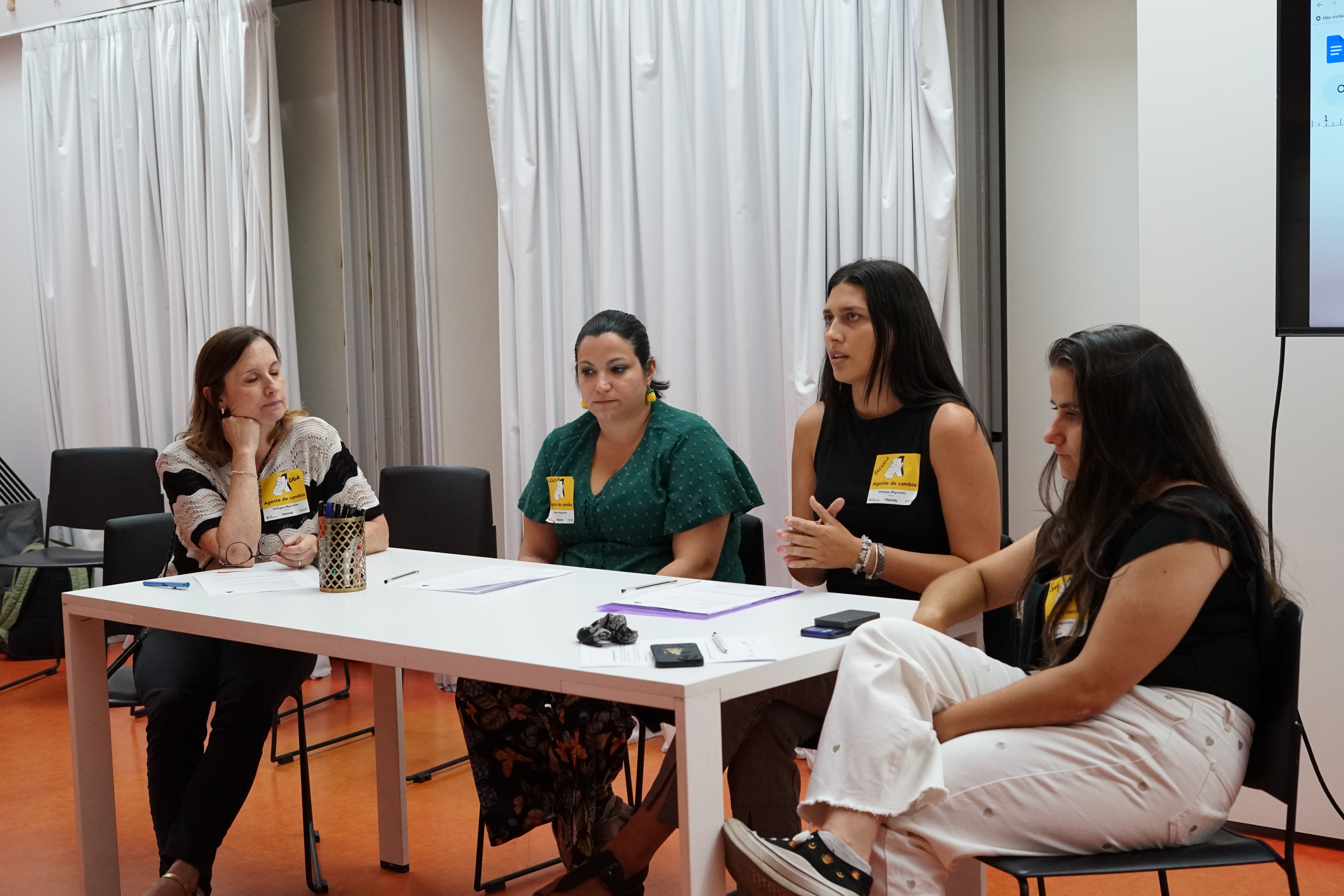
The policy team presenting their recommendations
Platoniq (2025)
- Public network for reception and support with migrant representatives
- Create a public network of first contacts, made up of migrants with experience in support, community mediation or social work.
- Create an integrated processing system with personalised administrative pathways, accompanied by in-person support points with trained staff and digital literacy tools accessible in everyday spaces.
- Link appointments to a specific file and an internal calendar within the public system.
- Promote basic training for customer service staff in digital procedures, inter-institutional administrative processes, and intercultural skills.
- Offer free digital literacy programmes for migrants, especially in urban areas with a high concentration of foreign populations.
- Path to effective citizenship (pending validation)
- Promote an exceptional mechanism for administrative regularisation for migrants with more than two years of social or labour roots, linked to training, volunteering or proven community contribution.
- Recognise participation-based roots as a valid category for initiating documentation processes.
- Include migrants as institutional representatives in public offices, neighbourhood councils, citizen service offices, etc.
- Explore the use of proxy voting in community assemblies or municipal forums, with legal and community support.
- Reform of the criteria for access to housing and training programmes
- Prioritise residential and educational integration programmes for people over the age of 18 without a family network or documentation, especially if they have been through resources such as CRAEs.
- Avoid automatic exclusion for documentary reasons: allow access to programmes for those who can prove their roots through registration, participation in networks or community references.
- Adaptation of public education
- Introduce initial training courses with no language requirements, accompanied by parallel language support.
- Design training programmes tailored to people’s interests, experiences and life contexts, without requiring formal qualifications.
- Facilitate agreements with cooperatives and companies to guarantee paid internships and sustained employment links.
- Recognition of skills and micro-credentials
- Promote flexible accreditation systems through micro-credentials or certificates of experience based on prior skills (including informal skills or those developed in other countries).
- Create an inter-institutional agreement valid throughout the EU to facilitate this express recognition.
- Civil rights and political participation
- Recognise the effective citizenship of migrants, regardless of their nationality or current legal status, through mechanisms that guarantee their participation in political, community and institutional life.
- Create spaces for structured political participation based on recognition of migrants’ trajectories.
- Guarantee more accessible regularisation processes as a means of exercising citizens’ rights.
- Explore forms of intermediate political representation, such as proxy voting, the right to participate in local participatory budgeting, or binding inclusion in citizens’ councils.
- Allow people without the right to vote to delegate their vote to a trusted person with full citizenship in processes such as participatory budgets or youth councils.
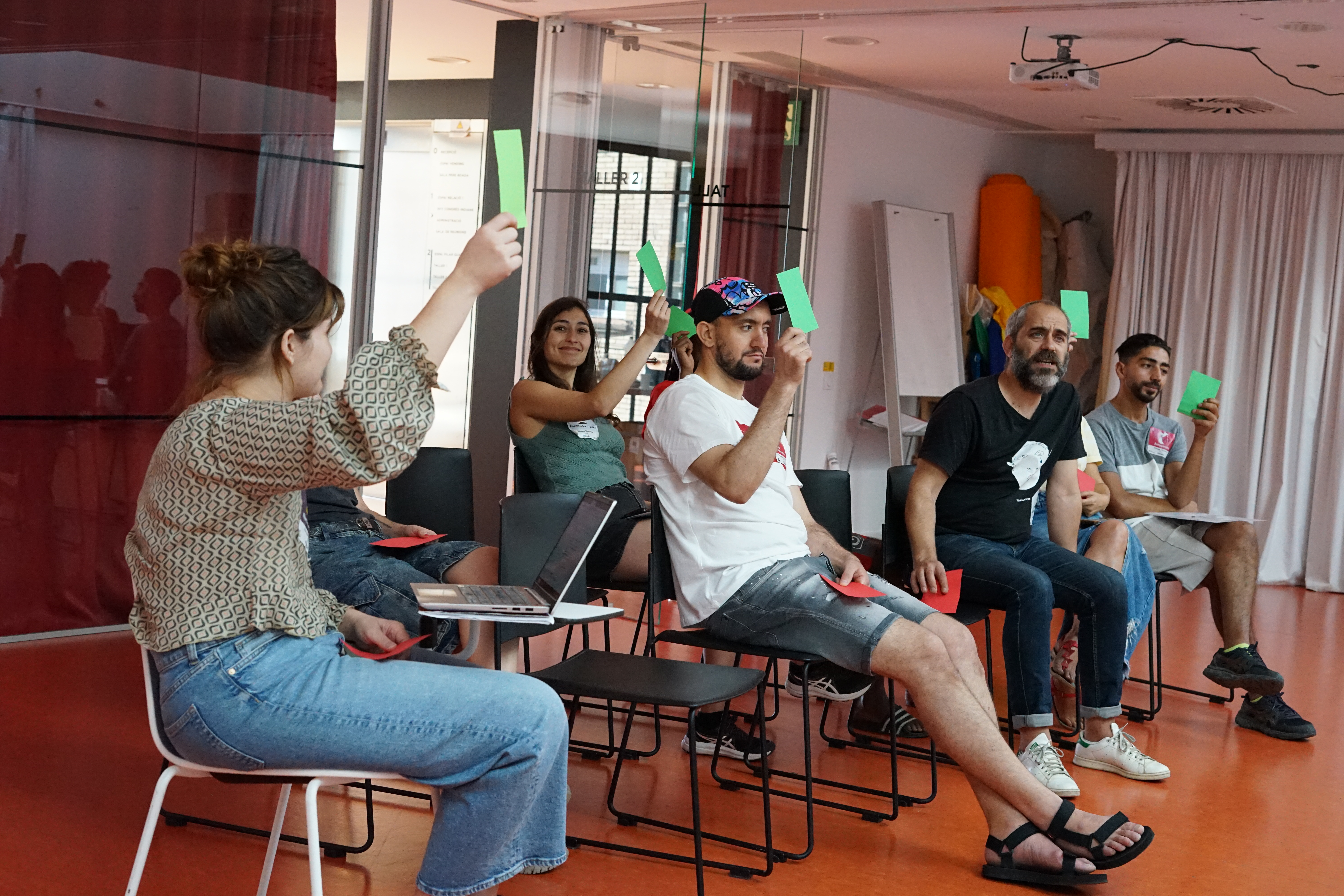
Voting on policy proposals
Platoniq (2025)
Download the policy brief here:
The stance taken by this process on this issue is to prioritise those “affected” by certain policies, so that they are the ones who lay the foundations for social debate on the issues that concern them. By placing them at the centre, a conscious decision is made to use positive discrimination to balance the idea of representativeness, which is considered one of the causes preventing their full participation, as they are in almost all cases a minority of the general population.