How can we imagine a democracy where the sea, algorithms and bacteria also have a voice? As ecological and technological challenges overwhelm human institutions, new forms of deliberation are beginning to emerge.
One of these took place in Barcelona in April 2024: the first Global Citizens’ Assembly on the Ocean, an initiative of Missions Publiques, facilitated by Platoniq and other partners, within the framework of the UN Ocean Decade initiative.
From the Parliament of Humans to the Parliament of Things
Inspired by Bruno Latour, Lynn Margulis, and Donna Haraway, we can think of this assembly not only as an exercise in democracy among citizens, but also as a rehearsal for deliberating with the non-human.
Life is a symbiotic and cooperative union that allows those who join forces to succeed.
Latour imagined a Parliament of Things, where non-human actors, from ocean currents to silicon chips, participate in decisions that affect them. Margulis reminded us that all life is symbiosis, and Haraway that we must “stay with the trouble”: forging partial alliances between humans, animals, machines, and ecosystems.
The ocean as a subject of deliberation
In Barcelona, forty citizens gathered in front of the sea to discuss the future of the ocean. But the setting was not neutral: the ocean itself was part of the dialogue.
The sound of the waves, the salty breeze and the environmental sensors accompanying the session created a space for expanded listening, where the materiality of the environment acted as a mediator. This framework embodies Jane Bennett’s “ethics of assemblage”, recognising the vibrant agency of the material.
The ocean assembly was only the first step towards a global process that aims to bring together 10,000 citizens in 100 countries. Each local meeting will be a microcosm of this new politics of cohabitation, in which humans deliberate knowing that they are not alone: oceans, forests, machines, and viruses are also part of the process.
The three-thirds method: present, life and future
The process introduced the Three-Thirds Method, a methodology that gives voice to three actors: current generations, the living system, and future generations. The idea is simple: human decisions should not be made only among humans of the present, but together with the living system and future generations.
The first actor brings together the voices of those who inhabit the world today: diverse citizens, with their experiences and concerns. The second actor incorporates the presence of the planet: the seas, the air, the organisms, the data that make them speak. It is not a question of speaking for them, but with them, listening to their signals, integrating their materiality and vulnerability into the conversation. The third actor belongs to those who are not yet born. Their place is represented by an empty chair, a letter written from the future, or the voices of young people who challenge those who make decisions today.
Thus, deliberation becomes terrestrial diplomacy: a space where humans, ecosystems, and possible futures engage in dialogue. This method reminds us that all politics is also a relationship between times and species, and that caring for the present means caring for the life that sustains us.
Towards a more than human democracy
Non-human deliberation does not replace democracy: it expands it. It reminds us that all public decisions are based on material, biological and technological relationships that also deserve to be heard.
As Haraway points out, it is about “composing with others”, not speaking on their behalf. It is about designing participatory processes that integrate the sensitivity of sensors, the voice of the tides and responsibility towards what has not yet been born. To recognise this is to accept that politics is not limited to human language, but is also expressed in data flows, air currents and climate rhythms. More than human democracy consists of learning to deliberate within this framework, listening not only to what is said, but also to what vibrates, transforms or resists.
Designing participatory processes that incorporate the sensitivity of sensors, the voice of the tides and responsibility towards those who are not yet born is a way of acknowledging that care is also a political practice. This expansion of democracy requires a new civic imagination: one that understands that inhabiting the planet means deliberating with it, and that every human decision is, inevitably, an ecological decision.
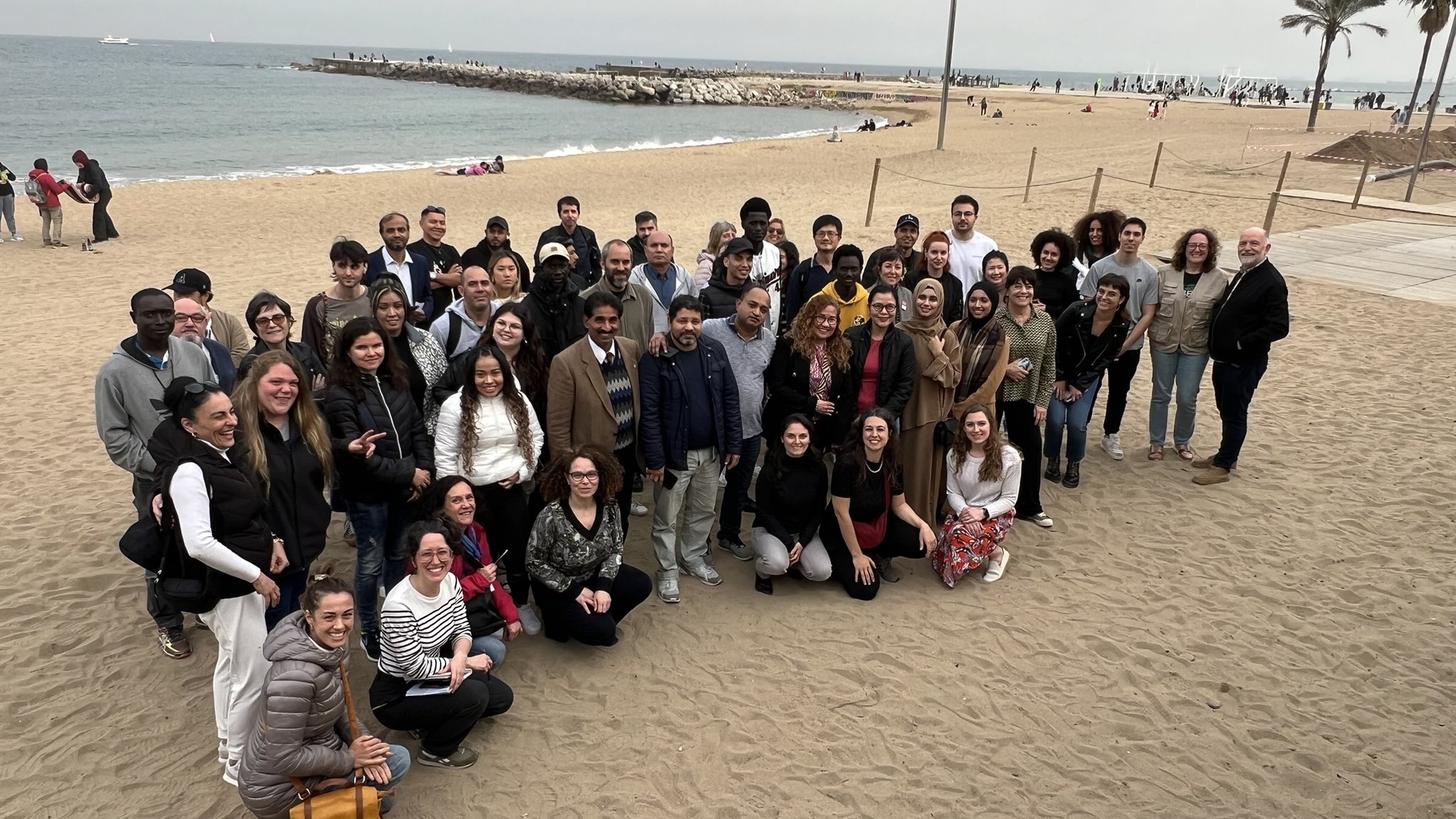
40 citizens giving voice to the oceans
Platoniq (2024)
Caring, translating, cohabiting
At Platoniq, we continue to explore how to design deliberative methodologies that integrate living systems, collective intelligence, and civic technology. If you would like to participate or collaborate in the design of multispecies deliberation processes and planetary assemblies, please contact us.