Interviews
Desirée Bela-Lobedde ‘We need anti-racist education at a general level and political interest in particular.’


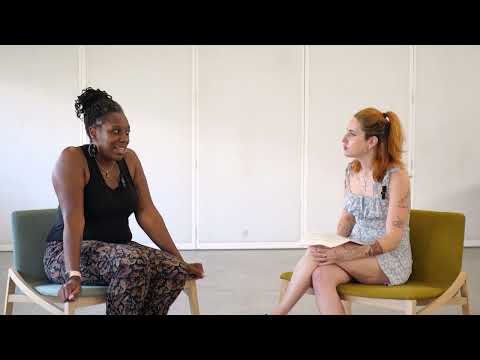
We spoke with Desirée Bela-Lobedde, “writer and mother of two wonderful teenagers,” who is dedicated to promoting anti-racist education in various ways: writing books, participating in the media, and providing training, both in person for companies and institutions and online for a more general audience.
Alex: We wanted to talk to you about positive discrimination. We understand that it has been an instrument of liberation for many oppressed groups and under-represented minorities. But how do you see this concept in the context of representative democracy?
First of all, I wouldn’t talk about positive discrimination as a tool for liberation; I think that gives it too much weight. I believe that affirmative action or quotas are necessary. For example, in terms of gender, there are very male-dominated sectors where quotas have been used to redress the balance. One example that comes to mind is the Mossos d’Esquadra, who have decided that a percentage of their positions must be filled by women to prevent it from remaining a hyper-masculine space. In terms of racialisation, the same thing happens, but in many more sectors. If we do not guarantee the presence of racialised people through quotas, there will be spaces where we will never be represented. I believe in quotas as a means, not an end, to achieve a society where the greatest number of people are democratically represented. As this representation does not currently exist, it must be enforced.
If we take an impartial sample of society for a debate, the margins would still be minority. How can we connect the legitimate interests of an underrepresented minority with the interests of the majority?
That is a crucial question. Currently, I find it difficult to reconcile these interests because when we talk about majorities and minorities, we enter into a power game. As long as the majority does not feel that the acquisition of rights by minority groups is a threat, that majority will have no intention of taking on board the interests of minorities. In my experience, this needs to be addressed as a matter of social justice. In Afrofeminism, it is said that if we focus on the most vulnerable people in a society, we inherently protect everyone. We need to understand that by protecting the most marginalised people, we protect a greater number of people.
Last year, at the Platoniq Foundation, we carried out a project called Diàlegs Migrants, where racialised people and migrants created audiovisual pieces about their experiences. We imposed a quota so that only racialised audiovisual creators could participate. Do you think this quota is correct?
I’m going to get a little punk here. For me, it’s problematic that only racialised people or migrants are asked to talk about their experiences. We have to put an end to that, because we’re pigeonholing a group based on their identity as migrants. For example, in an interview with Ibrahima Balde, co-author of “Hermanito” with Amets Arzallus, Amets was identified as a writer, while Ibrahima was only identified as an immigrant. This perpetuates the narrative of suffering among migrants and racialised people. It is good that spaces such as Diàlegs Migrants exist, but people should be able to talk about whatever they want beyond their own experience. Racialised people should have the opportunity to be more than just migrants.
For example, I am more than my experiences of racism: I have knowledge, a career and experience. In my case, it is related to anti-racism and social justice, but in many cases there is knowledge and experience related to other areas that we cannot choose because whenever we are given a space, it is to talk about our trauma and our experience of injustice.
But do you think it is essential that they themselves are the creators of these audiovisual pieces?
Of course, that is essential. When the stories of a group are told from the outside, stereotypes are perpetuated and there is a lack of knowledge about the context and particularities. For a long time, white people have spoken about us. Now it is our turn to explain what we want, in the way we want. As Audre Lorde said, “if I did not define myself, I would end up being crushed and devoured alive in other people’s fantasies”. As Lucía Mbomio says, “if I don’t tell my story, if we don’t tell our stories, we betray ourselves,” because we are left at the mercy of a certain perspective, with its biases and prejudices. So, yes, we need the people who are the protagonists of the stories to also be the ones who tell them.
Last year, our colleagues at Por Causa gave us training on new narratives related to racism and hate speech. They mentioned that we need to appeal to emotions rather than purely rational discourse. What do you think about this?
It’s complicated. Far-right discourse is populist and appeals strongly to emotion. I think it’s difficult to combat that with emotion from the other side, from the people and groups that advocate for social justice. I think it’s complicated to respond emotionally to a Vox banner in Plaza del Sol saying that an unaccompanied minor earns 4,500 euros, but you only earn 800. It’s also exhausting to always have to provide data to make people believe what you say about anti-racism and social justice. I think it’s interesting to appeal to emotions, to community, to what unites us, but we must be careful not to fall into the trap of pain pornography. We have to find a balance and adapt the message according to who we are addressing.
Changing the subject a little, we know that you were an observer at the Commission’s citizens’ dialogue on hate. How was that experience and what is your assessment of it?
In 2021, the European Commission set up European citizens’ panels where specific topics are discussed over three different weekends. I participated as an observer on the last weekend of the panel dedicated to combating hatred in European society.
It is a very interesting participatory tool because it allows 150 citizens from the Member States to influence European Union policies. The ideas that emerge are passed on to the European Commission, which can turn them into laws or regulations. This opportunity for participation makes European institutions seem more accessible.
How will this be articulated? We shall see. What emanates from the European Union must be incorporated by each Member State into its legislation, and that is where we can get a little lost. It was interesting to see the processes, the working groups, the plenary session, and the conclusions. Hopefully, these types of panels will also be held at the country, autonomous community, and city levels, so that citizens have more opportunities to participate.
As an observer, what prominent voices and issues stood out to you the most? What is your overall assessment of this experience?
My assessment is limited because the media, influencers, and content creators were only invited to the third session. I don’t have the full context, but some issues that caught my attention were the need for the European Union to establish independent protection and security mechanisms to prevent the spread of hate, especially online. There was a lot of talk about the role of the media and social networks, and the issue of anonymous profiles spreading hate messages.
The importance of offering tools from the educational sphere to teach children and young people non-violent communication techniques and dialogue was also highlighted. These are very interesting topics, although it is difficult to describe what happens in a citizenship panel with such a limited vision.
This instrument is only a couple of years old, so I am confident that they will gather feedback to improve the selection processes for individuals and the incorporation of media and content creators. I believe it will improve over time.
What issues did you highlight as an observer and what specific measures were proposed?
In the last session, each group discussed an aspect related to hate speech, such as the protection of vulnerable groups, education and online platforms. Each group proposed between two and four ideas in the plenary session, resulting in some 40 ideas that will be forwarded to the European Commission, which will decide which are most relevant and turn them into European Union legal instruments.
I found this topic very interesting. Returning to the topic of migrant dialogues, this year we continued with Migrant Dialogue II, where we asked participants to share a personal experience with us in order to identify the different layers or levels of oppression they face. We would like to know your opinion on some of the concepts we have identified. One participant said that she had a dental problem and, due to her financial situation, was referred to social security. She explained the mistreatment she received and reported that this happened to her because she was poor. She linked racism with poverty. What is your opinion on this link?
I think we must be very careful not to fall into the slogan of “it’s not racism, it’s classism”. In the end, both exist and are intertwined. Having money and being able to pay for a private clinic does not guarantee good treatment, because prejudice can exist anywhere. We must apply an intersectional perspective to understand that class and race can create greater social exclusion. It is not correct to believe that racism disappears with money. People like Vinicius and Oprah Winfrey continue to face racism, despite their wealth. The greater the social exclusion, the more explicit the violence; on the other hand, with a higher level of education or purchasing power, violence is still present but in many cases it is a much more subtle issue.
Another participant said that she came to Spain on a student visa and needed to work. She was offered a job in a café without a contract or social security registration, working 52 hours a week for €800. She told us that after two years, because she had gained her boss’s trust, he did her paperwork. We were surprised that she put it that way. Later, the participant identified the concept of institutional racism, in this case the institution being the workplace. Can you explain this concept a little more and give us your opinion on this experience?
Institutional racism refers to the practices, laws and dynamics of institutions that discriminate on the basis of race. This includes the education system, law enforcement, the media, politics, the judicial system and cultural representations. In all these spaces, events occur that are a source of racial discrimination because they jeopardise the dignity of racialised people.
So, when we are talking about people in a vulnerable situation, such as this person you describe, who comes on a student visa… the visa expires, and it is practically impossible to process or request an appointment at the immigration office for any type of permit. Their experience becomes an abuse.
Desirée Bela-Lobedde: Constitution in the sense of the collective’s demands? As a text that sets out their prerogatives and demands, I find it interesting as long as it is migrant and racialised. Migration has its particularities, but we racialised people who are Spanish also have our demands and prerogatives.
On the other hand, it is worrying that she feels she has “earned the trust” of her boss. It is not about trust, but about rights. Unfortunately, when a person is in such a vulnerable situation, in certain cases all these issues become confused.
As a facilitator, how could we help someone in this situation to see that they have been the victim of a violent situation?
Of course, it’s difficult because, you see, this is one of the reasons why I believe that anti-racist education is important for everyone, including racialised people, because as long as we are not aware of all these mechanisms of how white supremacy or privilege manifests itself, white privilege creates a hierarchy in which migrants and racialised people find themselves at that level of vulnerability, and this is one of the manifestations of institutional racism. If we cannot identify that, we don’t see it, we don’t see it.
So anti-racist education is fundamental for everyone, and that’s it. When you have that knowledge, that’s when you start to detect a lot of things and put a name to many situations you’ve experienced and many things you’ve been through that until then you thought, ‘So-and-so didn’t do it with bad intentions, maybe I’m exaggerating and seeing things that aren’t there’. So I believe there needs to be support, there needs to be a contextualisation of how these dynamics occur, but I also think it’s interesting that this exercise is done among peers, among racialised people, to try to mitigate the paternalism or infantilisation of the person who finds themselves in that vulnerable situation.
In terms of your activism, how do you deal with being considered an immigrant rather than Spanish, if that happens to you? Do you see your identity as hybrid?
What identity isn’t, really? We live in such a polarised society that it only understands you as one thing or another, without conceiving that you can be the sum of many things, which is very limiting.
One of the problems, as I mention in my book Ser mujer negra en España (Being a Black Woman in Spain), is that Spain deceives itself into believing that it is not a racist country. This is difficult to understand, especially as part of the West and a product of an imperialist and colonial society. It is almost impossible for there to be no racism there, but that is another issue.
The problem is the perpetual notion that anyone who is not white is a newcomer. Spain considers itself white, even though it has not been so for centuries. In Catalonia, for example, there are the terms “nouvinguts” and “newcomers” or “second generations”. I have never migrated, so why do they call me a second-generation immigrant? Will my daughters be third-generation immigrants? How many generations will it take to be considered simply Spanish? If we will never have the “eight surnames”, how do we do it?
It is a problem of people’s imagination. I can say that I am French, American, Cuban, and no one would question it, even though I do not have an accent from any of those places. But if a black person says they are from here, questions arise such as “From here? Since when?” and a need to justify it. It’s like Rubén H. Bermúdez says in his book “¿Y tú por qué eres negro?” (Why are you black?): if you say you’re from here, why are you black? Because Spain considers itself a white country, when it isn’t.
They always relate the presence of black people to waves of immigration. There have been African people in Spain since the Middle Ages; we are only 14 kilometres from Africa. The influence is undeniable, but this does not explain or discuss the historical contributions of people of African descent. That’s why people always think we’ve just arrived.
We wanted to know your opinion on a concept called the Migrant Constitution. I’ll explain it in context. First, this concept originated with the Black Panthers in the United States. They proposed to establish themselves as an independent nation within the country, with their own black constitution. Recently, the Topmanta collective in Barcelona posted an image on Instagram indicating that this nationality was migrant. So, like any nation, in principle it should have a migrant constitution. Playing around a bit with the terms Migrant Constitution and/or racialised, what do you think of this concept? What is your view on this?
I would be interested in a document that addressed racism, anti-racism, the repeal of the immigration law, the elimination of the CIEs, the colonial legacy in Spanish cities, the decolonisation of the curriculum, etc. But once all that has been compiled, I would like it to go through a political process so that it has legal force
If by constitution we mean a document that covers all of that, I find it interesting. However, I think it would be difficult to implement in practice, not because the document is not valuable, but because of public interest. I would be interested in a document that addressed racism, anti-racism, the repeal of the immigration law, the elimination of the CIEs, the colonial legacy in Spanish cities, the decolonisation of the curriculum, etc. But once all that has been compiled, I would like it to go through a political process so that it has legal force. That is where we encounter the obstacle. The easiest part would be to draft the Constitution itself, but it is difficult to get it to the political institutions for consideration. Ideologically, it would be a very necessary and useful instrument. By bringing together people from different groups, holding meetings, etc., it would be possible to reach a consensus and gather what is of interest to the African, Moroccan North African, Roma communities, etc.
But what do we do with all this? For example, with the ILP for regularisation, a minimum of half a million signatures were already required for the popular legislative initiative to reach Congress and be approved. And then, in May, right? Suddenly the PSOE said… Oops! Maybe not, eh? This is always the obstacle. How is it that, given the public interest, there is no interest in legislating on these issues?
To recap a little and based on what you’ve said, we need to develop new narratives to change public interest, to try to shift the focus. For that, we need anti-racist education and new narratives, which is complicated, isn’t it?
Education and interest. Above all, political interest. It has been proven on several occasions that when there is political interest, things move forward. I am thinking of the express regularisation during the pandemic of migrants with health qualifications because it was needed. Express asylum was also granted to the Ukrainian population during the war between Russia and Ukraine. Meanwhile, people from territories such as Sudan have been seeking asylum unsuccessfully for years.
These initiatives show that, if there is political interest, things can change. We need anti-racist education in general and political interest in particular.
__

If you want to learn about anti-racist culture, you can check out Desiree’s courses and training programmes at this link. But if you’d rather receive the newsletter with all the relevant news and necessary information first, you can do so here.