Interviews
Eva Cardona The Mallorca Climate Assembly, or how to get an island to engage with the climate crisis

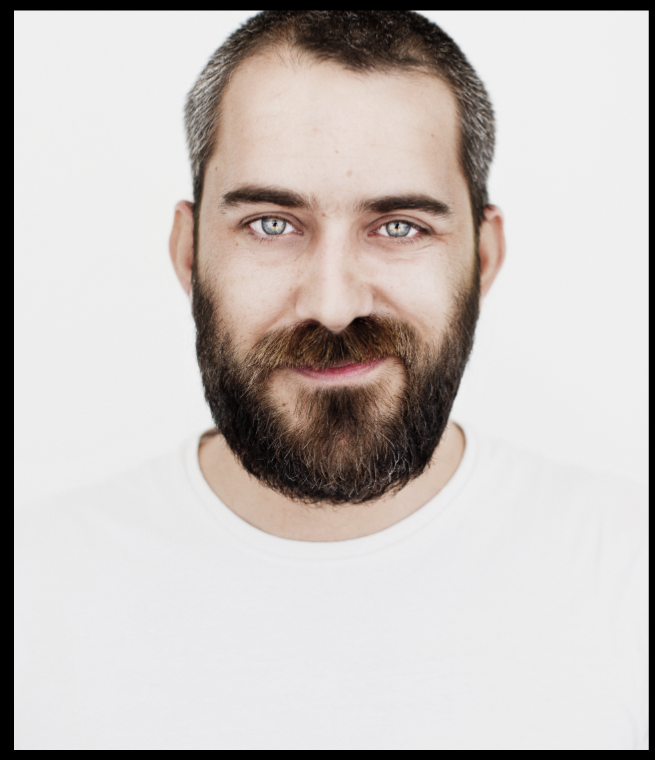
We spoke with Eva Cardona, from the team promoting and coordinating the Mallorca Citizens’ Climate Assembly, who told us about her experience participating in the first Citizens’ Assembly in the Balearic Islands.
What did you think of the experience of participating in a Citizens’ Assembly?
As a social and democratic experience, it was very interesting, with many bright spots. In terms of political coordination, it also had its shortcomings, but it basically served to lay the foundations for deliberative democracy in the Balearic Islands. It was a pioneering experience in this autonomous community and has helped to educate, involve citizens and open up a path that did not exist before.
Where did the initiative come from?
The initiative arose in close connection with the Committee of Experts on Climate Change, a collegiate body created under the Balearic Islands Climate Change Act. The proposal came from a group of people connected with the world of deliberative democracy and was submitted to the regional government and also to the local governments of the four islands. This led to a political agreement to promote and launch the Assembly, a commitment that was finalised in 2022, when it finally came to fruition.
Since you mention it, there has been a change of government. How are the results of a process handled in such a context? Were the agreements updated with the new executive?
That is, in fact, one of the key points. At the governance level, the process was complex. The University of the Balearic Islands (UIB) acted as the promoting body, while the Government provided the political commitment and funding. It was, in fact, a scheme shared between institutions.
Although it was communicated to different political groups in Parliament, those who actually took responsibility were those who were in the Government at the time. After the Assembly was held, a political change soon followed, which introduced discontinuity.
Political debate is highly polarised and partisan, and a great deal of education is needed for representatives to understand the significance of a citizens' assembly, whether temporary or permanent, and to act accordingly.
The outgoing team had time to provide fairly coherent feedback on citizens’ proposals, but the break in continuity shows how difficult it is to articulate these processes so that they survive changes in government and allow for accountability over time.
And how are you organising accountability now? Have there been any attempts at self-organisation among the participants?
Yes, and it’s an interesting part. As is often the case in such processes, a group of participants felt empowered and eager to continue. Some people have self-organised, maintaining contact with the national Climate Assembly and acting as a pressure group.
At the moment, there is a heated debate in the Balearic Islands about mass tourism, which has a direct impact on the sustainability of the islands. The current government has launched a process called “impact for sustainability” to gather opinions from different groups, and there are people from the Climate Assembly who are still active in raising awareness of their proposals and maintaining political pressure.
What future do you foresee for participatory democracy in the islands?
In the short term, I don’t see it as very promising, but in the medium and long term, perhaps yes. The main obstacle is the lack of understanding among many politicians about what processes of this type mean.
The political debate is highly polarised and partisan, and a great deal of education is needed for representatives to understand the significance of a citizens’ assembly, whether temporary or permanent, and to act accordingly.
In an island territory such as the Balearic Islands, how did you include the voice of nature in the deliberations?
We weren’t creative enough to directly include non-human elements, although that would have been very interesting. What we did do was dedicate one of the four thematic areas of the Assembly to ecosystems, reflecting on how our activities affect the territory and how ecosystems are key, not only for quality of life, but also as carbon sinks. In this area, a lot of weight was given to the sea because we are islands, but also to water and terrestrial ecosystems.
Assembly expert session
Finally, what place does deliberative democracy occupy for you in eco-social transformation?
For me, it is a basic ingredient. I see it as a transformative tool that, if we manage to channel it well and give it continuity, can help us achieve that much-talked-about ecological transition that is so necessary and yet so little achieved.
You can consult the recommendations arising from the assembly here.
__
The interview took place at the Forum on Deliberation, Creativity and Democracy, between 15 and 18 October 2024, thanks to the support of the Open Society Foundation and the Barcelona Provincial Council.