Interviews
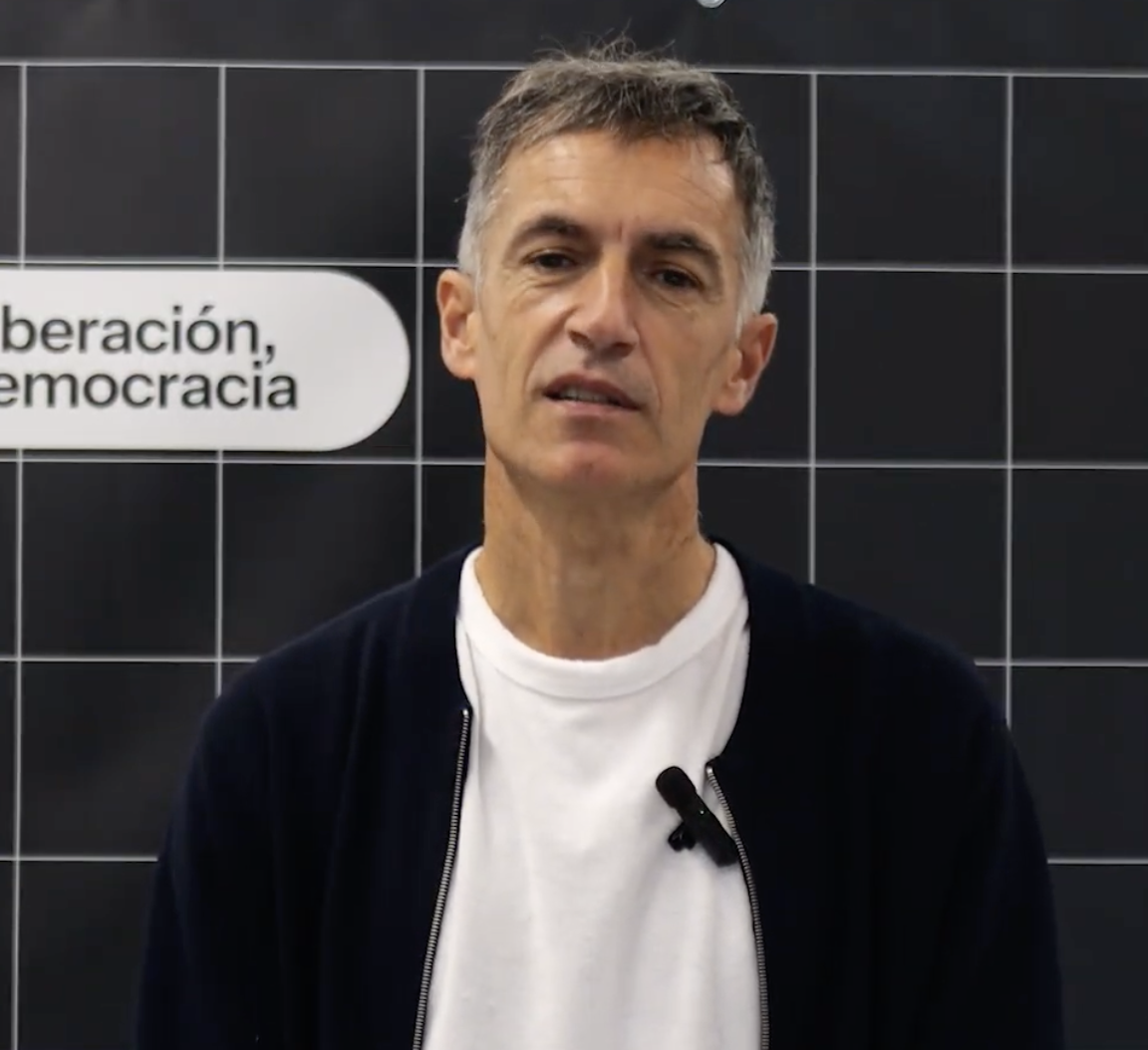
Jaume López Social worldviews and deliberative democracy: a conversation about how we understand the common good


We spoke with Jaume López, former Director General of Good Governance at the Government of Catalonia and professor at various universities. He currently continues to research democratic participation, common goods, and social worldviews.
Institutions and deliberative democracy
What virtues do public institutions see in deliberative democracy?
In general, public administrations do not perceive deliberative democracy as an ally, but rather as a competitor. Citizens’ assemblies or deliberative processes undermine the institutional status quo, challenge the limits of the representative system and open up parallel spaces of legitimacy.
However, when these experiences are successfully connected with institutions, an opportunity arises. Deliberative assemblies can complement representative democracy, especially on issues where parliaments no longer achieve quality deliberation. One need only observe the current climate of political confrontation: in no other area of life would we accept people constantly insulting or ridiculing each other, yet this is normalised in parliamentary debates.
Citizen deliberation can be an antidote to this degradation of public dialogue. As institutions realise that it does not replace their function, but rather complements it, they become more open to incorporating it. Many processes on issues such as climate change have shown that assemblies can contribute reflection, consensus and legitimacy without threatening the representative system.
Why are deliberative processes not carried out on truly sensitive issues, such as housing or migration?
Because, for now, the topics chosen for the assemblies are not selected for their social relevance, but rather for their low political risk. “Safe” issues are chosen, ones that do not compromise party strategies or electoral alliances.
When it comes to issues such as housing or migration, where the parties’ positions are clear and confrontational, the possibility of opening up a citizen process is perceived as a threat. However, this is precisely why these would be the most necessary topics for deliberation: they are structural issues where disagreement blocks political action.
Even so, I am optimistic. The current processes, even if they are on less controversial issues, are generating institutional learning. They are a first step. Once the deliberative practice is consolidated, we will be able to tackle more complex issues. We are already seeing some progress in other countries, such as the debate on euthanasia in France, which is beginning to position itself in that middle ground between what is socially important and what is politically possible.
But that does not mean that questioning democracy does not provide opportunities to present citizens’ assemblies as a formula for overcoming current limitations, especially with regard to the lack of quality deliberation in representative forums, and to counteract the widespread pessimism exploited by those who present themselves as ‘saviours of the people’ in order to destroy the democratic system.
What structural or political conditions would make it easier for institutions to see deliberative democracy as a complement rather than a competitor?
I do not believe that, on their own initiative or in their own interests, current institutions will give too much space to deliberative democracy. Rather, I believe that, ultimately, the impetus must come from society, either because there is a context of great political disaffection that puts traditional institutions at risk and causes them to seek reform, or because that risk of disaffection is linked to certain populist and extreme electoral offers whose reach one wishes to minimise, or because there is a new wave of democratic demands such as the 15M movement in its day, or even the Catalan sovereignty process. Without some kind of pressure or fear, it is difficult to make progress in deepening democracy, such as complementing institutions with true deliberative democracy.
Another issue is that some political groups, and for some very specific policies, as is already the case with other participatory processes, such as participatory budgeting, advocate incorporating some of these experiences of deliberative democracy, even as a trend linked to good governance.
Could municipalities be laboratories for testing assemblies on complex issues, given that the electoral impact is less than at the state level?
Without a doubt, municipalities seem to be the most suitable place for any practical experience of deliberative democracy. Let us not forget that deliberative democracy has cities as its ideal context due to their size. There are possibly three types of advantages at the municipal level. On the one hand, there is indeed a more limited risk if issues of exclusively municipal competence are dealt with. Secondly, there is greater flexibility to develop some innovative experiences and, above all, the link between territory and deliberation. Deliberative democracy is easier to understand when we link it to territories and communities the size of a municipality.
How would you articulate a medium-term strategy to ensure that deliberative democracy is not just a one-off experiment, but a stable cultural and political axis?
The medium-term strategy for deliberative democracy to be naturally linked to representative democracy and to an understanding of what quality democracy means has a lot to do with cultural change. Firstly, it involves reclaiming the popular component of democracies, which is not the same as populism, emphasising that power is not transferred to representatives, but rather that they act as vicars of a power that always remains in the hands of the citizens. It is true that this cultural change has to contend with another cultural transformation that is also taking place, which minimises the importance of democracies and raises, as we see in some surveys, the possibility that a good government is an authoritarian government. In other words, the re-evaluation of democracy at the moment is taking place along two different paths.
On the one hand, there are those who minimise the achievements and impact of contemporary democracies and those who, in defending it, point out its limitations. Therefore, they also have a critical perspective, but they seek to develop it. At times, it seems that the urgent task is to combat this cultural shift that minimises the achievements of democracy. However, it is likely that these are not two separate struggles, but rather that explaining the limitations of democracy, accompanied by proposals for its improvement, is the best way to avoid shying away from the debate and leaving it in the hands of those who simply want to destroy democracy.
Do you think deliberative democracy can play a role in crisis management (economic, climate, health), or is it a mechanism designed only for stable contexts?
That’s not an easy question. I think that any meaningful institutional change probably requires a certain amount of instability, a certain disenchantment with the system it seeks to complement or reform, but at the same time, within limits that do not invite extreme solutions.
I would link this to the previous question. I do not believe that there is sufficient political maturity to use citizens’ assemblies as a general formula for tackling major problems in a widespread manner.
Worldviews and citizen participation
What do we mean by “social worldview”?
The concept of social worldview refers to unconscious cognitive frameworks, those filters through which citizens interpret socio-political reality. They are the lenses through which we view the world, even without realising it. These filters determine what we consider “normal”, what we find expected or correct.
When people evaluate public policy, read a newspaper, or assess a political proposal, they always do so with reference to this implicit idea of normality. This conception is not explicit: it is constructed from a system of values that we learn, share, or question, and it is precisely what we call social worldviews.
In our Western democracies today, three or four major worldviews coexist, acting as positions prior to ideology or voting. For the first time in history, there is no clearly dominant one. In other eras, there was a hegemonic worldview; today, however, we are experiencing a tense coexistence that translates into what some call ‘culture wars’. But it is not so much a difference in cultures as it is a difference in fundamental values about what is right, desirable or fair in the social and political sphere.
How does this theory influence participatory processes where different worldviews must coexist?
The theoretical framework of social worldviews can be applied to any public policy because it offers us an extremely valuable interpretative tool. But it can also be used in a practical way: it helps us to design more conscious and representative processes.
In participatory processes, we tend to take into account traditional axes such as social class, gender or age, which guarantee diversity. However, we should add another equally important axis: that of worldviews. Representing different ways of understanding reality allows us to confront worldviews that, although invisible, determine how we value what we consider fair, modern or desirable.
For example, what is the role of the market in our lives? Should everything be measured in terms of economic success? Do we understand reality from a more spiritual or more materialistic perspective? Do we identify with national values or with a more global perspective?
Designing processes that make these perspectives visible and conscious allows us to generate deeper consensus. Just as we now recognise gender bias, we must also recognise the biases derived from our worldview. This allows us to better understand disagreements and build cross-cutting agreements that integrate different forms of normality.
Are we witnessing the emergence of a new, more radical or polarised worldview?
Worldviews are such broad filters that new ones rarely emerge, unless there is a profound change in civilisation. What can happen, however, is that some worldviews gain visibility or influence in the public sphere.
Strictly speaking, there has been no shift in values, but rather a transformation of the communicative space: values that were previously silenced now have a public voice. For example, for years some people may have felt uncomfortable with certain feminist or environmentalist policies, but preferred not to express their disagreement because it was considered socially inappropriate. Today, thanks to (or because of) the dynamics of social media and certain political strategies that encourage polarisation, these voices find legitimacy to express themselves, often in a radical or provocative way.
It is not so much that values have changed, but rather that the conditions for expressing them have changed. Values enter and leave the public sphere depending on contexts, dominant discourses and the correlation of forces.
I often talk about photograph mode and film mode: the former allows us to observe that there are different worldviews in tension; the latter allows us to understand that these worldviews evolve and change. And in that evolution, what sometimes seems like a step backwards is only the visibility of something that already existed but was not openly expressed.
Culture, values and the role of the common good
Can deliberative democracy bring young people closer to politics?
Only partially. Its direct impact is limited, because participation is usually by lottery and affects a small number of people. But it can have an indirect effect: if it improves the quality of the system and increases trust in institutions, it can reduce widespread disaffection with politics.
Interestingly, young people are not invisible. They are constantly mentioned in institutional discourse: they are a permanent reference in the language of legitimacy. However, this does not translate into real policies that respond to their concerns. In practice, young people are present in discourse but absent in action.
Housing protests are perhaps a recent exception, but in general social mobilisations continue to be led by older generations, who are more socialised in protest. Young people should take greater advantage of the opportunities offered by the system, although it is also true that the current system does not make it easy for them to get involved.
What could be done to bring young people closer to political life?
There are many things that can be done, but most of them are micro-actions: small gestures that encourage participation. However, real change has to be cultural.
We live in a deeply individualistic society. Young people have been socialised in a culture of “you can do it alone”, of self-help, of personal and rapid success. In previous generations, community was a way of life, a survival strategy. There were cooperatives, neighbourhood networks, mutual societies… Today, these spaces have been replaced by immediate, digital and consumer-oriented solutions.
The challenge is not only to offer political or participatory activities, but to rebuild the value of the common good. To relearn that cooperation is not an abstract ideal, but a vital and political necessity.
That is why the challenge is not only to offer political or participatory activities, but to rebuild the value of the common good. To relearn that cooperation is not an abstract ideal, but a vital and political necessity.
Furthermore, a person’s worldview is not fixed. It is shaped by biological factors, such as a predisposition to empathy or temperament, and social factors, such as education or the values of the environment. Dominant cultural values may favour a more materialistic or pragmatic worldview, but that does not mean that people change their mental structure from the ground up.
Sometimes, what changes is not the worldview, but the context that allows it to be expressed. Therefore, when it is said that today’s youth are more ‘macho’ or more ‘individualistic’, it is worth asking whether the opposite was really true before, or whether it was simply not expressed. Visible variations in public values respond more to communication or media dynamics than to real civilisational changes.
In short, we live in a time when worldviews clash more openly, but also when we have the opportunity to bring them into dialogue. That is the task: to build deliberative spaces that recognise these differences and turn them into a source of common learning.
__
The interview took place at the Forum on Deliberation, Creativity and Democracy, between 15 and 18 October 2024, thanks to the support of the Open Society Foundation and the Barcelona Provincial Council.