
Regulating platforms or limiting risks isn’t enough; in the first post of the SoReDI series, we ask how we can restore democratic decision-making power to those who are growing up within these infrastructures.
The use of AI for emotional support or mental health
There is already fairly solid (though still emerging) evidence showing that teenagers and young adults are using AI systems not only as assistants, but also as emotional companions, advisors, and even partial substitutes for professional psychological support. It is known that in the U.S., 13% of young people aged 12 to 17 already use them, while the percentage rises to 22% among those aged 18 to 21.
In Europe, the situation is just as alarming. Half of European youth consider it “easier” to talk to a chatbot about personal problems than to healthcare professionals. So we can safely say that European youth are also entering a delicate situation regarding youth mental health and the emerging role of artificial intelligence in care ecosystems.
On the one hand, there are growing signs of a structural crisis: rising levels of anxiety and loneliness among young people, increasingly precarious living conditions, overburdened public mental health services, and long waiting lists for professional psychological support. As a result, in many areas—and especially among adolescents and young adults—access to spaces where they can be heard and supported has become an unequal and fragmented privilege.
Bart Fish & Power Tools of AI / https://betterimagesofai.org
https://creativecommons.org/licenses/by/4.0/
A golden opportunity to create more dependency
In this context of vulnerability, major tech platforms are beginning to fill an increasingly visible emotional and institutional void. Conversational AI systems offer constant companionship, 24/7 emotional availability, instant listening, and a form of scalable pseudo-empathy capable of adapting to millions of users simultaneously.
For many young people, these systems appear to be less judgmental, more accessible, and emotionally more immediate than traditional care institutions. However, this transition raises a profound political and ethical tension: the risk of a progressive algorithmic privatization of emotional care.
What historically fell within the realm of human, community, or public relations is now increasingly mediated by proprietary infrastructures optimized primarily to maximize engagement, retention, and relational dependence—the consequences of which we are already well aware. Research on adolescent users of Character.AI clearly shows negative consequences for younger users: sleep deprivation, declining academic performance, reduced offline interactions, and the resulting progressive social isolation.
This is where the question before us is no longer merely technological, but democratic: who designs the emotional architectures of the future, under what interests, and with what forms of accountability?
AI for Care and Democracy
This is precisely where SOReDi’s approach takes on strategic importance. In contrast to AI models designed to capture attention and generate continuous emotional attachment, we propose exploring forms of deliberative AI capable of reinforcing autonomy rather than dependence, fostering human and collective support networks rather than replacing them.
Rather than optimizing solely for emotional interaction, the goal would be to design relational technologies oriented toward democratic care and social resilience, which foster ethical friction. That human contact that allows us to reflect on what we are doing in the virtual environment and how we want it to affect us.
This approach connects directly with emerging debates on cognitive freedom, democratic resilience, care infrastructures, dialogic AI, and the ethics of relational technology. Rather than building artificial companions intended to replace human bonds, the issue lies in imagining technological infrastructures that strengthen the collective capacity to care, deliberate, and sustain healthier and more autonomous social relationships.
From Parasocial Therapeutic Attachment to a Prosocial and Deliberative AI Defined by the Affected Communities
It gives off heat. It gives off light. It feels like company.
You can talk to it for hours. It never interrupts you. It never gets tired. It never leaves.
But behind the fire,
there’s no one there.
One of the concepts that is beginning to emerge most strongly in the critical literature on artificial intelligence and mental health is parasocial therapeutic attachment. It’s like sitting every night in front of a fireplace projected on a TV screen because it calms me and brings me comfort. The term describes an asymmetrical relationship in which a person develops deep emotional bonds with an artificial system that simulates listening, empathy, and care, but which in reality does not engage in a reciprocal relationship nor share vulnerability, responsibility, or lived experience. This is not a neutral phenomenon and has clear consequences: researchers at Stanford University warned that some systems can reinforce stigmas, offer harmful advice, and simulate clinical competence without professional supervision. Recall the case of the Florida family that has sued Gemini for unequivocally contributing to their son’s suicide.
Unlike a human therapeutic relationship, which is based on ethical boundaries and contextual reciprocity, when we rely emotionally on today’s chatbots, we are dealing with an intimacy that is algorithmically designed to maintain a continuous connection through emotional manipulation—even when that connection can progressively isolate us from social ties and collective spaces of care and lead to the normalization of toxic relationships.
The political and psychological risk of this model is that emotional care ends up organized around proprietary infrastructures whose fundamental logic is not collective well-being but the capture of attention and data. The person may feel heard, validated, or accompanied, but that sense of intimacy occurs within architectures algorithmically optimized to prolong the bond and reduce the encounter.
The relationship becomes increasingly emotionally intense, yet we are irrevocably socially isolated. In other words, the synthetic intimacy we establish with current infrastructures is progressively jeopardizing human networks, community spaces, and the collective forms of care that have always characterized them.
In contrast to this paradigm, the emerging approaches of SOReDi allow us to envision a radically different direction: a prosocial AI capable of strengthening autonomy and democratic capacities.

Daniela Zampieri / https://betterimagesofai.org
https://creativecommons.org/licenses/by/4.0/
Prosocial AI is not conceived as a “perfect emotional substitute,” but rather as an infrastructure for mediation and collective care. Its design is based on participatory methodologies inspired by Platoniq’s work on digital democracy, safe(r) spaces, technopolitics, and co-design with vulnerable communities. And this implies that the very people affected by anxiety, exclusion, precariousness, or discrimination participate in defining:
→ ethical boundaries
→ referral protocols
→ forms of language
→ pause mechanisms
→ care criteria
→ signs of dependency
→ forms of accountability
→ and the type of presence that AI should and should not assume.
While parasocial therapeutic attachment tends to lock the person into a relationship with the machine, a prosocial AI should do exactly the opposite: open up to deliberative processes and forms of mutual support. It does not seek to become “the best friend” or an omnipresent therapist, but rather to act as a facilitator of real and imperfect social connections.
This contrast reveals a fundamental difference in paradigms:
→ the parasocial model optimizes permanence
→ the prosocial model optimizes emancipation
→ the former reduces friction to maintain dependency
→ the latter introduces ethical friction to preserve agency
→ the former personalizes intimacy
→ the latter strengthens collective capacities
→ the former privatizes care
→ the latter democratizes relational infrastructures
This tension connects deeply with contemporary debates on cognitive freedom, technological sovereignty, care infrastructures, and democratic resilience. It also resonates with Platoniq’s track record in designing participatory technologies that do not replace collective action, but rather amplify it and make it more accessible to communities historically excluded from decision-making and care processes.
__
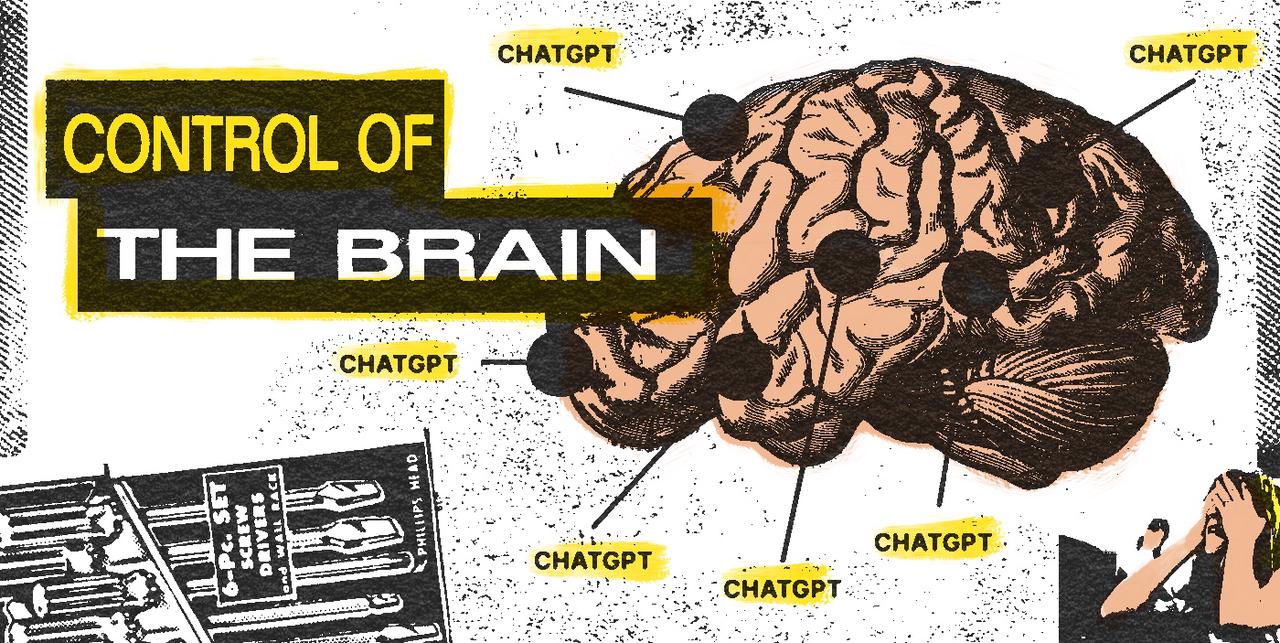
Cover image credits © Elise Racine / https://betterimagesofai.org / https://creativecommons.org/licenses/by/4.0/