Interviews
Juliana Souza The transcription of testimonies of violence against women as an act of care and redress

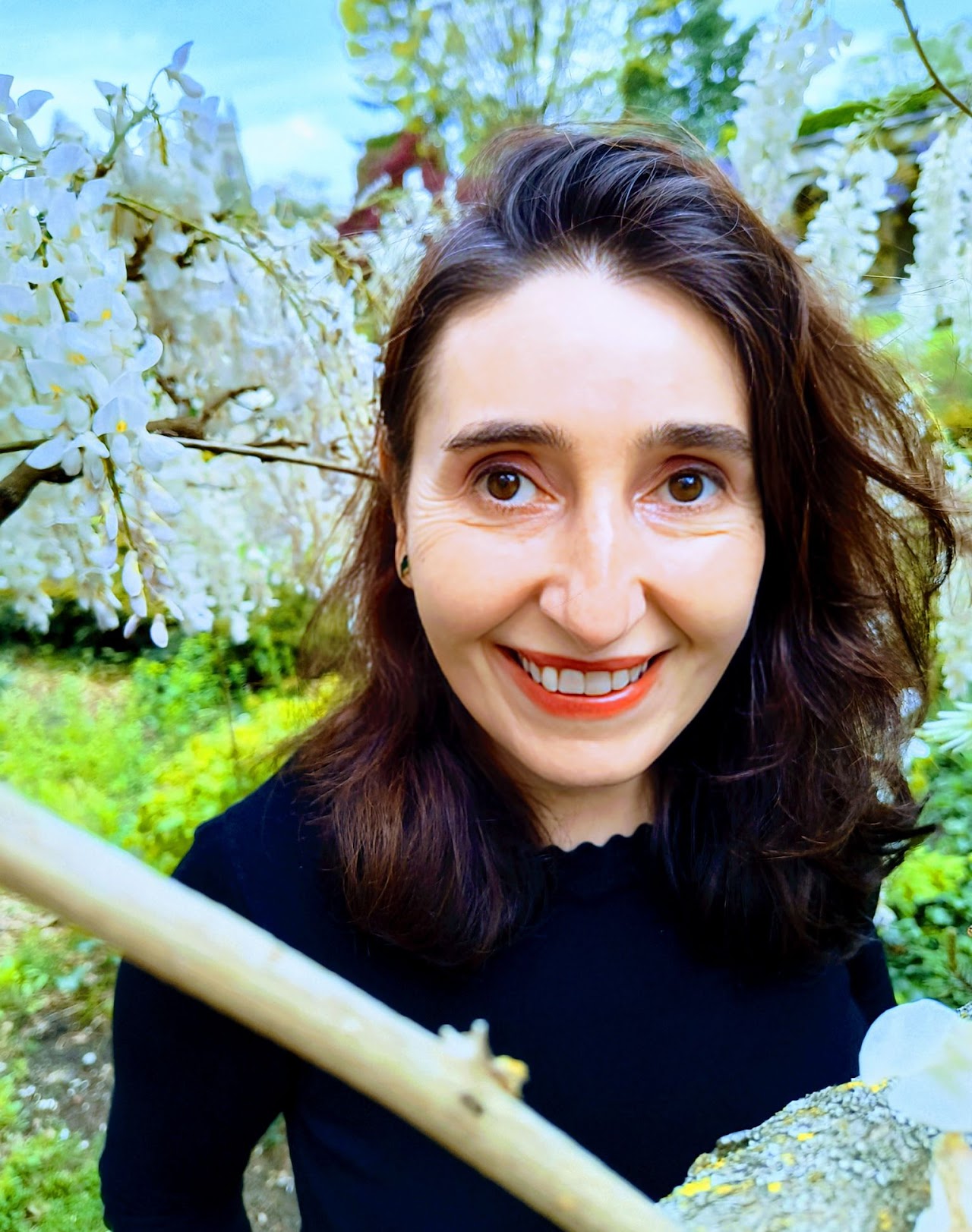
Juliana Souza is a postdoctoral researcher in the Department of Political and Social Sciences at Pompeu Fabra University. Her work focuses on gender and sexual diversity policies, inequalities, and discursive disputes in the media, parliament, and education. With a background in performing arts and political science, as well as extensive experience in content analysis and feminist and intersectional methodologies, she is responsible for coding the testimonies shared by the LaNuestra community. In this interview, she reflects on how deeply personal accounts can be transformed into structured knowledge without removing them from their context or betraying the voices of those who shared them, approaching the coding process as an exercise in analytical rigour, care, protection, and collective reparation.
Situated knowledge and feminist content analysis
You describe yourself as a specialist in content analysis and feminist and intersectional methodologies. What does this expertise entail when working with testimonies of gender-based violence? How does it shape the way these accounts are interpreted?
Juliana: One of the fundamental principles of feminist perspectives is understanding that knowledge is always produced from a particular position. We never approach research as a blank page. The idea that academic research can be completely neutral or objective is misleading. Everyone has their own history and experiences, and these create a repertoire through which we interpret the world.
I worked in a trade union in Brazil for fourteen years, where I delivered courses on trade unionism, gender, youth and other subjects, generally from the perspective of workers. My undergraduate degree is in performing arts, which I think helped me develop an empathetic way of looking at people and their experiences. My master’s degree and PhD are in political science, where I developed research on gender and sexual diversity using content analysis.
I also participated in a research group that conducted a content analysis of the Netflix series Orange Is the New Black. That experience taught me that content analysis does not need to be limited to formal written texts. It can be used to identify subtle information that is communicated indirectly or is not explicitly written down.
The feminist perspective does not reside in the tool itself. There is no single tool that is inherently feminist or intersectional
This background has been very helpful in the LaNuestra project. The testimonies contain emotional and political information, as well as embodied knowledge. These women lived through the experiences they describe. They are speaking about a reality they know through their own bodies, rather than from the position of someone who studies gender-based violence theoretically but has never experienced it. We therefore cannot approach the testimonies simply as raw information from which we extract numbers and percentages.
Combining quantitative and qualitative analysis
Which methods have you applied specifically in LaNuestra?
Juliana: The feminist perspective does not reside in the tool itself. There is no single tool that is inherently feminist or intersectional. Almost any method can be used from a feminist perspective. What matters is how the tool is used, which theoretical foundations inform the research and how the entire process is organised.
Our work is based on the understanding that knowledge is situated and that reflexivity is essential. I created the first coding document, but the system was developed collectively by a team of three people. Each person independently coded the same testimonies. We then held meetings lasting four or five hours to discuss every disagreement, doubt and contradiction. The codebook was constructed step by step through this collective process.
The feminist perspective is therefore present in the foundations of the research, in the way decisions are made and in the organisation of the coding process—not simply in the application of a particular tool.
Analytical rigour and the emotional impact of the work
You and your team work with testimonies containing anger, trauma, violence and fear. How do you maintain analytical rigour when working with such explicit and emotionally demanding material?
Juliana: The anonymisation process itself was extremely demanding. It was not enough to remove names or professions. Any information that could allow a person to be identified had to be examined carefully. A description of the location or circumstances of the violence could also reveal someone’s identity. So, the testimonies were reviewed by the anonymisation team, then by a legal team, and subsequently returned for another review. The purpose was to prevent re-identification and protect the women who had shared their experiences.
Coding introduced another emotionally demanding layer. A single testimony might need to be read thirty or forty times because the spreadsheet is organised by category. First, we read it to identify the type of violence. Then we read it again to determine where the violence occurred, who was involved, which emotions were expressed and so on.
This systematic process does not mean turning the testimonies into something mechanical or removing their emotional context. It is a way of making the analytical procedure explicit and consistent. Nevertheless, repeated exposure to graphic accounts of violence is very difficult.
It is impossible to spend entire days reading testimonies of gender-based violence without being affected
Everyone has particular subjects that affect them more deeply. In my case, testimonies involving children were especially hard. Sometimes I had to stop working. The coding rounds were initially planned to last two or three weeks, but we often needed more time because people had to pause and recover.
Everyone involved in the coding process was receiving therapy. This was important because of the risk of vicarious trauma: the trauma that can affect researchers or professionals who repeatedly engage with the traumatic experiences of others. It is impossible to spend entire days reading testimonies of gender-based violence without being affected.
When testimonies do not fit legal definitions
What happens when an experience does not fit existing legal definitions? Did you encounter situations that could not be adequately described through legal categories?
Juliana: The first stage in constructing the codebook involved reviewing Spanish national legislation, legislation from the autonomous communities and relevant European legal frameworks concerning gender-based violence.
This required many hours of reading and comparison because different laws separate, define and name forms of violence in slightly different ways. We also met with academic experts who study gender-based violence to incorporate forms of knowledge that are not normally present in legislation.
When someone speaks about violence they have suffered, they do not normally use legal language
They speak through an emotional language grounded in physical and psychological scars. They do not necessarily identify an experience as sexual harassment, coercion or another specific legal category. They describe what happened in the way that feels important to them.
The challenge was therefore to bring together three structures: legal definitions, expert knowledge and the language used in the testimonies.
What the codebook makes possible
Interviewer: Beyond categorising testimonies, what can be done with the codebook? Why is it important?
Juliana: Many testimonies of institutional violence describe not only the failure of institutions to advance a complaint, but also the way women are treated when they seek help. Police officers or other professionals may ask what they were wearing, why they had been drinking or why they were in a particular place.
The codebook places women’s voices at the centre while also producing knowledge that can support awareness and prevention.
One testimony, for example, ended with the woman warning others that if a man behaved in a particular way, they should pay attention, speak to someone and not ignore it.
Feminist movements often explain that aggressors isolate women from friends and family. However, there are also more subtle behaviours through which this isolation is gradually created. Violence does not normally begin with a punch. It develops slowly. The aggressor undermines the person’s self-confidence, makes her doubt herself and encourages her to believe that she is irrational, confused or unable to remember events correctly.
These patterns of psychological violence can eventually be connected to physical violence. Greater knowledge about the process can help women recognise warning signs earlier.
Safeguards for participants and researchers
What safeguards are needed to protect both the testimonies and the researchers working with them?
Juliana: Everyone who participated in anonymisation signed a confidentiality agreement. Other people involved in the project have made the same commitment. This provides legal protection for the project, but more importantly, it helps maintain the safety of the information.
Cristina Fallarás also established a collaboration with the Ministry of Justice to register and publish the anonymised collection of approximately 5,000 testimonies. She has also published testimonies in a book.
Formal registration is important because one common response to accounts of gender-based violence is to claim that the stories were invented or exaggerated. Registering the anonymised material provides a record demonstrating that these experiences were reported.
The collection also functions as a counterpoint to existing official information. Official reports may state that a particular proportion of women experienced gender-based violence during childhood, but the testimonies suggest that the prevalence may be considerably higher.
This is one of the project’s most important contributions. The testimonies can help women identify violence that they had previously naturalised
For the researchers, protection involved more than therapy. During meetings to discuss coding disagreements, we also created time to talk about the emotional impact of particular testimonies. Someone could say that a testimony had been especially difficult, that it had affected them personally or that they had needed to stop working.
As the person coordinating part of the process, I also received private messages from coders explaining that they could not meet a deadline because the material had become overwhelming. These limits had to be respected.
For women reading testimonies of gender-based violence, the material often triggers personal memories. Even if you have been a feminist activist for many years and have studied the subject extensively, you may encounter a testimony and suddenly recognise that something similar happened to you.
We therefore created space for collective discussion, respected people’s individual working rhythms and adjusted deadlines when necessary. Projects still operate within a world of deadlines and productivity expectations, but a feminist project cannot reproduce the same harmful structures it criticises.
Cristina always made clear that meeting a deadline would be desirable, but that the people participating in the process were more important. That is one of the aspects of the project that I most admire.
LaNuestra as a community of care and redress
What do you expect from the future of LaNuestra? How can the project contribute in an increasingly polarised world?
Juliana: One reason I am proud to participate in LaNuestra is the way we are framing the community. We are creating a space based on love, care and mutual support: a safe space for women and non-binary people.
It is difficult to find this kind of environment online. When someone speaks publicly about gender-based violence, the comments often include people denying the experience, accusing the person of seeking attention or attacking her credibility.
LaNuestra can provide a space where people are able to speak in their own way and share details they may not feel able to disclose elsewhere.
This can form part of a healing process. Discussions of justice often include reparation as a fundamental component. Reparation is commonly associated with legal proceedings and the punishment of an aggressor, but the testimonies reveal that other forms of reparation can emerge when women read one another’s stories and speak with each other.
LaNuestra has the potential to become a space of reparation as well as a protected space for testimony.
We also want to offer practical support. A woman may want to file a formal complaint but be unable to find someone who will listen to her, particularly because institutional violence is so common.
The project aims to provide access to lawyers, doctors and psychologists who work from a feminist perspective and who will listen without denying or minimising the woman’s lived experience.
The evolution of the project’s visual identity—from the first crowdfunding campaign to the second—also reflects this emphasis on love and community. We want to confront the most violent aspects of society through the solidarity and care created within this space.
There is a well-known phrase: “If I cannot dance, it is not my revolution.” I believe that is true. For women who have survived violence, being able to meet, dance and enjoy themselves without fearing what someone might do to their bodies or reputations is itself powerful. It is another way of constructing safety, freedom and collective reparation.