Interviews
Cristina Monge Active hope as a democratic capacity: on participation, governance, and the ecological transition

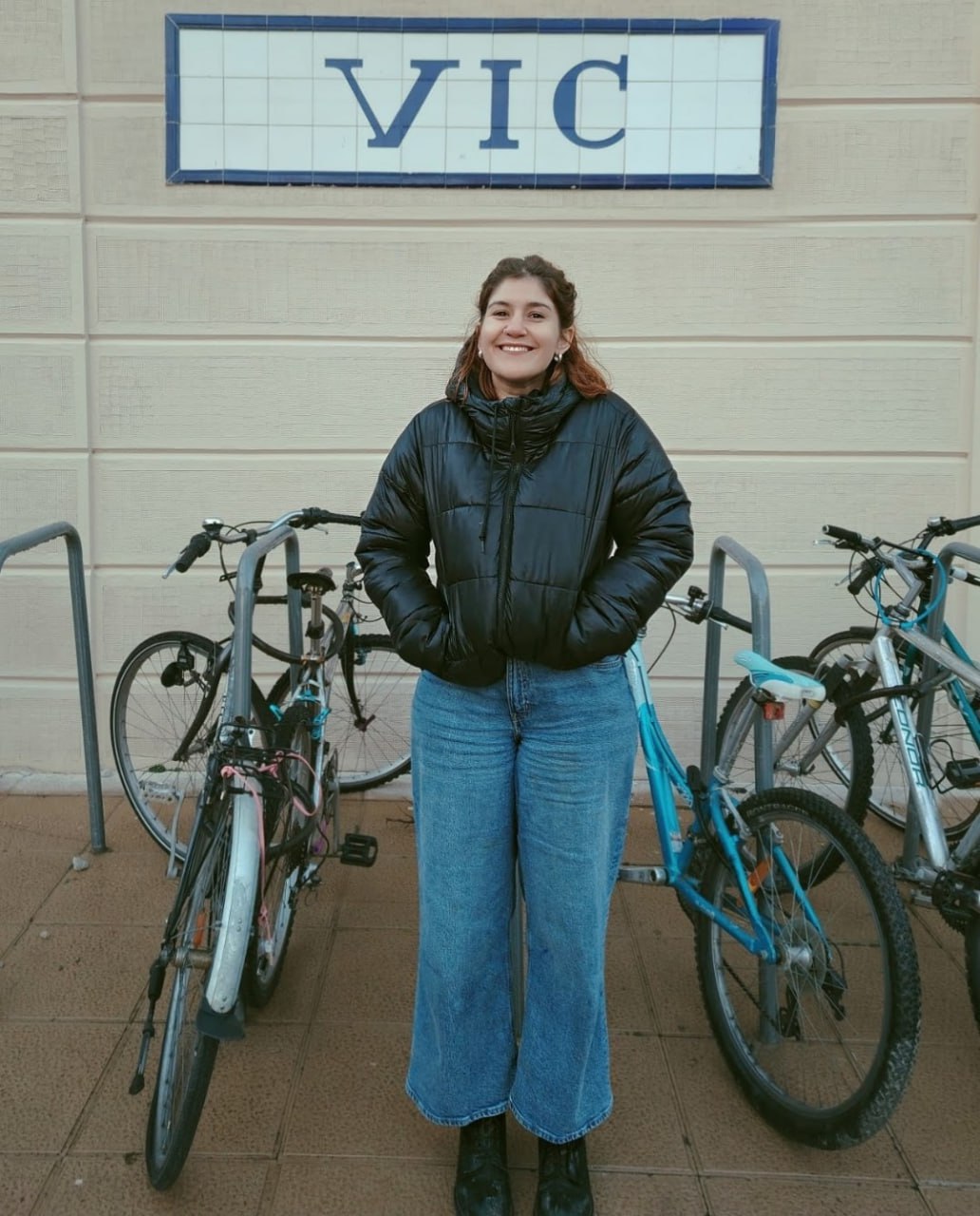
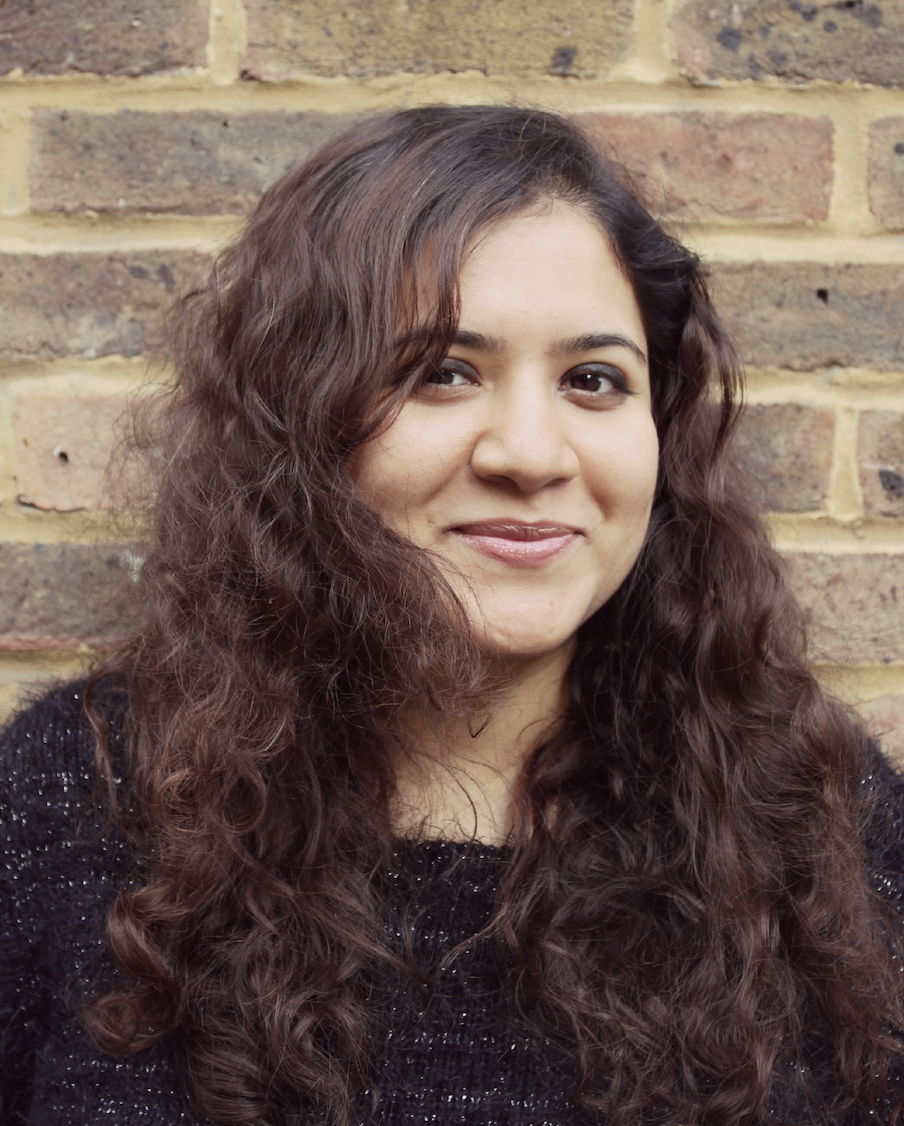
Cristina Monge is a political scientist, sociologist, university professor, and president of the Más Democracia platform. Specializing in democracy, participation, governance, and ecological transition, she combines academic research with public outreach and advocacy. In her latest books, La gran oportunidad (2025) and Contra el descontento (2026), she addresses, respectively, how to turn the ecological transition into an opportunity to strengthen democracy through social justice, and how to restore citizens’ capacity for agency and shared responsibility in the face of discontent.
In Against Discontent, you argue that we must reclaim an “activist attitude” toward politics. However, today many people feel overwhelmed and powerless in the face of the uncertainty and complexity of global challenges. What would you say to those who feel they cannot influence the course of events?
From my perspective, the crisis that democracies are facing today is fundamentally a crisis of trust. There is mistrust toward institutions, political parties, the media, and even toward science and the production of knowledge. We live in a context marked by uncertainty, with challenges of enormous complexity, and today many people don’t know whom to trust to address them.
This even extends to a lack of trust in society itself—in the sense that society feels it will not be able to take on the challenges ahead. This, I believe, is precisely what fuels this sense of powerlessness, paralysis, helplessness, and, all too often, hopelessness.
In this context, I believe it is not a matter of being optimistic or pessimistic. What matters is regaining the awareness that the great challenges we face, while enormous, are not inevitable. Precisely because they are problems created and managed by human beings, they can be resolved through human decisions, and they depend on the decisions we make as a society.
I am not talking about naive optimism, but rather about active hope—understood as the conviction that we can still influence the course of events
Precisely because these problems depend on human decisions, we can manage them in different ways, taking advantage of the opportunity they present. If we think about the environmental crisis, for example, science tells us that we are in uncharted territory and that the planet has never before been in a similar situation. That uncertainty does not mean we cannot do anything, but rather that we are still deciding how we want to address this situation.
We can use this uncertainty to drive the transition toward a more just and democratic society—hence the title The Great Opportunity—or we can manage it through denial and delayed decision-making, which would only exacerbate existing problems.
That is why I place so much emphasis on our ability to make decisions. Nothing is set in stone. In the face of paralysis, we need to reclaim our capacity for agency and recognize that the future will depend, to a large extent, on the decisions and actions we take (or fail to take) today as a society.
In The Big Opportunity, you argue that the ecological transition can take these two paths. Where would you say we are right now?
I believe we are at a very delicate juncture. Historically, Europe has been one of the world’s leading forces on environmental issues, championing ambitious initiatives such as the European Green Deal, which Ursula von der Leyen described as “the European Union’s new development model.”
However, the situation today is different. The green transition is facing significant resistance. On one hand, there are climate denialist forces linked to the far right. On the other, there are more liberal or conservative factions that, while not denying climate change, argue that “now is not the time to act” and always find a reason to delay decisions (the financial crisis, the pandemic, the war in Ukraine, etc.).
Following the latest European elections, this slowdown has become even more evident. Today, we should be accelerating the transition, and although many of the Green Deal’s goals remain in place, in some areas we are slowing down or even moving backward.
If we look at transition models, there are very different cases depending on the country. Spain, with varying degrees of success, has attempted to incorporate the idea of a just transition into many of its policies, combining the ecological transition with criteria of social justice. In other countries, however, more neoliberal models predominate, driving the transition without that social dimension, which can increase inequalities and ultimately erode social cohesion and democratic quality. In other countries, however, we see much more neoliberal models that drive the transition without incorporating the social dimension. This can increase inequalities and ultimately erode social cohesion and democratic quality as well.
In my view, we shouldn’t worry so much about making mistakes as we should about continually evaluating what we do and correcting course when necessary. The important thing is to move forward, learn, and adjust, because time is of the essence.
When talking about the ecological transition, some people don’t quite understand how it relates to democracy. How would you explain that connection to someone who has never thought about it?
The environmental crisis is making living conditions harder all over the planet. We see this in heat waves, droughts, floods, extreme weather events, and the rise in certain diseases.
But this deterioration does not affect everyone equally. While it impoverishes us all, it does not do so in the same way. A drought like the one Spain experienced a few years ago had significant consequences for the agricultural sector, but a similar drought in the Horn of Africa can turn into a humanitarian crisis affecting millions of people. The same is true within our own society: facing a heat wave while living in an air-conditioned home is not the same as facing it without the means to protect oneself. That difference has consequences for people’s health, well-being, and opportunities.
And this is where the link to democracy comes in. The great promise of democracy was never simply to vote every four years, but to build more cohesive, just, and egalitarian societies. When the environmental crisis exacerbates inequalities, this promise loses credibility and democratic legitimacy begins to erode.
When the environmental crisis exacerbates inequalities, the democratic promise loses credibility, and the legitimacy of democracy begins to erode.
What democratic skills should we foster among citizens so that we can speak of a true culture of deliberation based on active listening and dialogue?
The first thing I would ask myself is who we’re talking about when we discuss democratic capacities. We tend to focus almost exclusively on citizens, but those who should be most interested in ensuring that democracy functions well are the democratic institutions themselves, which still have a long way to go. When it comes to democratic capacities, it is the institutions that must work harder and make greater efforts to lead discussions and outline processes clearly.
Here I distinguish between clarity and transparency: it’s not enough to simply publish a document hundreds of pages long on an institutional website. That doesn’t guarantee that citizens will be able to understand what is being done or what is intended. Institutions must explain in an understandable way what decisions they intend to make, why, and what they mean for the community. Likewise, they must make information, knowledge, and technical advice available to the public so that citizens can voice their opinions or even propose alternatives to the proposals put forward. Only in this way can participation lead to high-quality deliberations.
We also need citizens who are more accountable and aware of what is at stake in every public decision. However, this requires opening up conversations and processes in which citizens can debate major collective decisions. These spaces are often driven by civil society organizations, but there should also be a review of institutional processes and public administrations, which should take on greater leadership in this area.
In Spain, there was a very telling case involving the so-called “ayuntamientos del cambio” around 2015. The political parties and organizations that emerged from the 15M movement and later gained positions at the institutional level attempted to incorporate more horizontal and participatory ways of doing politics. However, they encountered many difficulties and barriers, as the very nature of these institutions is incompatible with new forms of organization.
This shows that it is not enough to simply call for greater citizen participation: we must also review the institutional dynamics themselves so that they can accommodate new forms of deliberation and participation—both in terms of the legal framework and the methodologies and social dynamics that take place within them.
After so many years of researching participation and democratic quality, is there any idea you’ve come to see differently over time?
For many years, we practically took it for granted that increasing citizen participation would automatically lead to greater trust in institutions and an improvement in democratic quality. Today we must recognize that this was a hypothesis, not a certainty. In recent decades, participatory processes have multiplied, and yet levels of trust in institutions have not improved; in many cases, they have even worsened.
That does not mean that participation is not important, but rather that we still need to better understand what kind of participation works, under what conditions, and for what purposes. Those of us who work in this field must continue to research and evaluate our own practices, rather than turning certain ideas into unquestionable truths.
Throughout our conversation, you’ve spoken about active hope and regaining a sense of agency. What is it that keeps you hopeful?
Humanity has faced enormous challenges many times and has managed to overcome them; there’s no reason to think that things will be any different now. Furthermore, history isn’t predetermined, nor is it the result of an inevitable fate. It’s shaped by the balance of power that we’re able to build.
I want to be part of that process.
Today, pessimism has almost become a position of prestige. You only have to open the newspaper or listen to the news to conclude that everything is going wrong. What is truly difficult—and truly courageous—is taking on the challenge of thinking about and building alternatives. That, for me, is true hope.